Kyos is the least advanced continent of Aya. Several tribes fight ceaseless wars over resources; the land is far from barren, but their technology is outdated. As Hifu Solson, a famous Artasian historian, put it, Ilyon (a continent to the south of Kyos) “was already standing on the verge of industrial revolution, while people of Kyos were still fighting over their poorly grown crops with wooden sticks”.
Prior to ≈500 BW (before War era)
≈500 to ≈400 BW
In 502 BW, scouts from Nari, a country on the northern continent of the same name, landed on Kyos and advised their government to use it as a staging ground for a planned invasion of Ilyon. For the next 20 years, Narians systematically exterminated or subjugated Kyosian population; a common threat unified previously isolated communities, and newly emerging pockets of resistance complicated Narian plans. In 478 BW, Kyosians won their first substantial victory in the center of their continent, near a settlement which later became known as Metropolis. Their fight against Narian occupation, however, would continue for almost 80 more years.
≈500 to ≈400 BW
≈400 to ≈350 BW
By 400 BW, Nari was no longer able to sustain its mission on Kyos, which turned from a quick invasion into a century-old war of attrition, and had withdrawn its forces. The only Narians left on the continent were either dead or switched sides, and Kyos entered a period of relative stability.
Kyosians became stronger, but still acted separately. Local princelings who established their authority over small villages during Narian occupation learned to fight smart and invested heavily in scientific research, but the continent lost a lot of blood and we became less aggressive. Such is the inclination of all living things, I presume, even Demons. — Hifu Solson, a lecture at Artas University, 315 AW
357 BW
Elara Bates, future first Queen of Tetra, is born in the village of Northern Star.
357 BW
Around 350 BW
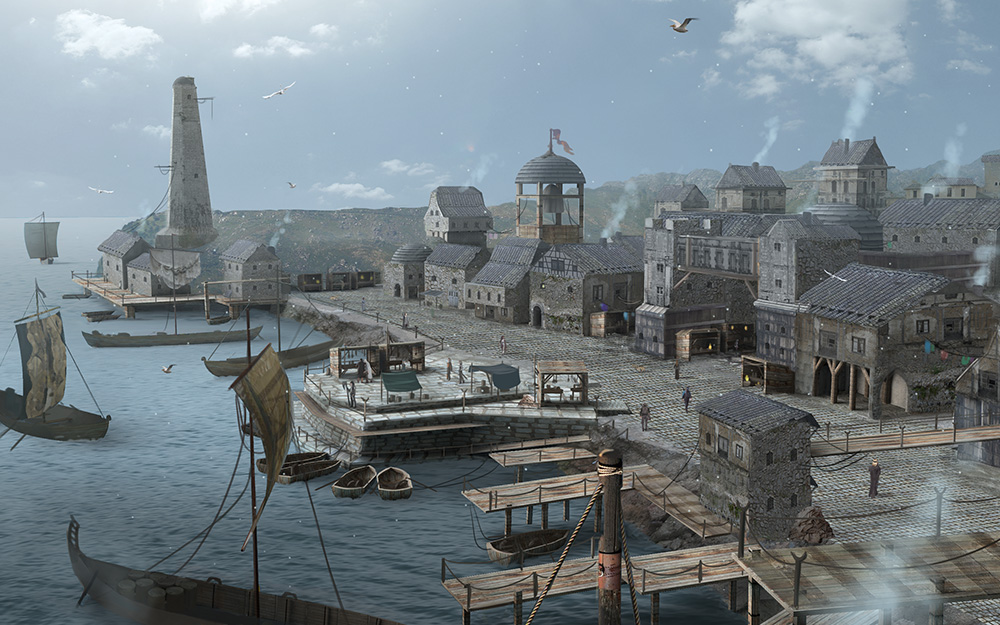
Contrary to a popular belief cultivated by Tetrian High Council later, Elara grew up in a loving family, had no trouble with friends or neighbors, and even after leaving Northern Star was never so much as scratched on her travels. Aldi Goffel, the inventor of flux and an amateur historian, insisted that “she became an agent of change to improve rather than to fix”, since at the time Kyos, having learned from its mistakes, was nothing like before Narians. Some scholars refer to this time as the “Silver Age”, but it’s debatable whether it started before or after Elara took power.
328-320 BW
In 329 BW, Elara marries Huston Plight, a rich trader from the Western regions with unrealized political ambitions, who dies from an illness a year after, leaving her as the sole heir to all his assets (including an estate and an impressive collection of art, which Elara sells almost immediately, earning herself “the huckstress” nickname from her future enemies). Seemingly dissatisfied with abusive treatment of farmers and craftsmen in the region, she soon sends a letter to her lord Wilty Stones, one of three princelings of the Western regions; she calls it “A fair warning”. This title gave name to her military campaign, which started with the hanging of poor Wilty and continued for nearly ten years, resulting in the unification of almost all of Kyos under her banner.
328-320 BW
320 BW
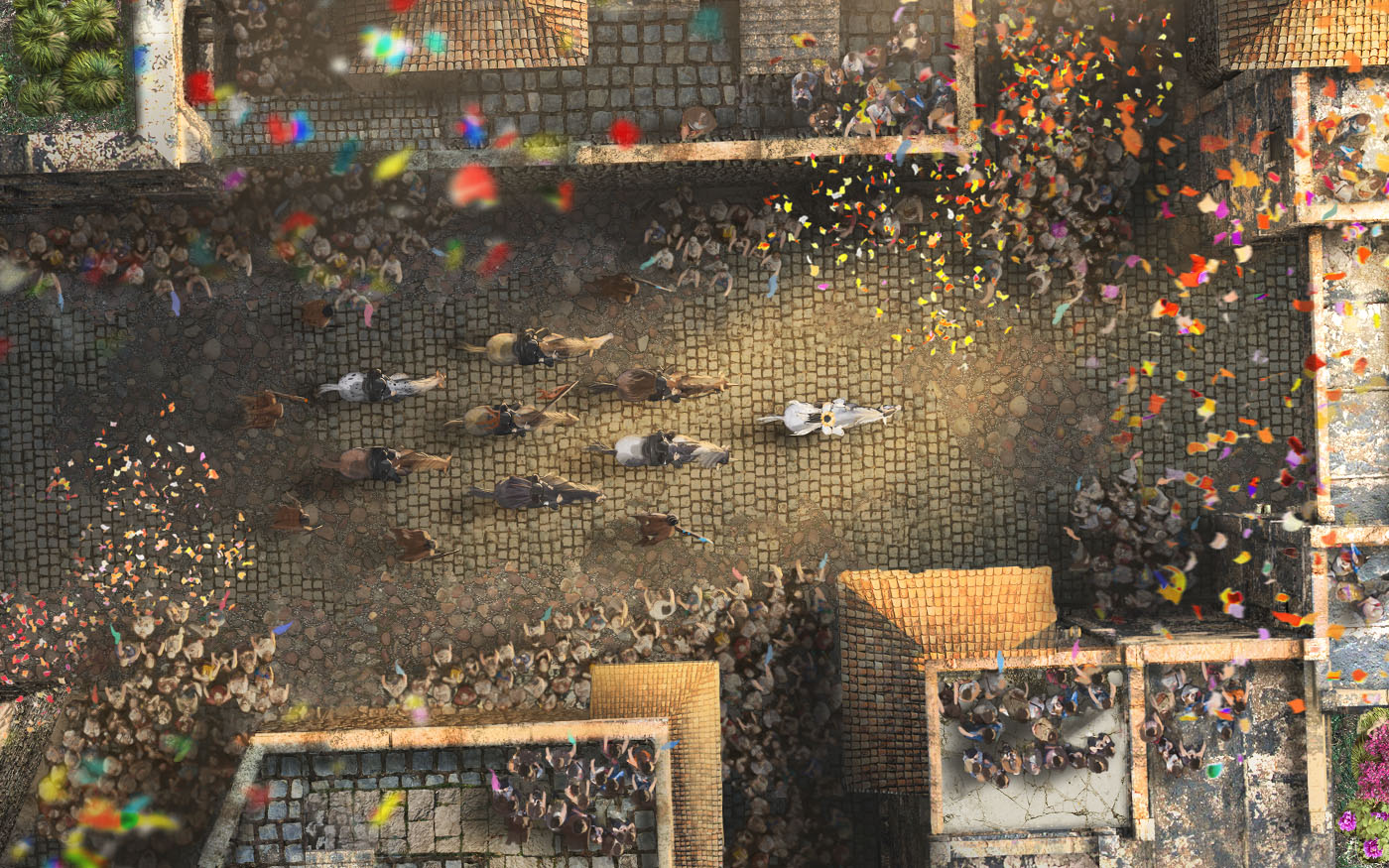
Elara is crowned the first queen of the newly founded State of Tetra. She declares every native on Kyos a Tetrian and establishes Metropolis as the State capital.
320-283 BW
Elara reigned over her newly founded country for almost 40 years, which are generally viewed as a prosperous time for Kyos, an introduction to its Golden Age. She established political, economic and social patterns which continued to exist long after she was gone. She stopped at nothing to cement Tetra’s integrity, and any and all attempts to threaten it were met with a merciless response, which led to a near devastation of several separatist regions. However, Tetra as a whole has no doubt benefited from her actions, as they strengthened its military and economy, and the quality of life has improved for its citizens.
283 BW
After the Narian occupation, Kyos adopted a hostile policy towards outsiders, and even when the memories of it started to wear off, Kyosians were too busy handling their internal affairs to care for anything else. Elara, too, was mostly focused on making the idea of Tetra work, and it was only around 290 BW when she started to build diplomatic relations with countries from other continents. In 283 BW, she left Tetra for her first and last time. She and her embassy were headed to Lacus, the second largest city on Ilyon and the capital of Adrion, its prominent country, but were never seen again after leaving one of small towns outside its gates.
This almost led to a war, but since Queen Bates never remarried and left no heirs or clear instructions on succession, some of pretenders to her throne used their influence to avoid setting against Adrion and focused their efforts on preventing chaos within Tetra. It’s unlikely that they were driven by peaceful tendencies; rather, they understood that a war would prevent them from fulfilling their ambitions, and there was no suitable military leader at the time to take advantage of the situation. In 289 BW, less than a year after Elara’s disappearance, she was presumed dead, and the High Council, established by the late Queen as the second most powerful authority in Tetra, elected Arches Long, one of its members, as her successor.
283 BW
283 to ≈150 BW
The period after Elara’s disappearance and until approximately 150 BW is known as the Golden Age of Kyos. During that time, Tetra was led by the Long dynasty, which produced a number of capable and efficient rulers.
The Golden Age was the time when the seeds planted by Elara bore fruit, and the Longs were good gardeners. It seemed as if nothing was impossible… Tetrians conquered the Garuda, and today we almost wish they weren’t so efficient in doing so, since their elegant solutions, which look more like a triumph of an imaginative mind than a desperate attempt at survival in a desert, supply Corrupted with fresh water to this day. — Hifu Solson, “A complete history of Kyos before, during and after War”, fourth edition, 322 AW
By 200 BW, Tetra became the primary military and economic power on Aya. Ironically, during their Golden Age Tetrians accepted thousands of refugees from Nari, who suffered from unending political turmoil throughout the third century before War.
≈150 to ≈50 BW
In 152 BW, Kivu Long, the youngest king of Tetra, died at the age of 17. According to the rules of succession established by Arches, Kivu’s uncle, Ortis Long, was the next pretender; however, since Ortis was unable to have children and was a weak-willed man (often later called “a thorn among the Longs”), he was persuaded by the High Council to abandon his claims to the throne, which effectively led to Tetra turning from a monarchy into an oligarchy. The Council then dealt with Kivu’s other remaining relatives (who all had little chance of succession to begin with) by offering them seats, and the Aegis, Syan, Tali, Danton, Artas, Soma and Long families started their rule over Tetrians, which lasted for century and a half.
≈150 to ≈50 BW
Around 100 BW
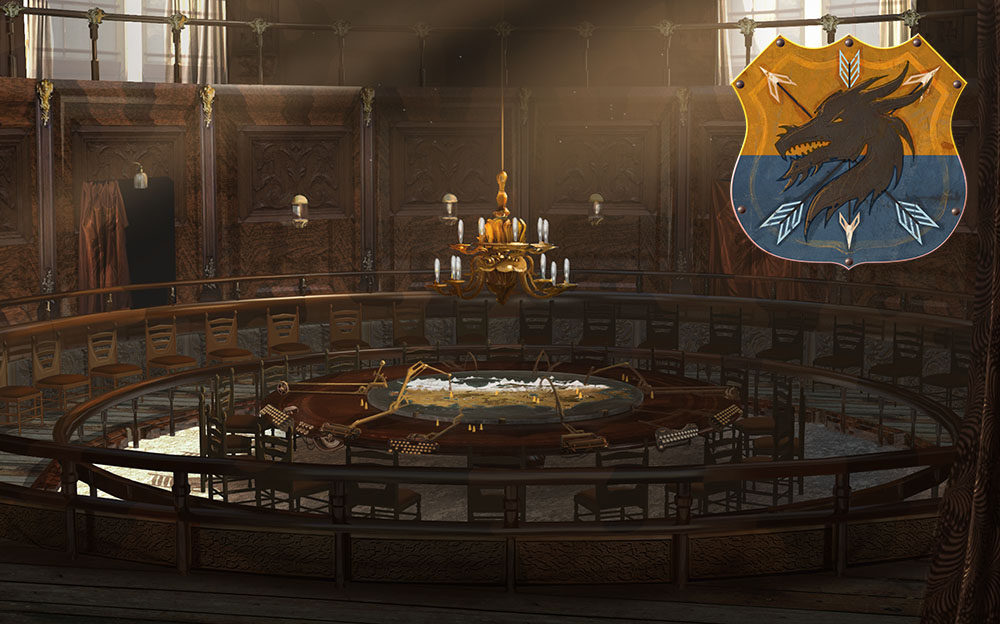
Since the High Council sat on Ivy street in Metropolis, the political setup at the time was often referred to as the Ivy Oligarchy. It was, in general, a continuation of the course laid out by Elara and sustained by the Longs; however, the rivalry between families, some of which started to call themselves “septs” to honor pre-Narian traditions, led to a poor judgement of risks during the heated competition, which ultimately brought Tetra to ruin.
It’s debatable whether the High Council’s three arrows originally symbolized its three presiding families or its supervision over the legislative, executive and judicial branches of power, but either way, in its final stretch they came to stand for something else — for its three parties, or wings. The rate at which Tetrian science had been moving forward was frightening to the Talis; they also considered this progression to be regulated insufficiently. They were the first wing, the conservatives, who were concentrating their efforts on trade and preservation. Their profound opponents were the Dantons and Aegises, two families which invested heavily in industrial and high-technology research — those were called the progressivists. The rest (except for the Longs, who usually took it upon themselves to balance things out) were the spiritualists, who believed in superiority of one’s inner potential over technology. As we now know, they proved themselves right in a horrifying way. — Hifu Solson, a series of public lectures on the history of Kyos, Artas University, 315 AW
26 BW
In what was first sincerely, and then ironically known as “the Good Year”, all three wings make announcements concerning their major initiatives. The Artas and Soma families launch the Northern Research Center (NRC), the mission of which is declared as “the discovery and cultivation of psychic abilities”. They have no shortage of research material; in fact, Tetrians, sympathetic to their cause (or attracted by a generous compensation), stand in lines to willingly participate. The Talis publish their plans for Virtue, a new city and a special trade zone on Kyos partially autonomous from the High Council. Ana Danton, the head of the Danton family, reveals having been a test subject for her own Danton corporation, and becomes known as the first voluntary synthet after her famous apple-crushing demonstration. Finally, the Aegis sept keeps up with the rest by presenting Guardians — the first in a line of battle robots coordinated by a programmable AI, which will become known as Bygones in the AW era.
New races:
26 BW
1 BW
An event known as the Kindling, which resulted in heavy casualties among personnel and research subjects, takes place in the NRC. The incident was contained almost immediately, but no reports of it remain; two main theories about what had happened are: the first manifest of a Demon by an esper, or a riot.
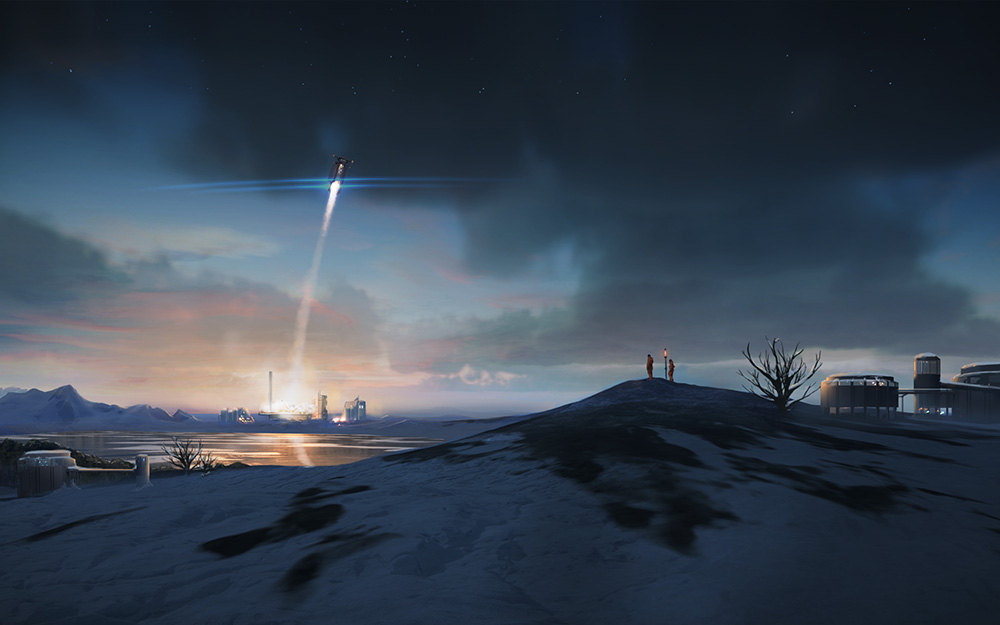
A week later, the last module of the Mover of Planets is successfully launched from a platform near Galvana Science City.


Year 0
There is nothing to fear. — High Chancellor Danton, a speech on the Conflagration, Metropolis, Year 0
After the Kindling, the High Council promised to shut down the NRC as soon as its subjects undergo rehabilitation. Many believe that its personnel continued their research instead; whatever the case, three month later the facility was almost completely destroyed during the Conflagration. In just one day, hundreds of Demons were manifested by espers, who neither wanted nor, in most cases, could control what they gave birth to. The ensuing conflict of espers, Demons and Tetrians became known as War, possibly the shortest one in the history of Kyos. It was a one-sided battle that Kyosians lost; rather than having to deal with an organized attack from the outside, Tetrian military had to fight a horde of rampaging creatures, even one of which posed a significant threat, pouring from within. In less than a year, Kyos lost two-thirds of its population and all of its major cities and outposts.
New races:


1 AW
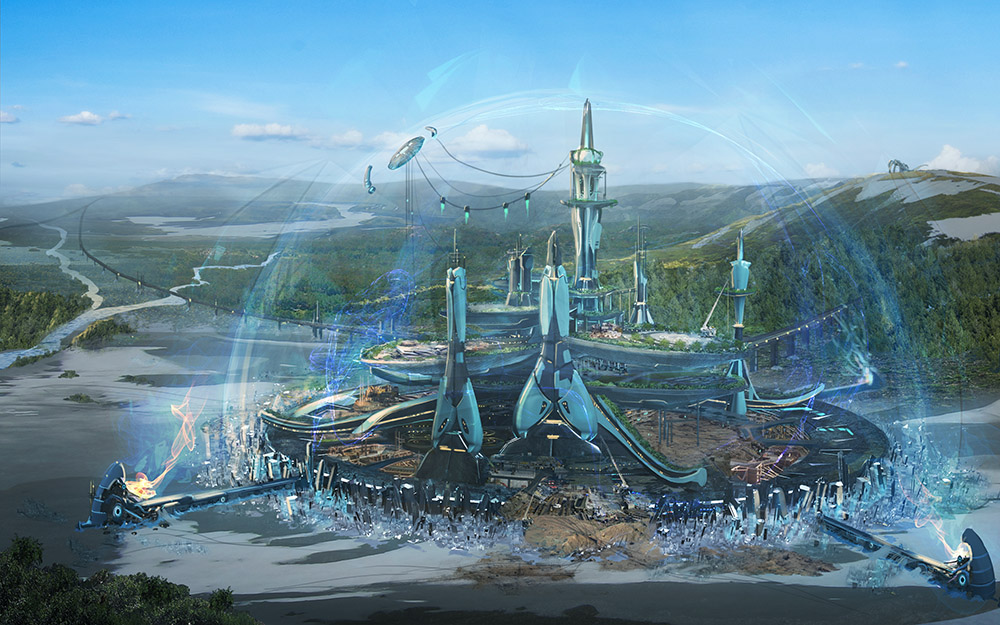
A year had passed since the Conflagration, and what was left of organized Tetrian resistance fought in the south-eastern part of Kyos, the farthest one from the NRC. There, a group of scientists led by Norma Tali, who had been working on an evacuation plan, accidentally discovered a source of energy which, when harnessed in a specific way, was capable of producing a defensive field impassible to Demons. They called it Axis, and within a month the Talis mounted a defensive dome around one of their outposts near the Swamps of Kes. It became the first dome city, or DC, of the after-War Kyos.
2 AW
The immediate solution was to launch more Axis domes; however, it was soon discovered that their deployment and sustainment effectively eliminated single (or “objective”) reality outside. The scale of the effect was proportionate to the amount of consumed energy, so it became clear that if Kyosians intend to create other domes, they should do so simultaneously; otherwise, any further coordinated effort would be impossible.
Several Axis-rich locations, which were inter-connected by the remaining railways (Demons’ inexplicable phobia of trains was already known and exploited at the time), were chosen for the delivery of Axis generators and randomly distributed in what was later called Hades’ Lottery. Over 20 groups, some of which were led by families previously presiding in the High Council, left for their destinations; however, the Somas, who drew the shortest straw and had to position themselves in the western part of High Pass, launched their generators before the coordinated time. This caused panic among other groups, and the few lucky ones that had already reached their designated points followed suit, effectively abandoning everyone else who was still on their way. As a result, only six more domes were created; the objective reality outside all seven domes (or simply Outside from then on) failed, and the event became known as the Collapse.
2 AW
12 AW
Very soon Kyosians learned that Demons aren’t the only threat to their existence on the continent. Several groups which were unable to reach their destination after Hades’ Lottery still found themselves in or near Axis-rich areas during the Collapse. Their attempts to launch Axis generators after the event failed (just as any that came after), but it was quickly discovered that the areas still sustained objective reality, so those groups founded small settlements in hopes that sooner or later, help will come. Almost ten years later, some of those camps managed to establish communications with DCs, which is where the official reports about them come from; unfortunately, almost all were soon wiped out during The Scourge, a mass exodus of Corrupted from all regions of Kyos to the ruins of Flavia, a once proud bastion of Tetra in the Garuda Desert.
These seemingly mindless creatures, which are suspected to have evolved from humans who were outside the objective reality when the Collapse happened, were known to Kyosians before, but in ten years they appeared to have obtained leadership under more advanced of their kind, such as Banshees, Liches and Deaths, who were able (perhaps due to their origin) to move between subjective realities. As a result, Corrupted organized themselves in groups which grew larger by the day; and since they were unaffected by Axis, Kyosians, worn out by War, had little to counter them with. It was pure luck that none of the domes stood between the largest mobs and their destination.
New race:
Around 50 AW
We discovered that, for some strange reason, we were never alone in the old trains; makes one think about whether Axis even existed before War. And we traveled safely, even if getting tickets was hard. “Runs are full,” they always said; you had to buy one weeks in advance. I remember how the Talis discovered an Axis-rich area while planting their garden; with little effort it could sustain objective reality and provide some protection, which turned out to be bad news for the espers, as they were quickly exiled out of the city and into this new settlement. Good news for the grove, though, as many more like it popped out later, but only a few lasted long enough to get themselves an esper or two to shoo especially pesky Demons away. Inside the domes, we moved on foot, but there were news from Mira about some new thing they found which could bring cars back. Hades, I’m one of the few who at least remembers how they look; you know, someone once told me that Tetra will be gone forever once its last citizen dies, and I feel like this time is coming soon. — Nod Artas, Memoirs of a War Correspondent, 57 AW
Around 50 AW
52 AW
Several attempts at portable Axis drives are unearthed on the black markets of Mira DC; they are confiscated by the authorities and reverse-engineered for industrial use. Since Axis is more readily available than most other energy sources, their appearance allows for the restoration of civilian public and private transport and military vehicles, with the latter becoming known as machines.
≈70 to ≈120 AW
The end of the first post-War century and the beginning of the second are known as the “Age of Restoration”, the reason for this name being (primarily) the recovery of science and industry to Year 0 standards. Kyosians were still very limited in their attempts to rediscover areas Outside, but, just like combustion engine in its time, Axis drives made a major impact on the overall progress. And since the Collapse made large-scale armed conflicts nigh impossible, after a while septs have managed to agree on all vital areas of interaction between the domes: transportation (intra-dome travel infrastructure was well-established and operated smoothly), communication (continent-wide Mesh network was restored to working condition), trade and finance (common currency called lot and a set of rules regulating trade between DCs and major surviving settlements were introduced around 100 AW).
≈70 to ≈120 AW
132 AW
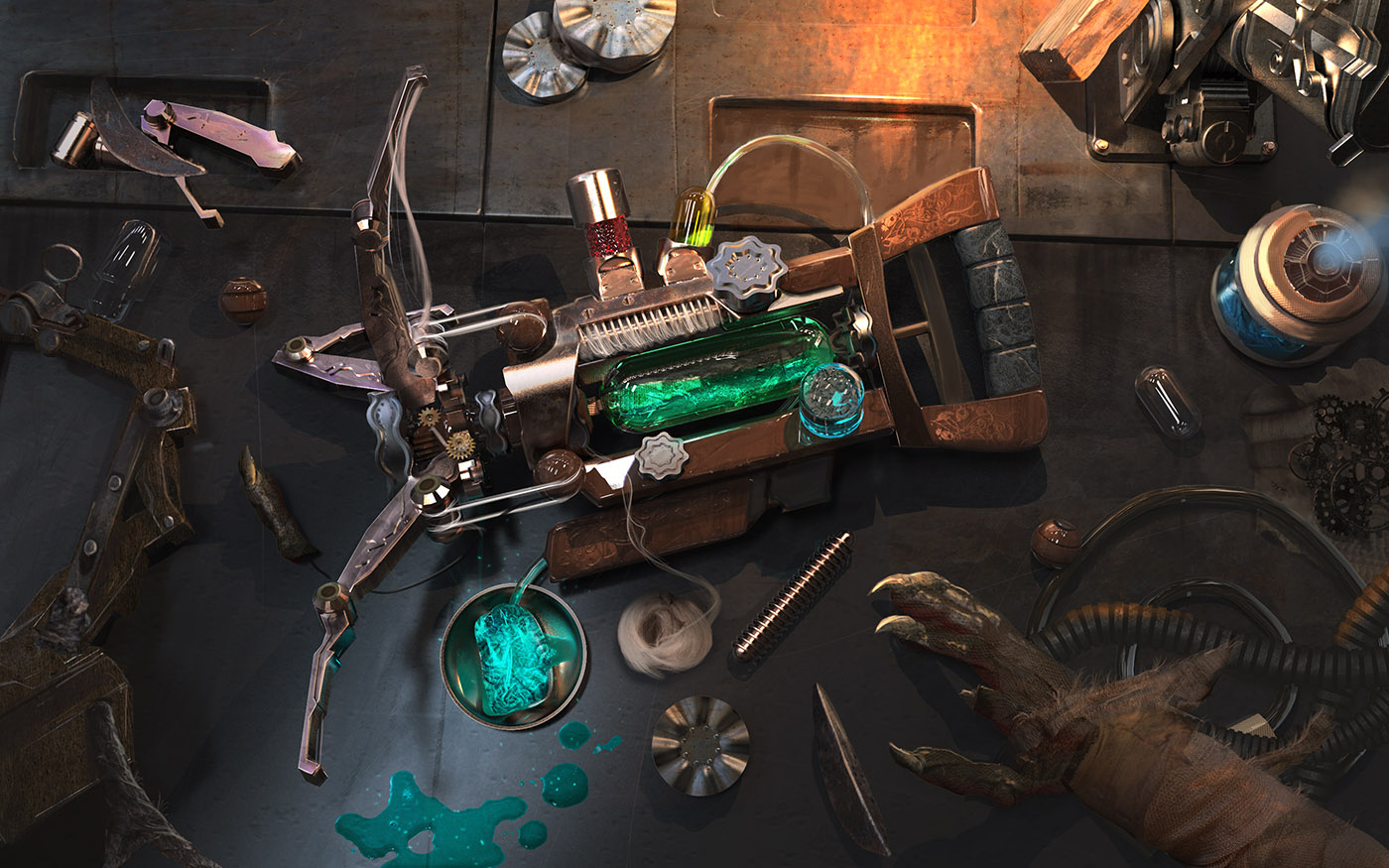
Aldi Goffel, an Artasian scientist researching Corrupted, invents the Flux — a device which allows its carrier to move between subjective realities outside the Axis domes.

148 AW
Representatives of every major family gather in Tali DC to finalize a set of rules which regulate the relations between the cities in an exhaustive number of scenarios. As a result of this discussion, a treaty known as Logan’s Law is signed by all of them.
Around 150 AW
The Flux opened the door to Kyos slightly — after all, an explorer (or a hunter, as many of them called themselves) can only go so far on their own. The larger part of the continent was accurately mapped for the first time, and many pre-War locations which Kyosians would claim during the Age of Expansion two centuries later were rediscovered. Machines had undergone a significant transformation: whereas previously every attempt was made to make them as versatile as possible, the Flux allowed for their specialization, which resulted in a more diverse lineup. But most importantly, many more Kyosians started to volunteer to become either members of private security forces (PSFs) or domes corps, which were often tasked with Outside missions, or independent hunters, which, according to an article from Logan’s Law, “do not always act in everyone’s interests, but ultimately do more good than harm as a whole”.
Around 150 AW
207 AW
Androids became public knowledge in 203 AW; it was speculated that they had appeared on Ilyon several years earlier, but there’s no evidence to establish the exact year. Kyos kept very limited trade relations with Ilyon and the states to the north, but androids were never officially imported; Ilyon banned them soon after the start of mass production. However, in 205 AW smugglers from Mira once again spearheaded the progress on Kyos by managing to obtain several units, which were then confiscated and reverse-engineered as usual. The technology required to manufacture them followed soon after, and the first commercial model, nicknamed Ingo, went into production on Kyos in 207 AW.
New race:

212 AW
In the third century AW according to Kyosian calendar, Ilyon was the most advanced civilization on Aya. Its many countries were recently united under the banner of Adrion, and few questioned its financial, scientific and military superiority. Especially not Kyos, which, according to a mocking remark by one of Adrionian diplomats, was by then an observer on a global stage rather than a participant.
If Kyosians, who never really learned to love outsiders despite having suffered their own demise from within, heard his comment, they’d probably “observe” the Calm with even less compassion than they did. In just an hour, every living thing completely disappeared from Ilyon, leaving no explanation as to what happened behind.
Miras, Talis and other septs would later send several joint expeditions to Ilyon; they would all fail at their main goal, but the scientists from the first of them, after having walked the silent streets of Adrionian cities, gave the Calm its name.
235 AW
Helmsmen company, which would later grow into Helmsmen group, the largest weapons manufacturer on Kyos, is established in Ares DC by a number of shareholders, which included representatives of the Ares and Artas septs.
238 AW
Arthur Soma, the younger brother of his sept’s elder at the time, returns from his journey to The Void with esper Elara Quinn to claim that he has evidence of Ilyon’s agents having financed and directed the research at the NRC. Despite this evidence never being shown to the public, the word of it sparks civil unrest in the city; over a thousand of androids, the technology for which came from Ilyon, get dragged out into the streets and are literally torn apart. As the fires spread, the Somians move on to destroying machines and burning their Axis drives; the riots are so violent that hundreds of citizens die in local conflicts.
The Hysteria, as the Somians themselves would later call it, lasts for three months. After the agitation quiets down, in part quelled by force and in part out of exhaustion, the Somas take measures to ensure their own safety and the safety of their people: they radically reduce the number of androids allowed in the city, limit the import of Axis drives and access to Mesh, establish communes for pure Kyosians and close almost half of synthetics clinics.
238 AW
≈260 AW
There were accounts of sightings of demonspawn long before 260 AW; some even go so far as to suggest they appeared during Year 0 events, but the more credible historians think it unlikely. However, it was only in 260 AW that a small settlement of these creatures was discovered by a group of fluxed hunters from Nova in an Axis-rich area next to one of the Javelin river sources (which, ironically, was not far from the place where The March of the Damned would later end — see below). The intentions of both parties were peaceful, and contact was soon established.
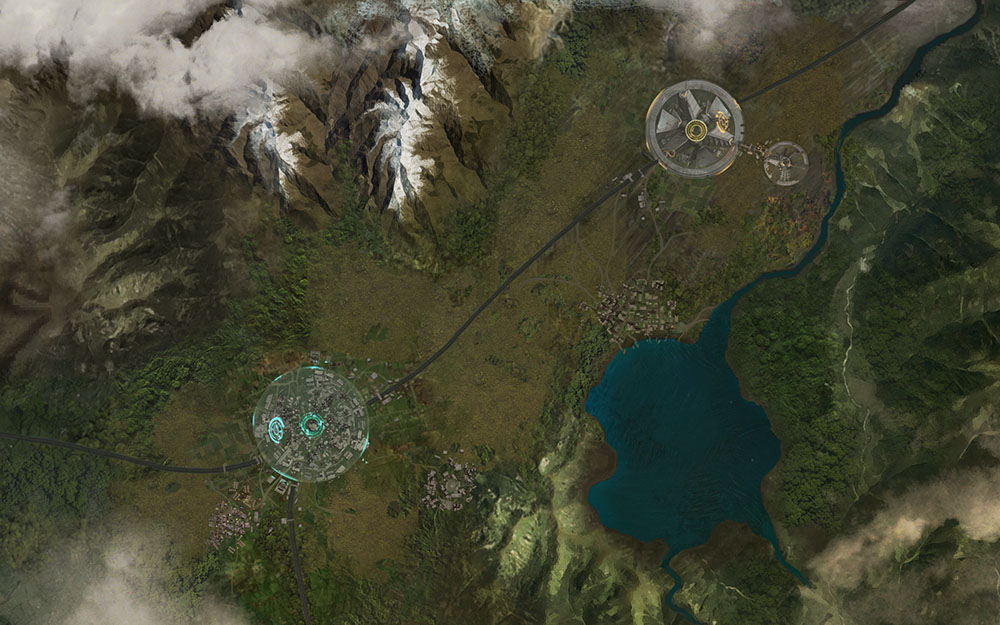
After several months of communication with the demonspawn and other septs, the Novas produced a relocation plan which was approved by all parties involved. The demonspawn were moved to a temporary camp; based on the information they provided, a campaign was launched to find and move other groups. They were all to stay in the camp until the Pions finish construction of a second dome, adjunct to their existing one (and, since it would otherwise be impossible, powered by the same Axis generators) — a project which was financed by a joint effort of several septs and large companies, including the rapidly growing Helmsmen. This was hardly a charitable venture — each investor pursued their own agenda — but to demonspawn it was a promised land, so they cared little about the underlying motives, and more and more of them flocked to the temporary settlement.
New race:
295-312 AW
The demonspawn were provided with several flux field generator (ff-generator) prototypes; these devices, which were being developed by Mirians at the time, allowed for a bubble of a single subjective (or “unified”) reality to be produced anywhere Outside. Just like Axis-rich areas, these bubbles didn’t provide any protection from Demons, which is why the temporary camp was set in the western end of Low Pass not far from Nova.
The Pions started their construction in 295 AW; the second dome took nearly two decades to complete, during which time the population of the camp grew to several thousand demonspawn.
295-312 AW
312-314 AW
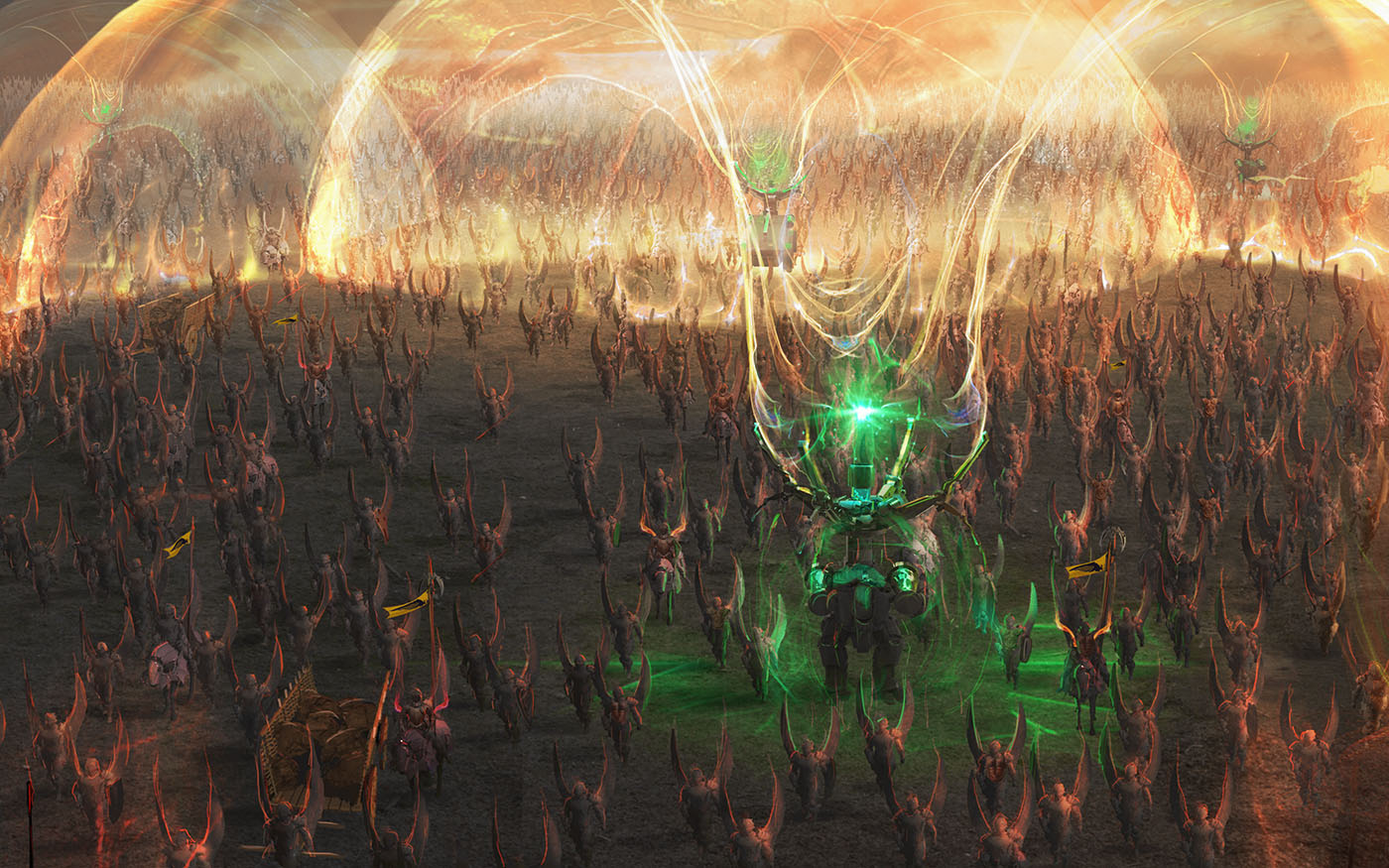
In 312 AW, Chad Pion, the elder of his sept at the time, declared that he doesn’t intend to cede the second dome to the demonspawn, motivating it by various social and financial issues the dome faced at the time (caused in particular by the need to reduce the output of the Axis generators dedicated to the main dome). Instead, he suggested a renovation of The Old Metropolis, which could be provided with a unified subjective reality by an array of by then already well-developed flux field generators. Chad offered the Pions’ full financial support, but Daniel, a demonspawn representative, left the negotiations outraged. He returned to camp and rallied his people to reclaim what they believed was rightfully theirs. A crusade was started, which soon became known as The March of the Damned.

The demonspawn mounted their ff-generators on machines, which allowed them to move as an army rather than in small groups. Since Nova, which stood between them and Pion and would not tolerate the offense, posed too much of a threat, they decided to circumvent Low Pass and attack from the east, gathering additional forces on the way. By the time they reached the mountains surrounding the Javelin river, it became clear that their path lies through Mira and Tali, so the septs of both domes abandoned the talks that were held by the Novas in the hope of reaching a peaceful solution and mounted a counter-offensive, using the same strategy as the demonspawn to stay unified. As a result, Daniel’s army was pushed back and ultimately defeated in the Battle at the foot of Aegis in 314 AW, the largest conflict Outside on Kyos since Year 0, and the remaining demonspawn were scattered all over Eastern Plains.

300-400 AW
The fourth century AW became known as the Age of Expansion. Flux fields allowed Kyosians to send large groups to previously unexplored locations, even if those weren’t rich with Axis; despite not being able to establish domes there, the new generators had at least sustained unified reality. Many pre-War structures, such as Stargazer and Aegis Castle, were refitted for military purposes, while several others, like Parker Dam that was laid down just before War, were finally completed. Other well-known locations were rediscovered (including Northern Star, to which Arthur Soma took a one-way trip in 330 AW), and many entirely new points of interest were charted. The map of Kyos started to take its current form.
Unfortunately, some of these expeditions led to local conflicts; since Kyosians were no longer bound as much by the frailty of their carefully constructed habitats, they began settling disagreements by fighting rather than negotiating. Kate Wars, which emerged from a dispute between Kate Artas and the Talis about the ownership of the artifacts that a party of the latter found in Artas Estate, is perhaps the most notable example of such conflict, as it ended in the destruction of the Tali-Artas railway. To be fair, this result did cool Kyosian heads off a bit.
416 AW
The last expedition to Ilyon was sent by the Talis in 322 AW, and it found no signs of sentient life. However, in less than a hundred years Mirians were shocked to discover rather talkative penguins, who claimed to have come from the continent to the south, literally at their own doorstep. Having managed to miraculously survive…
Having managed to overcome seemingly insurmountable dangers, my brave brethren landed on the inhospitable shores of Kyos. Naturally, their majestic bearing struck terror in its denizens. So the travelers explained: “Do not be afraid, we come in peace. We come as pilgrims.” Unfortunately, mainlanders aren’t very bright and it took them a while to figure out what’s what, but their prisons aren’t so bad. — Malé, a penguin explorer and adventurer extraordinaire, 523 AW
New race:
416 AW
Around 450 AW
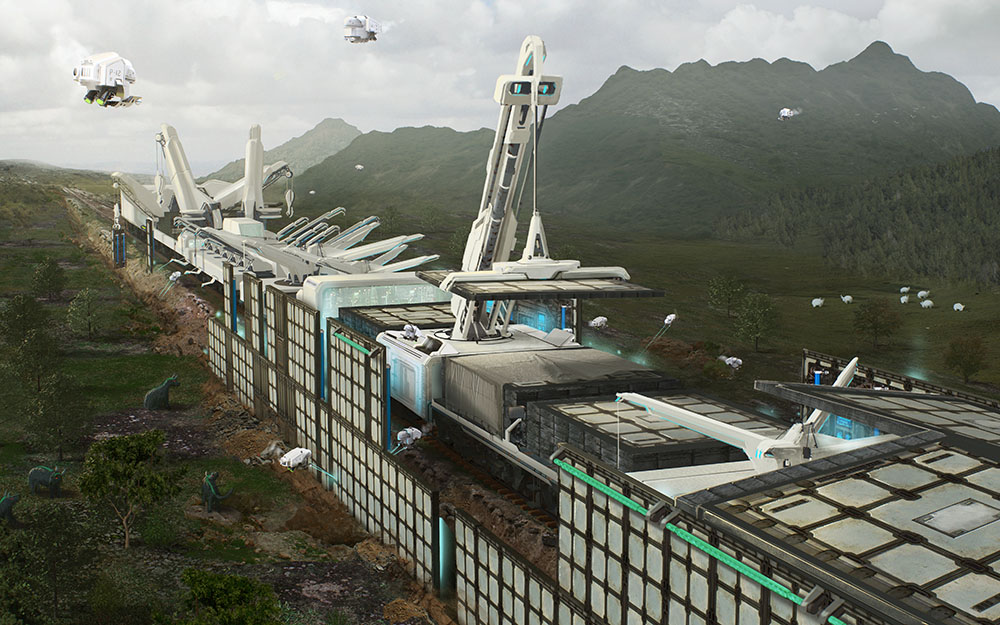
We felt that Kyos was well-established: it learned to defend itself, had a common currency, and the relations between the domes were open and regulated. That feeling of wonder our predecessors explored Kyos with had faded somewhat, but still remained strong. Sure, our own past wasn’t that much of a mystery anymore, but the marvels kept coming: dark marbles which appeared out of nowhere, gatherings of unallocated androids at Terminus, pinz on pilgrimages. That was also the time some started saying we should leave, get back to the evacuation plan forgotten so long ago, but who would listen to them? The Talis had just completed their War tunnel; a miracle constructed by a train which had been outfitted with hundreds of cranes, large and small. Who’d want to leave something like that behind? Not Ilyonians, ha-ha! — Madi Soul, VP of AmpArms, in her interview to Nova Stand, 505 AW
≈470-480 AW
During the first half of the fifth century AW, Mira was plagued by inner struggles between the members of its sept and a series of scandals surrounding the TFX corporation. The situation changed when Jacob Mira, the younger son of late Stafford Mira, came to power in 469 AW. The first ten years of his leadership are known as the city’s Second Renaissance: Mira almost tripled its export of goods, restored then somewhat neglected Mira Platform to full power, thus eliminating the rising competition in other DCs and even (imagine that!) settlements, and imposed strict regulations on its inner markets, which helped drastically reduce the number of accidents caused by illegal mods. Jacob is also known for opening and supporting a number of pilgrimage hotels and bars, which has made him a popular figure among pinz.
≈470-480 AW
489 AW
The events of Red Crown take place.
502 AW
Veins of felandrite, a combustive rock, are discovered to the south of High Pass. Several corporations make a joint effort to extract felandrite at a newly established mining site called Gambler’s Fallacy, but run into a number of difficulties which ultimately force them to abandon the project.
At the same time in Nova DC, the events of Minotaur take place.
502 AW
518 AW
Vyne Lockheart, an ambitious manager, gets a job at Helmsmen’s new ERD (Experimental Research Division) in Ares DC.

523 AW
Soma DC is destroyed; Daal, a Demon from The Void, ravages its last train to Nova.
A new age comes with The Fall of Kyos.