Mira Platform
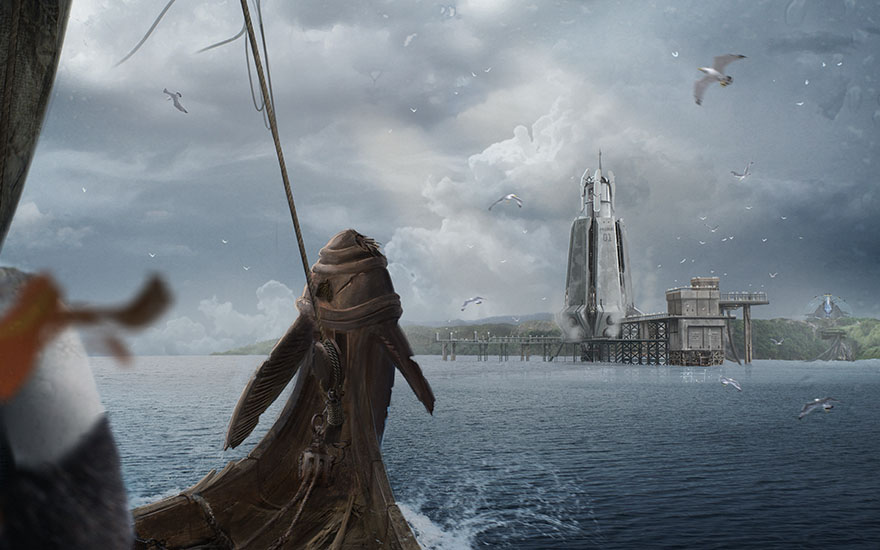
Before the Calm, the Mira Platform, which stood in an Axis area several kiloleagues away from the dome, was used as a beacon of sorts: the absence of objective reality surrounds Kyos, and Ilyonian sailors used to prepare themselves for going subjective upon seeing its light. After all interactions with Ilyon had ceased, the platform only served its primary purpose, which was housing most of the servers for Meshnet. However, its functions as a lighthouse were restored after pinz first came from the southern continent in 416 AW, and Mirians started paying more attention to it in general as competing data centers began to emerge in other domes.
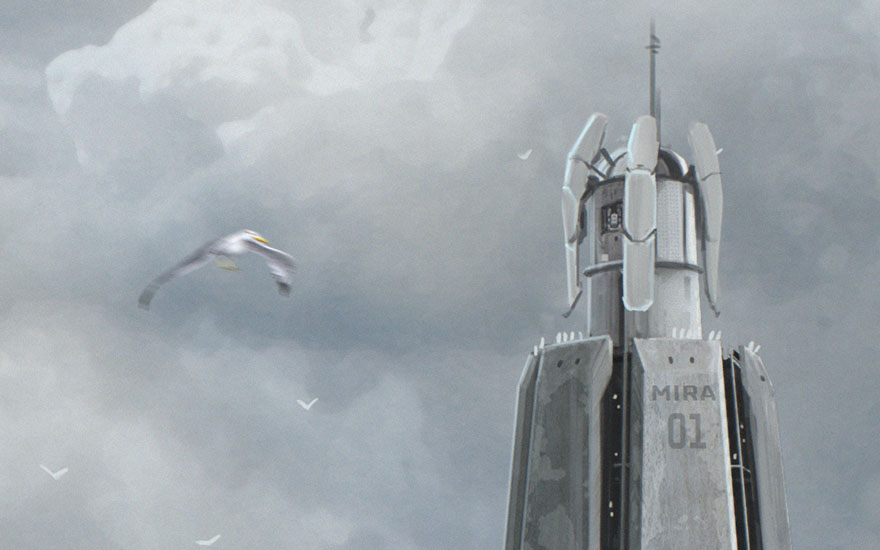
Mira-01: the Miras originally intended to build several of these platforms; they didn’t, but the number stuck.
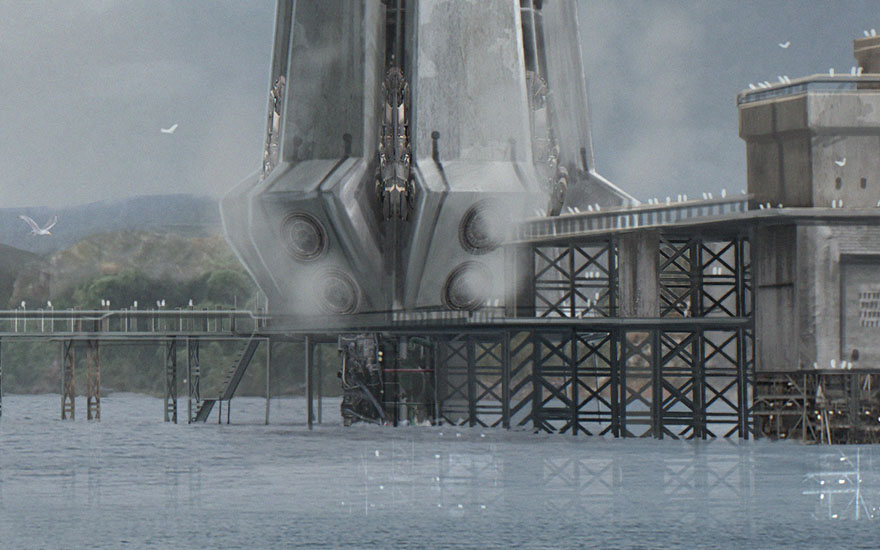
Under water: the platform actually extends tens of leagues below the water; there’s a train line to Mira, and the servers are stored in submerged compartments for better cooling.
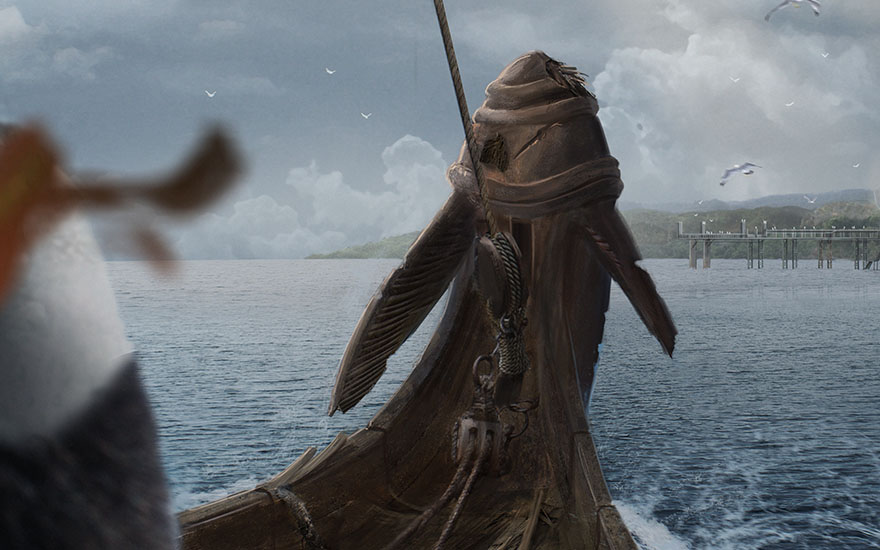
Pilgrims: incoming pinz! How big is your napa?
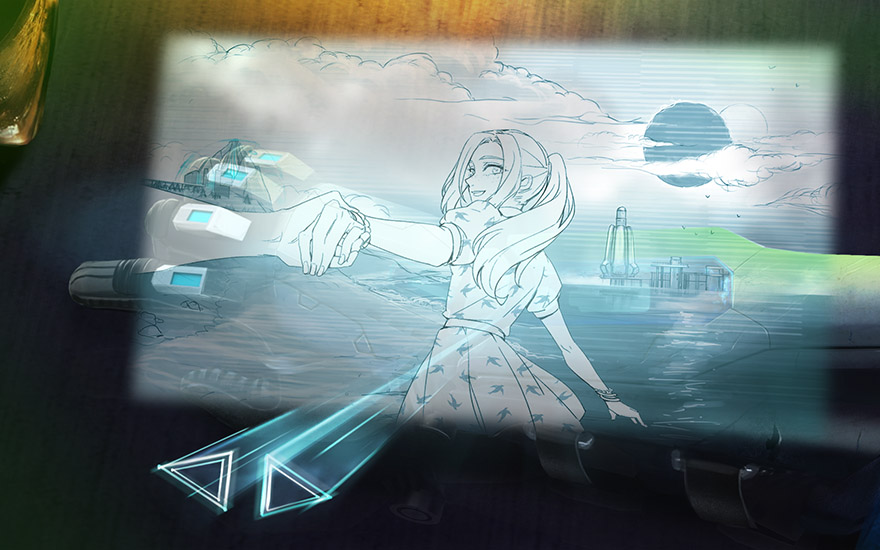
In Minotaur: right in the feels!
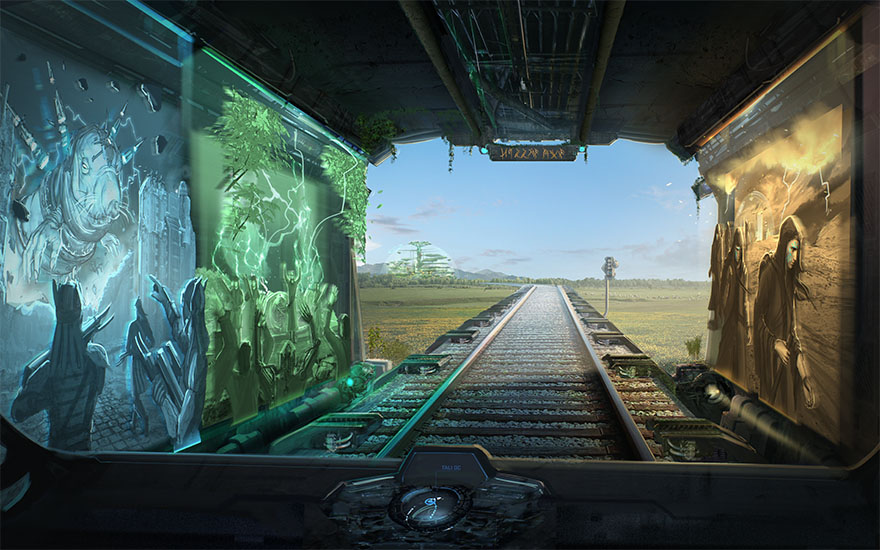
War
Not a single flux field was used when building the War. This tunnel, which serves as a monument to arguably the most important period in Kyosian history, is decorated with holo panels on both sides; trains to and from Nova slow down as they pass, allowing their passengers to observe the recreation of key episodes from Year 0 and 1 AW. The structure is unique because it was made in a subreality — to accomplish this, Talians used a specially outfitted train. Tens of manipulators were working as it moved, and with the assistance of several Primes and their remotely controlled drones the tunnel was (allegedly) completed in a single pass. And even if it did take more, the monument is still an engineering marvel.
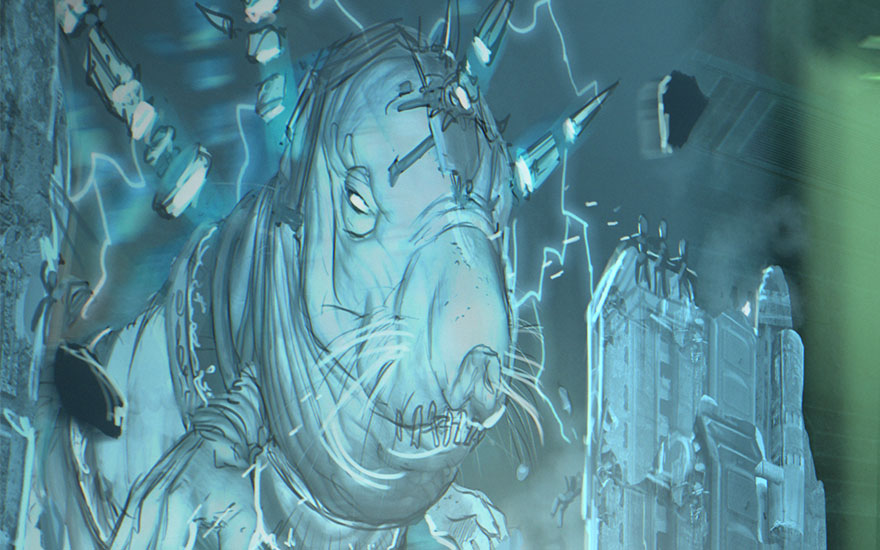
Holos: this one shows the attack of Calderra on the city of Flavia, which was one of the last large cities to fall after it became isolated from retreating Tetrian forces during War.
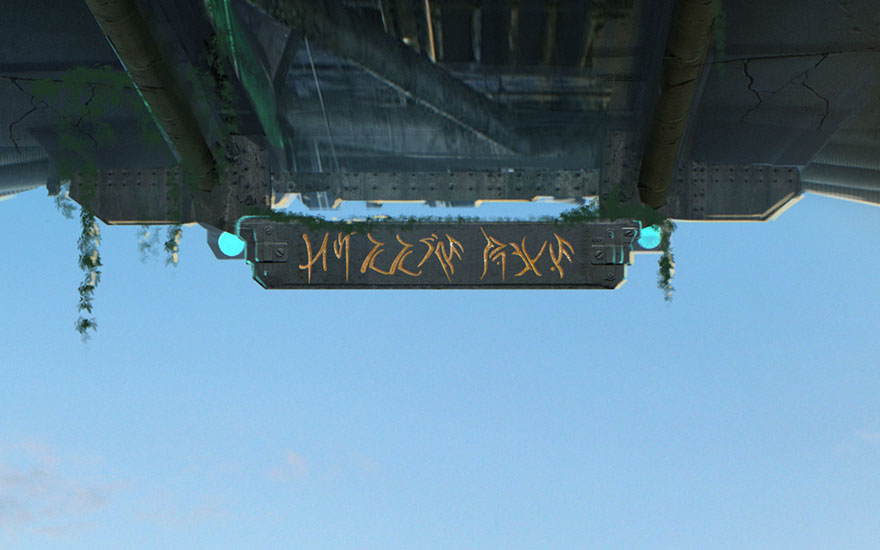
Fear the Fallen: a farewell — and a warning — that was common on Kyos in the first few decades after War.
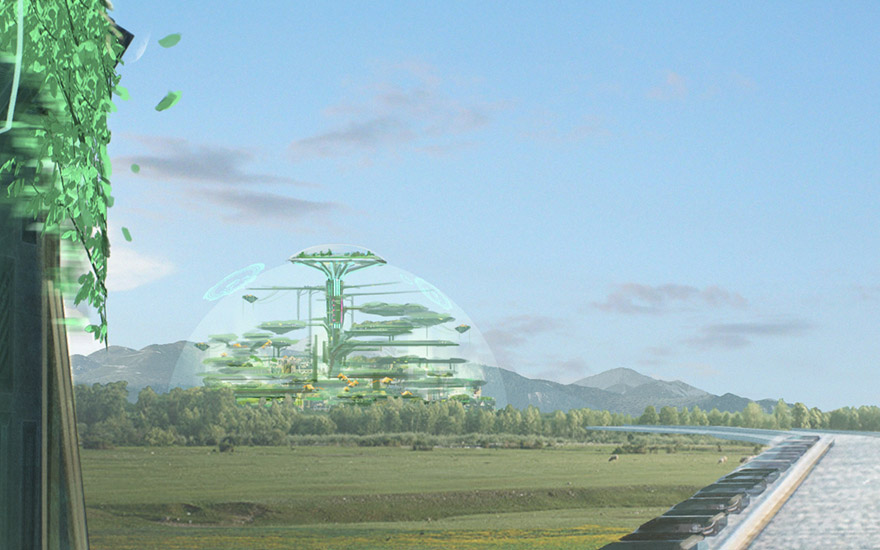
Welcome to Tali! Not only the city itself, but the woods around it as well were created by the Tali sept, hence their name.
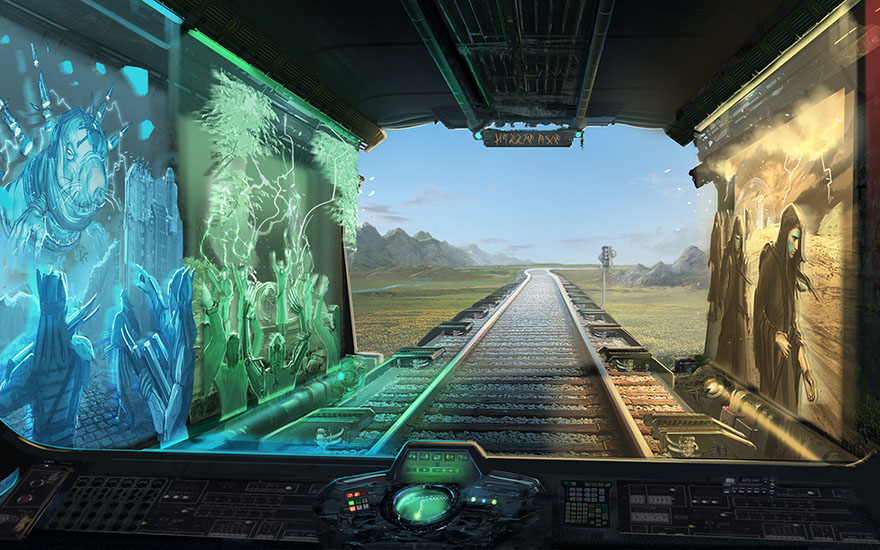
In Minotaur, since Fifteen is traveling away from Tali, her train exits on the Nova side of the tunnel; in the game, you can even make out Aegis Castle with its ropeways in the distance!
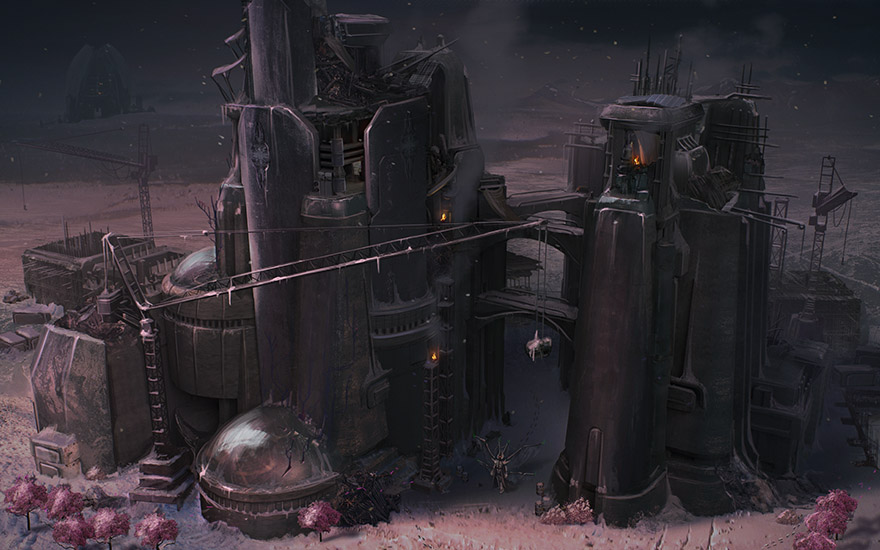
Cathedral of Grace
Unlike many other post-War structures, the ensemble of The Cathedral of Grace and The Library was built entirely from the ground up during the Age of Expansion. And despite being called an “ensemble”, the two buildings are in fact almost a kiloleague apart. It was still surprising, though, that when in 412 AW Corrupted started relentlessly attacking the construction site of The Cathedral, they paid The Library no mind. “A result of Syl’s anger,” Talian priestesses used to joke. After all, The Cathedral wasn’t dedicated to The Elder Goddess, but instead to a rather broad concept of “tolerance and mercy” — an attempt of the Somas to build a monument to their views on the co-existence of races of Kyos. The construction was “temporarily halted”, but after the events of Sarin 12 it looks like someone else will have to pick it up.
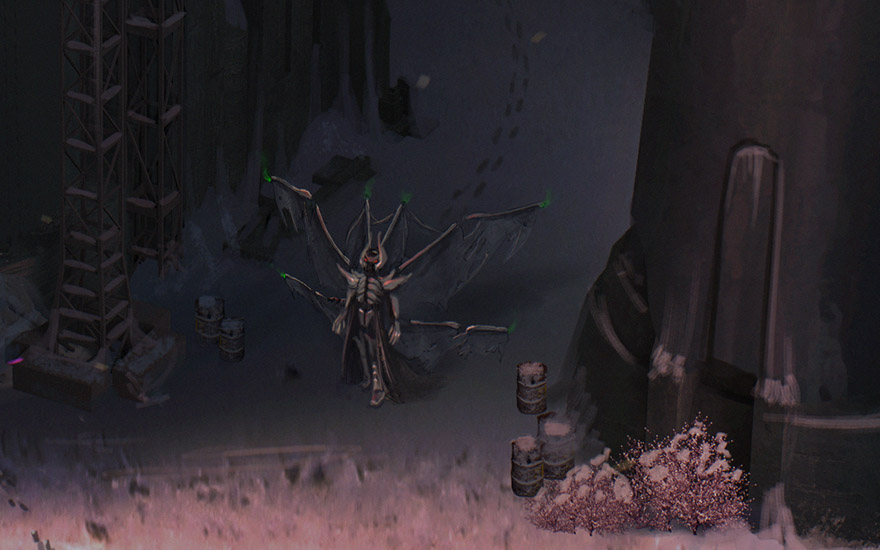
Death: run!
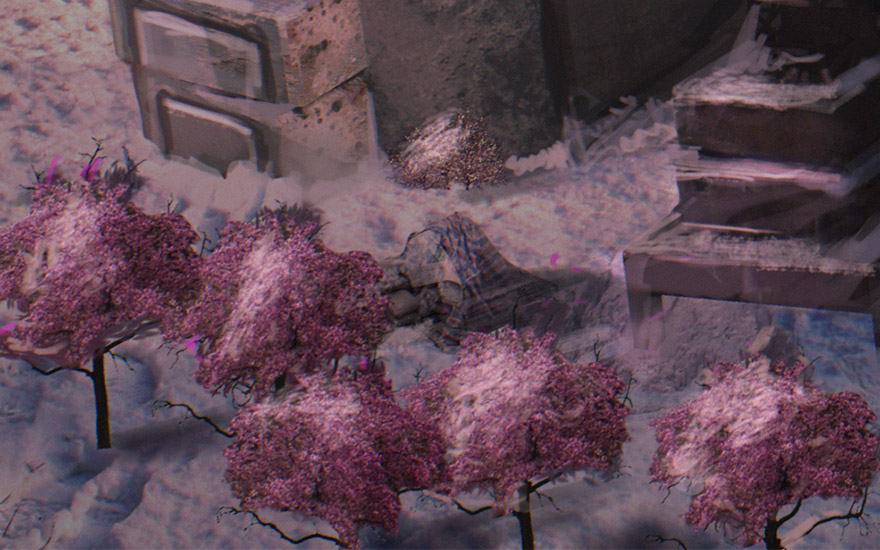
Cherry trees: in 52 BW, one of the Somas married a bank clerk from a small town which used to stand where The Cathedral is now, and cherry trees were planted there as a gift from the sept. Neither the trees nor the town survived War, but the Talis preserved the seeds and presented them to the Somas on occasion. The seeds were planted again when the construction started, but (ungrateful) Somian engineers often commented on how Talian ears are going to grow on the sprouting trees.
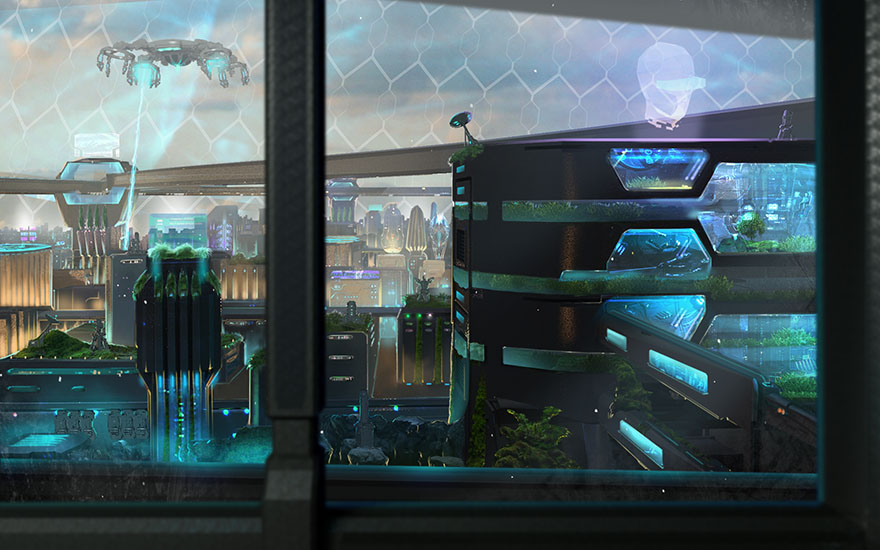
Minotaur and Red Crown: some important events of the former and a substantial part of the latter take place in Mira!
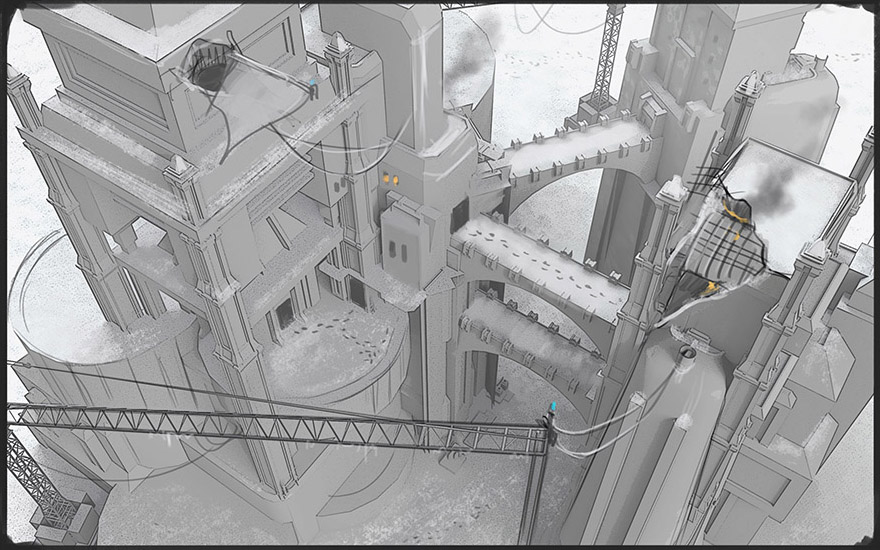
Prototyping: most locations on Kyos were first modelled in 3D with player movement in mind.
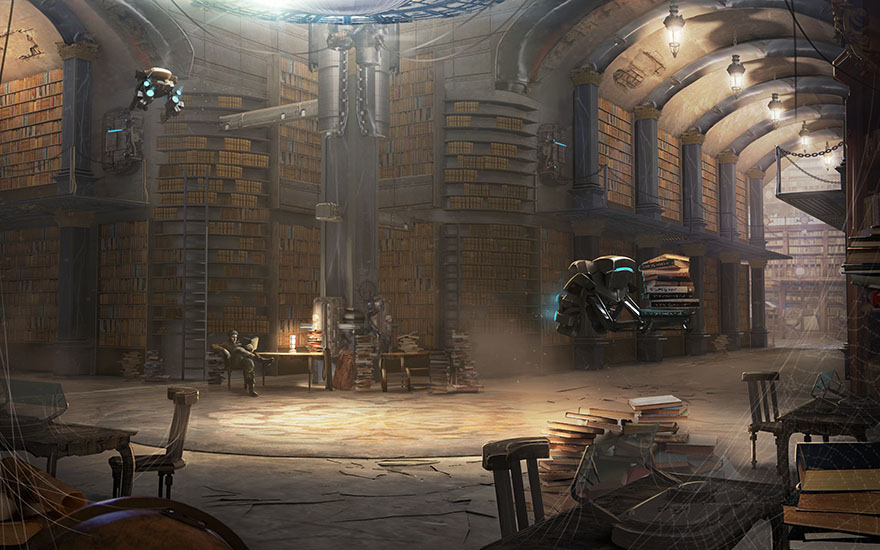
The Library
Officially a part of The Cathedral of Grace, The Library was constructed by the Somas, who always had a soft spot for everything pre-War, especially if it contained any trace of knowledge. Over the first four AW centuries, the sept had amassed an impressive collection of literature, and a large vault for it was built near The Cathedral. Of course, all its books, magazines and papers had been digitized, so The Library was more of a monument and an extravagant destination than a fully functional facility, but ironically, even its frailest scrolls outlasted the Somas.
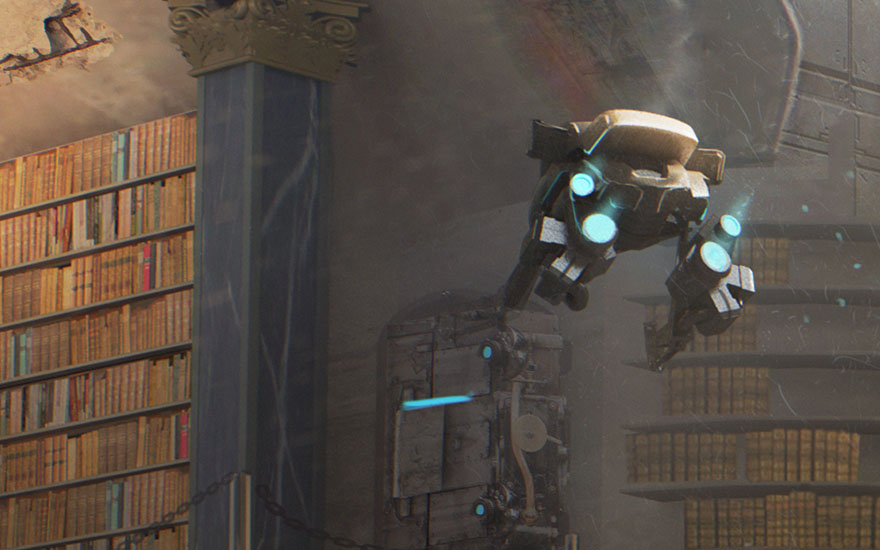
BKv2s: your personal librarian, a legendary model; just tell it what you need and this robot will happily ask you to repeat it. Arthur Hopton has one of those in his personal library (of course he does).
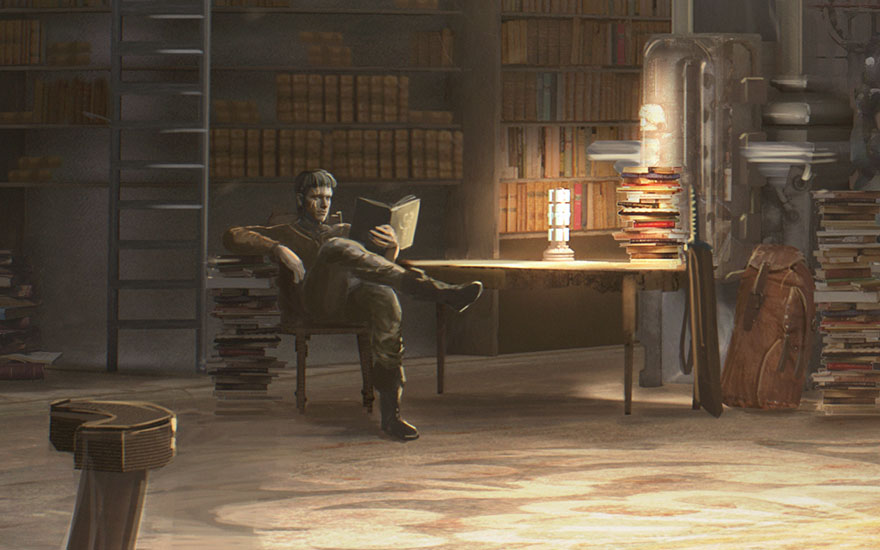
Visitors: considering it was the Somas who built The Library, it’s no wonder you can usually find an esper inside.
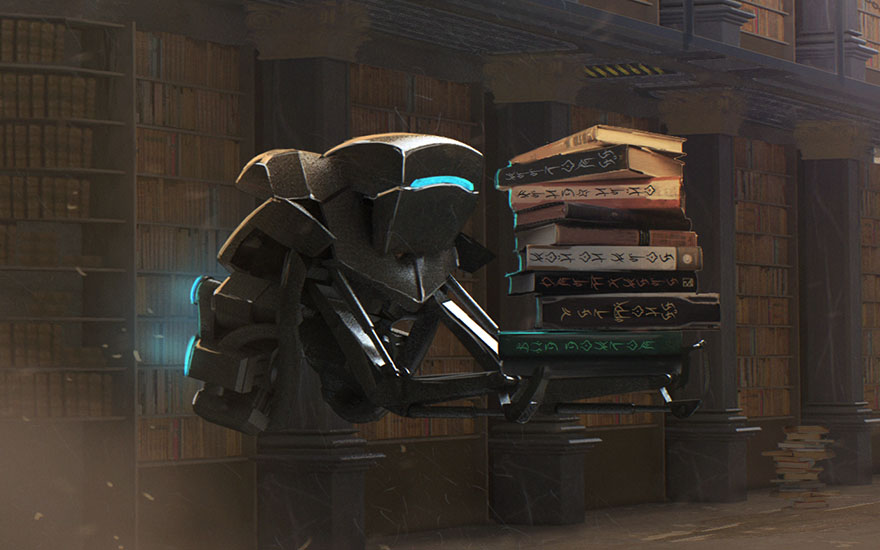
Reading list: another BK! Let’s see what it’s carrying… “Kate Wars”, “5 Stations” and “A Good Doctor”, among others. Not a bad compilation!
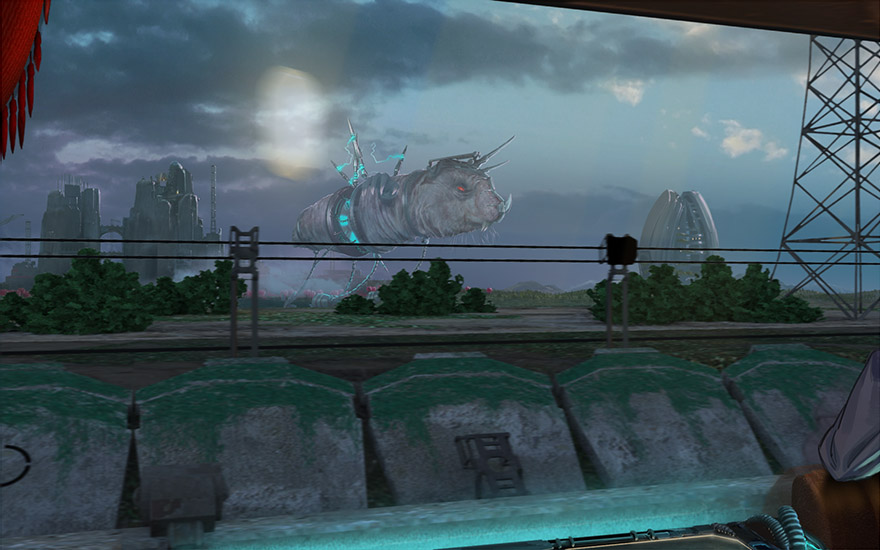
In Minotaur: enjoy the ride up the Soma-Nova line and check out The Library from the safety of your train! (Why is this entry here and not in The Cathedral of Grace? Questions like this keep me up at night.)
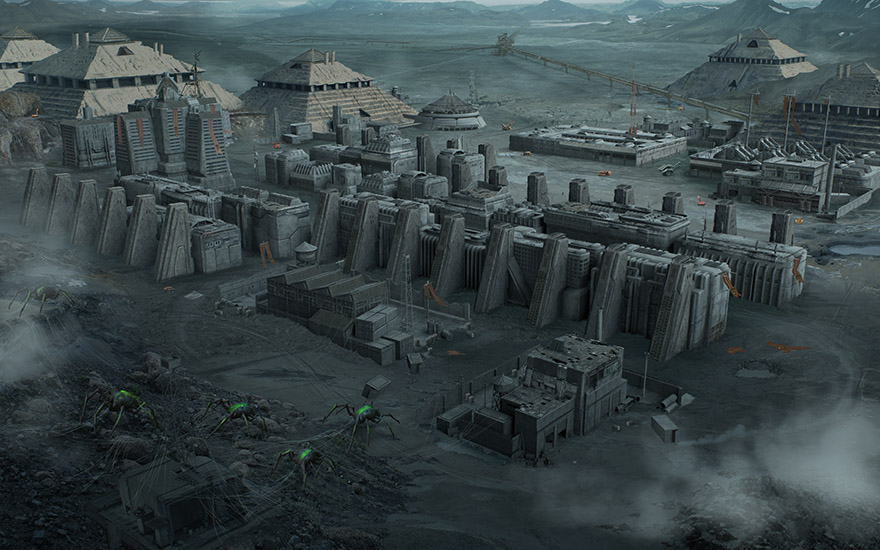
Gambler’s Fallacy
Possible energy alternatives to Axis have always been an object of attention; some septs diversified their options by using Outside structures like Parker Dam, but there was no real long-term safety net. Which is why, when in 502 AW deposits of felandrite (a combustive rock) were discovered by a research group from the Megaversity, it took just a couple of weeks for several septs to decide on establishing a joint mining site.
It was clear from the start, though, that this was going to be a risky project: the deposits were located on the eastern edge of the Garuda desert, a region considered unstable even by Kyosian standards, where an effect known as the “flux flicker” often occurred. Some scholars also speculated that felandrite has an effect opposite to Axis, in that it attracts Demons instead of repelling them. This hypothesis was never confirmed, though, as the whole operation quickly became so costly that the site was considerably scaled down in just about a year, and then completely abandoned soon after.
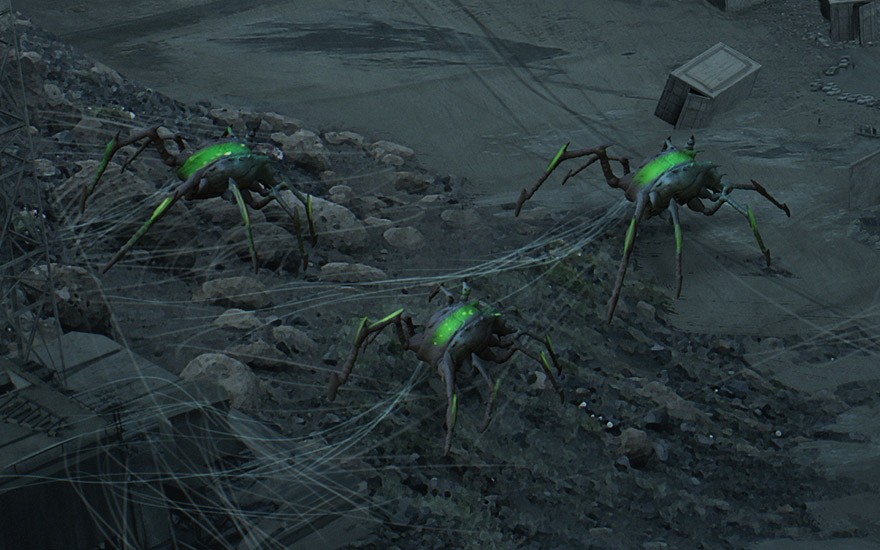
New masters: brrr.
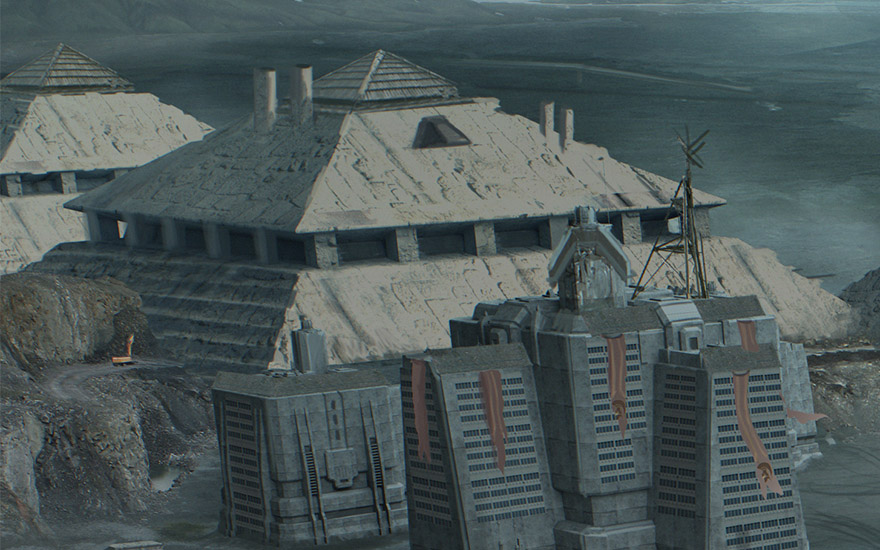
Pyramids: you’d think that Pionians built those, but nope: these are pre-Narian invasion (!) structures.
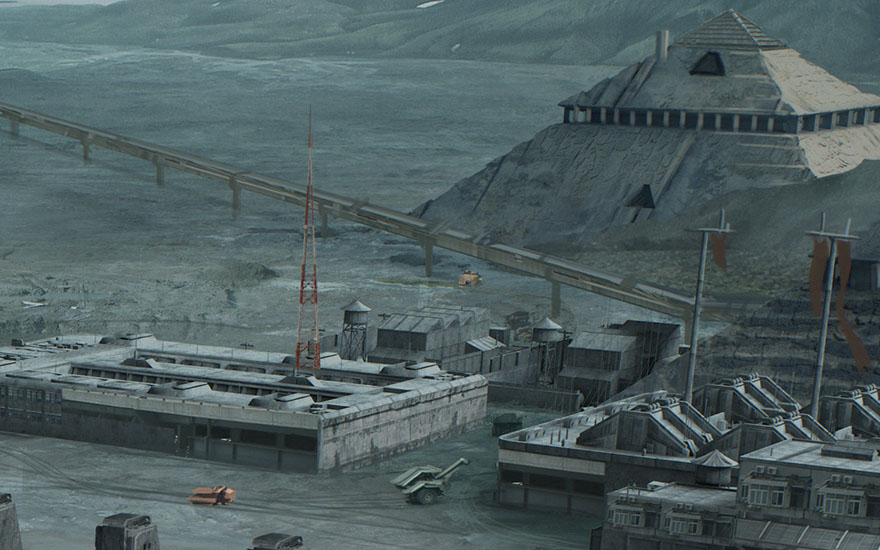
Train line to Flavia was mostly destroyed during War, but a part of it from a Soma-Nova junction to Fallacy remains.
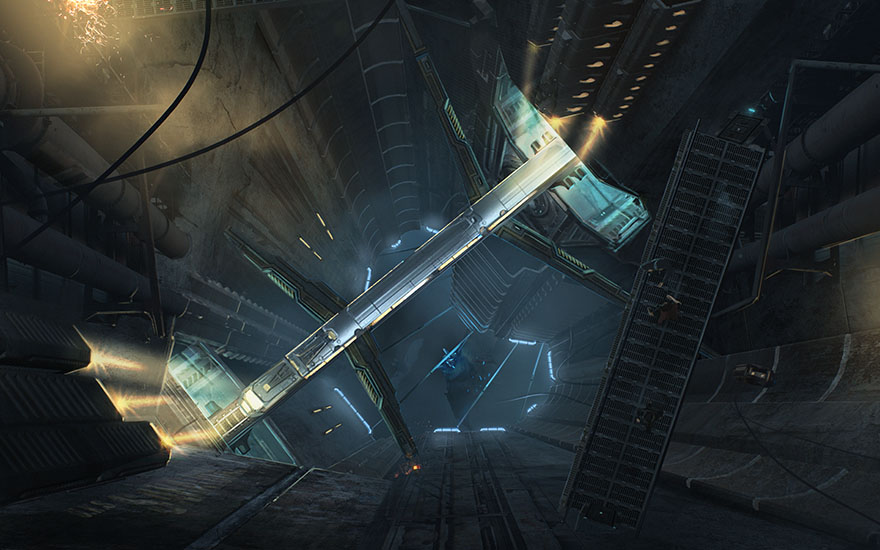
Chimera Vaults
These Vaults have cheated their way into the post-War structures category; most tunnels were dug around 15 BW-Year 0 by the Aegises for the Mesh network and Bygone servers (not a very healthy combination, as it soon turned out). War interrupted the construction, and the entrances to Chimera were buried by Tetrian soldiers during their retreat. Which is why, despite the fact that their location was well-known, getting inside the Vaults before flux fields was impossible. When it finally happened, domes corps and PSFs restored a large part of the structure and even carried out some unfinished work, but after hordes of Bygones began pouring out of the lower strata, they grabbed everything of value and left, and the place became one of espers’ favorites.
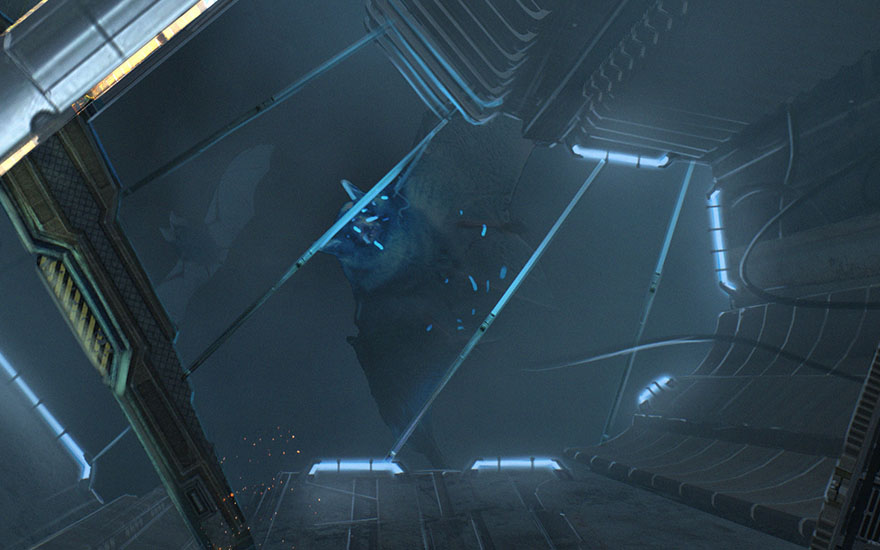
Beasts: 500 years later, Chimera is still powered on; the electricity (whether inadvertently or by design) is provided by the giant mantas, which float in the lower strata.
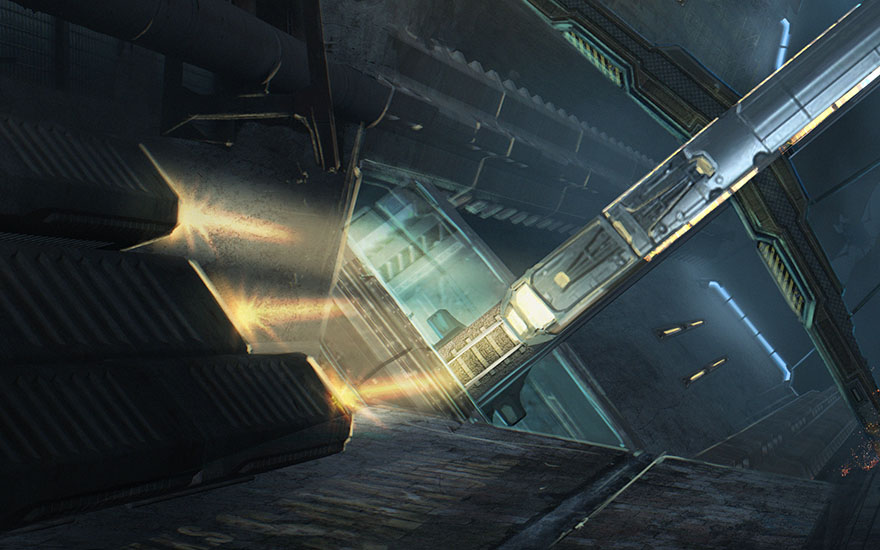
Trams: the Vaults are huge (there are four strata: entrance, higher, lower and pit, which go several hundred leagues deep) and have their own system of transportation.
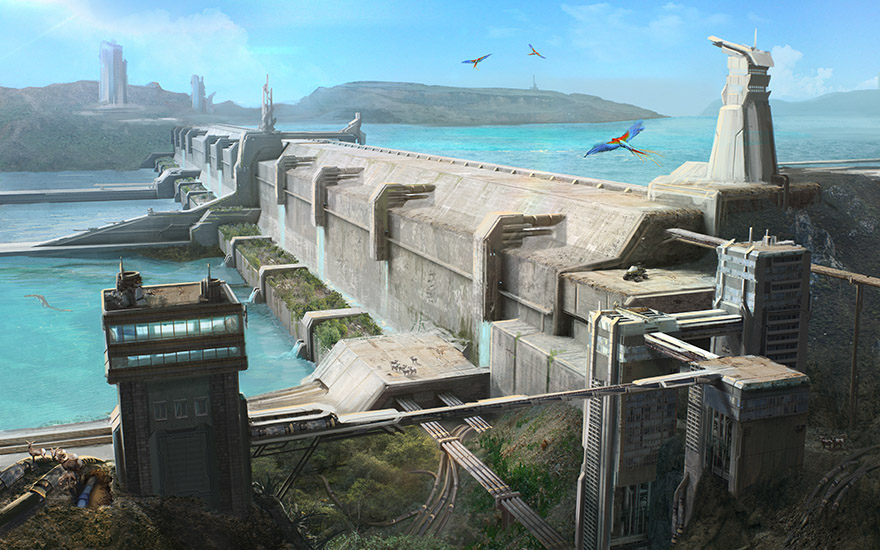
Parker Dam
One of the most ambitious post-War projects attempted by a sept, Parker Dam was to provide electricity and fresh water to the nearby Ares. Well, “nearby” is a bit of a stretch — the distance from the drop of the Gale river to the city is almost 200 kiloleagues — but Tetrians had already started building a gravity dam there before War, so Aresians at least had something to work with. The project was a success: Parker operates as intended to this day, lessening the reliance of Ares on Axis energy and Mirian water purifiers.
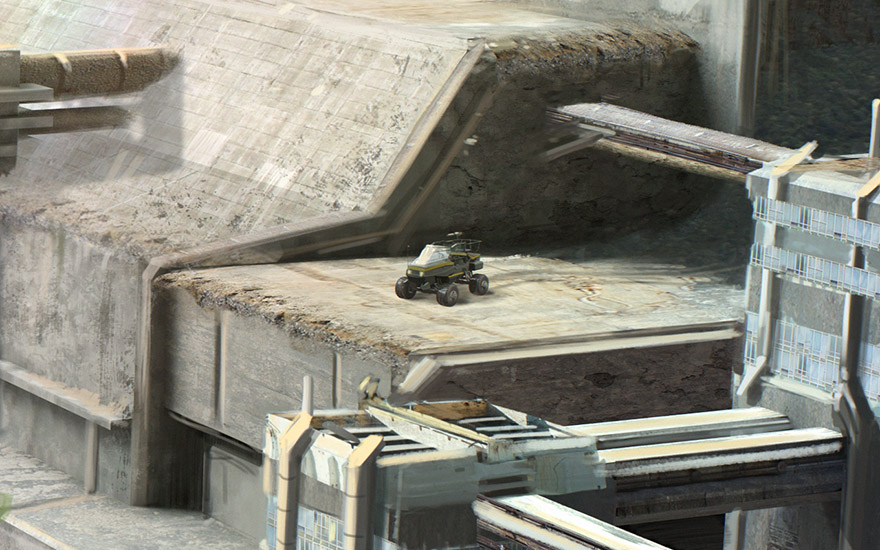
Inspections: the dam is fully automated, but Aresians send periodic inspections to check up on it. Also, seeing a Dunechaser on this things gives a pretty good idea about how huge Parker is.
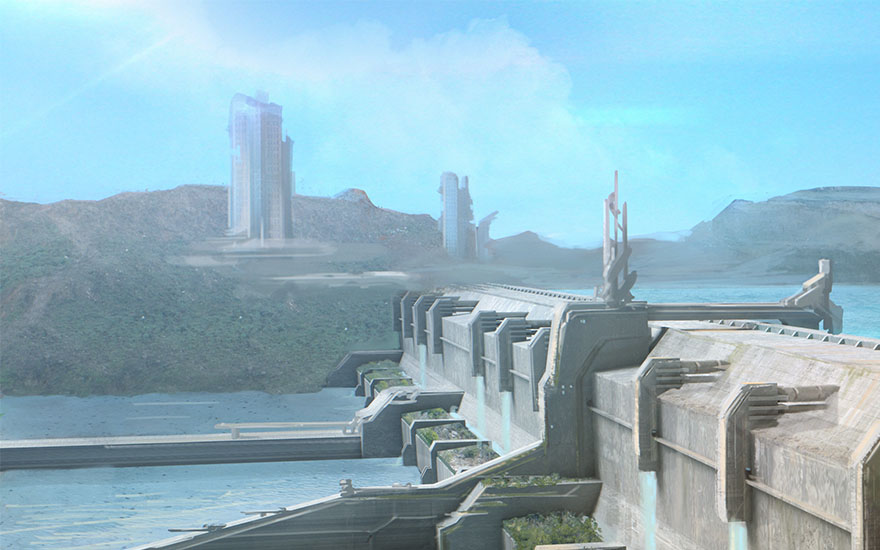
Rapture: just like the original dam, a nearly completed blissful resort not far from it was abandoned — the real estate market responded poorly to Demon attacks.
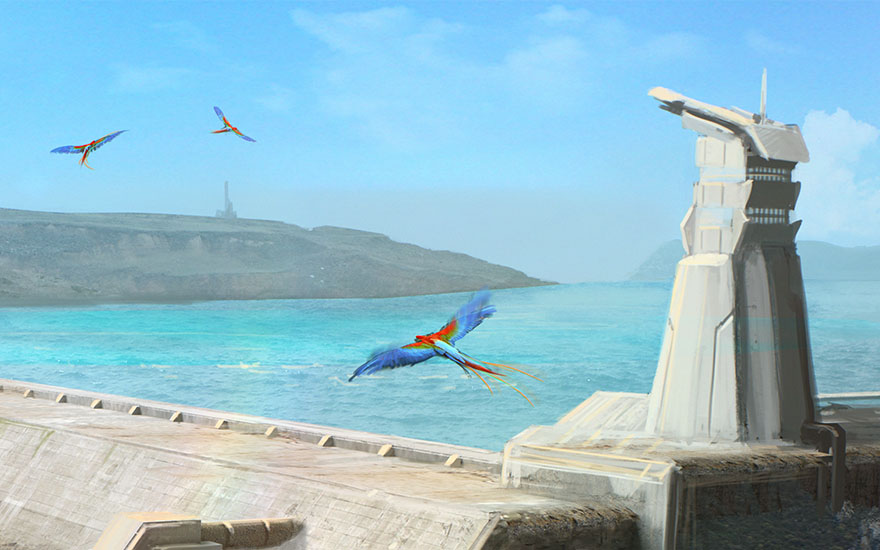
Defenses: Demons, Corrupted and Bygones care little about Parker, but rogue PSFs can still be a problem, so several towers which were originally dismounted from The Arc were modified and transported to the dam by Usurpers. Aresians are good at that sort of thing.
And hey, would you look at that — parrots!