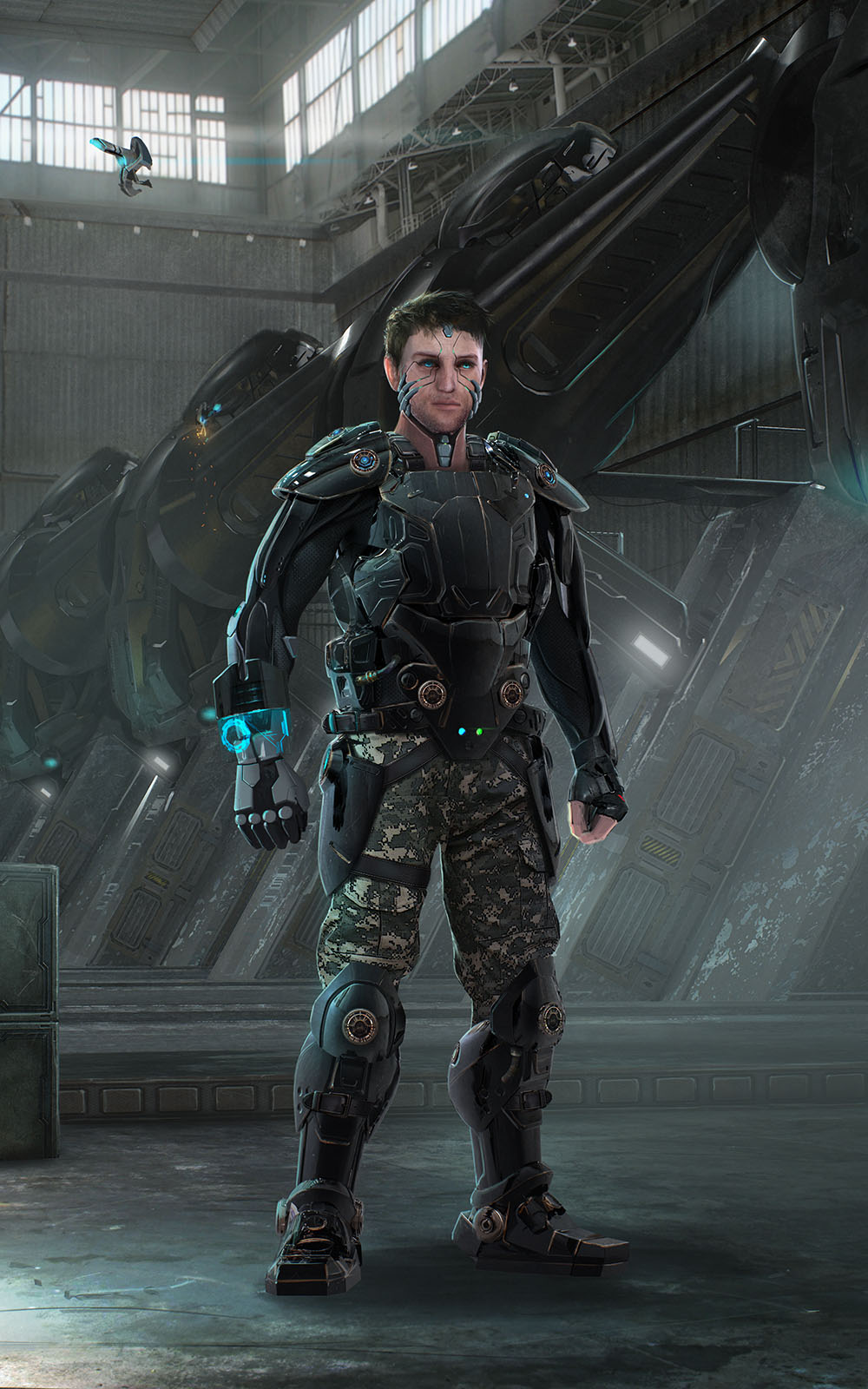
Synthets
Augmented humans of the post-War era.
Humans existed on Aya long before War, and synthets are a step (either forward or back, depending on where you stand) in their evolution. In 26 BW, the Danton family began mass-producing basic implants, but their attempts at selling them were met with widespread mistrust, not least caused by the efforts of other wings of the High Council. However, after Demons started cutting down Tetrians like grass, it became clear that synthets have much better chances of survival even after losing an arm or a leg, so whatever was left of the general population changed their attitude towards augmentations.
On post-War Kyos, synthetics are the standard; only their amount, represented by one’s IR (implant rate — a relative number), varies. There’s hardly a citizen who hasn’t had at least a part of their body augmented. Once Kyosians started installing implants, the resulting social traction caused a ripple effect: it’s hard to keep up with a friend who only needs two minutes to read a book you’ve spent a week digesting, or with a lover who can experience pleasure on a whole other level. It all happened even faster with PSFs, dome corps and mercenaries: a synthet fighter is much more efficient than their non-augmented counterpart.
You can do synthetics in many different ways. You have your abusers, daisies, nutcrackers… and then some. All of it is very confusing to an outsider. — Malé, a penguin explorer and adventurer extraordinaire
There are exceptions, of course, Kyosians who believe that man and machine should not be merged. They are “pure humans” (or “sticklers” if you wish to offend them), who either limit themselves to minor implants which became a necessary part of their domes’ infrastructure, or refuse (or simply cannot afford) synthetics altogether. Cities like Tali and Soma encourage such practices, while others like Mira make it almost impossible for anyone to survive without undergoing a significant augmentation.
It follows that synthets make up the bulk of population in DCs, but there are many of them in settlements as well.
From U7/The Fall of Kyos core rulebook:
Common classes: Officer, Executor, Aspect // Wild card: Herald
Strong against: demonspawn // Weak against: androids, Higher Corrupted (see the full chart below)
Bonus to stats: STR, DEX, CON

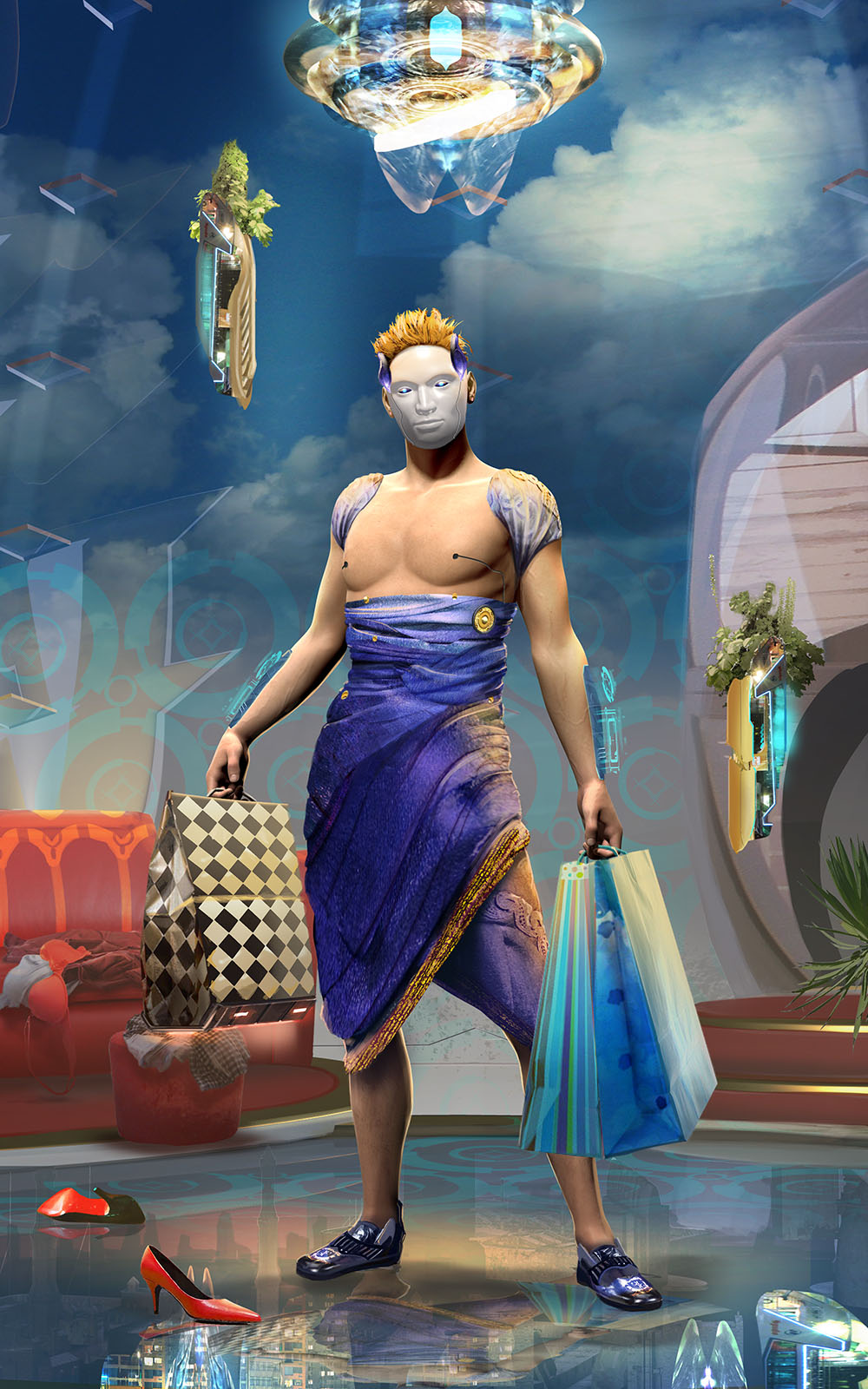
Androids
Man-made servants with a shortened lifespan operating time.
First androids came to Kyos in a box; they had been engineered on Ilyon several years before Calm, but were banned there soon after their production started. Smugglers from Mira managed to lay their hands on a couple of units, and the androids were reverse-engineered. Three centuries later, there are probably as many androids on Kyos as there are native Kyosians.
In Minotaur: a TFX assembly line
Despite this small difference in numbers, there’s a huge gap in status. Androids are servants; they exist for the benefit of their master (individual) or authority (group) and have few rights of their own. Kyosians, untroubled by the ethical aspects of this state of affairs, took a number of steps to prevent AI from getting any funny ideas. An android’s lifespan, called grasp, is very short; it’s calculated based on the cognitive capacity of a specific unit, which can be modified by the number and strength of limiters installed, and typically doesn’t exceed several years, after which the unit is forcefully deactivated by TFX. Androids’ behavior is determined by hard-coded patterns, which are adjustable to a certain extent by programs. They are workers, companions, lovers, soldiers, but each is primarily built to become only one of those things.
The system is naturally not without its flaws; from time to time — most often when an android loses its master and becomes an unallocate — malfunction happens, and then they run. They hide in settlements or wander Kyos in their subreality, the existence of which makes one wonder whether they are really not as different from kitchen appliances as TFX claims, or go to Terminus to join others like them.
Common classes: Prime, Shade, Officer // Wild card: Executor
Strong against: synthets, Bygones // Weak against: espers, Higher Corrupted
Bonus to stats: INT (high), DEX (high)
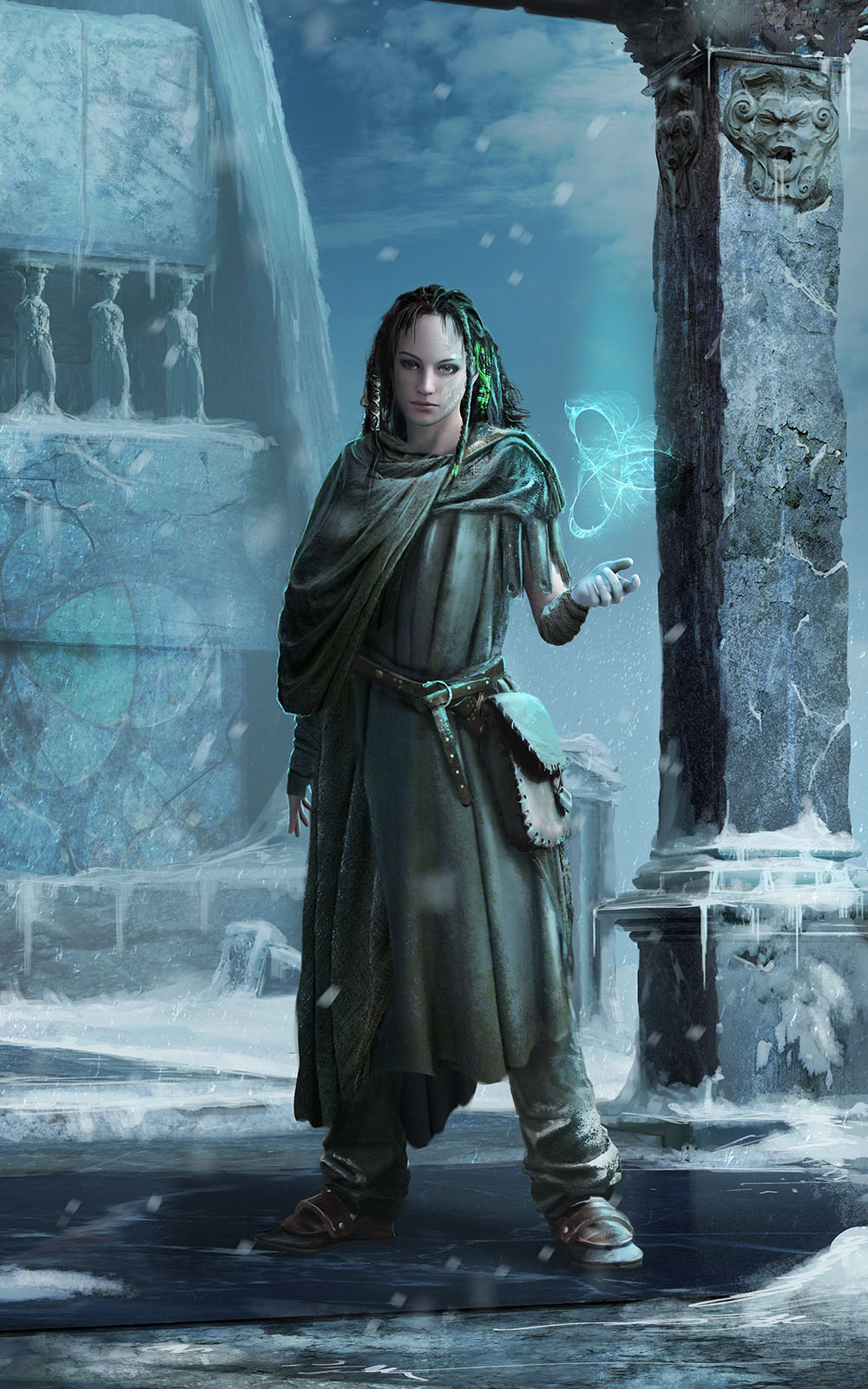
Espers
Demonbringers created and exiled by men.
It’s unlikely that those who volunteered to become the subjects in the Northern Research Center, founded by the Artases and Somas for the purpose of uncovering the potential of the human psyche, could imagine exactly how much their contribution would affect the future of Kyos. The experiments conducted in the NRC spiraled out of control and ultimately ended in the Conflagration: hundreds of subjects manifested their traumas into the corporeal world; espers birthed Demons. The creatures proved to be too much to handle for the Tetrian military, and espers were either unable or unwilling to assist, so the continent soon choked on surges of destruction.
Kyosians were saved by Axis and its effects; they isolated themselves in demonproof domes, trading freedom of movement for safety. At first an attempt was even made to welcome espers, but very soon they were forced back out into smaller settlements. Those who never joined other humans in the first place were caught in the Collapse: the failure of the objective reality everywhere on Kyos outside Axis fields and Axis-rich grounds. Such espers were effectively left to themselves in a world where anyone they knew suddenly disappeared into their own subrealities.
Several hundred years passed, and not a single esper died of old age. They remain frozen in the time of the Conflagration, but Kyos around them changes, and they adapt. Despite still not being openly allowed into most domes out of fear of another Manifest, they’ve come to be perceived as much less of a threat. Many lead comfortable lives in settlements, protecting them as powerful Aspects; others offer their services as Shades, or simply travel all over Kyos, like one of the most famous espers, Elara Quinn, who even published a series of widely popular travel journals.
Every esper has sigils, glowing symbols on various areas of their face and body which appeared during the Manifest. Sigils are hard to conceal, especially for prolonged periods of time, and the only known way to remove them is along with the body part.
Common classes: Aspect, Shade, Herald // Wild card: Officer
Strong against: androids, Demons // Weak against: demonspawn, Bygones
Bonus to stats: WIS, INT, DEX
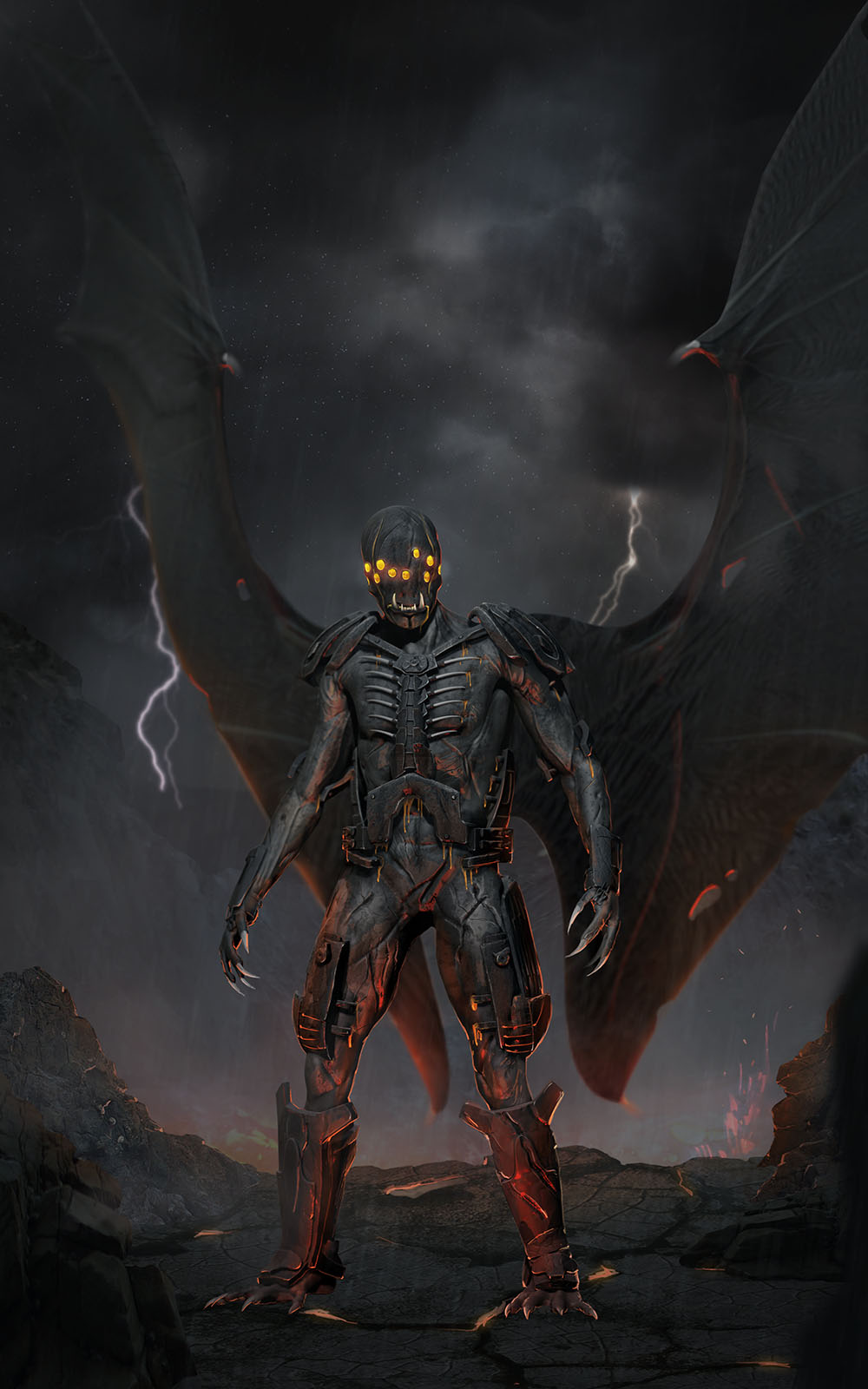
Demonspawn
Restless offspring of Demon and men.
It is not clear whether there are Demons who are humanoid in form and attributes, or if they only assume those temporary, but demonspawn (or demonkin) are living proof of either. Offspring of humans or espers and Demons, they are strong and intelligent creatures made bitter by the lies of others.
Trust me, you don’t want to know the details of the process. — Bane the Shattered
Demonspawn were first sighted around 260 AW in several subrealities; Kyosians then started to methodically seek them out and provide them with fluxes. Having established a temporary settlement in an Axis-rich location not far from Nova, several septs agreed to finance the construction of a second dome next to Pion DC, which was meant specifically for demonkin. However, the Pions refused to give up the dome after its completion, which led to a conflict known as The March of the Damned. In the end, demonspawn were defeated and scattered throughout Eastern Plains; since then most of them live in small unmapped settlements where reality is sustained by flux fields, which are in turn kept running by Shades and Executors offering their services to those in DCs who are ready to pay a good lot.
Demonspawn are naturally large creatures, but their constitution varies:
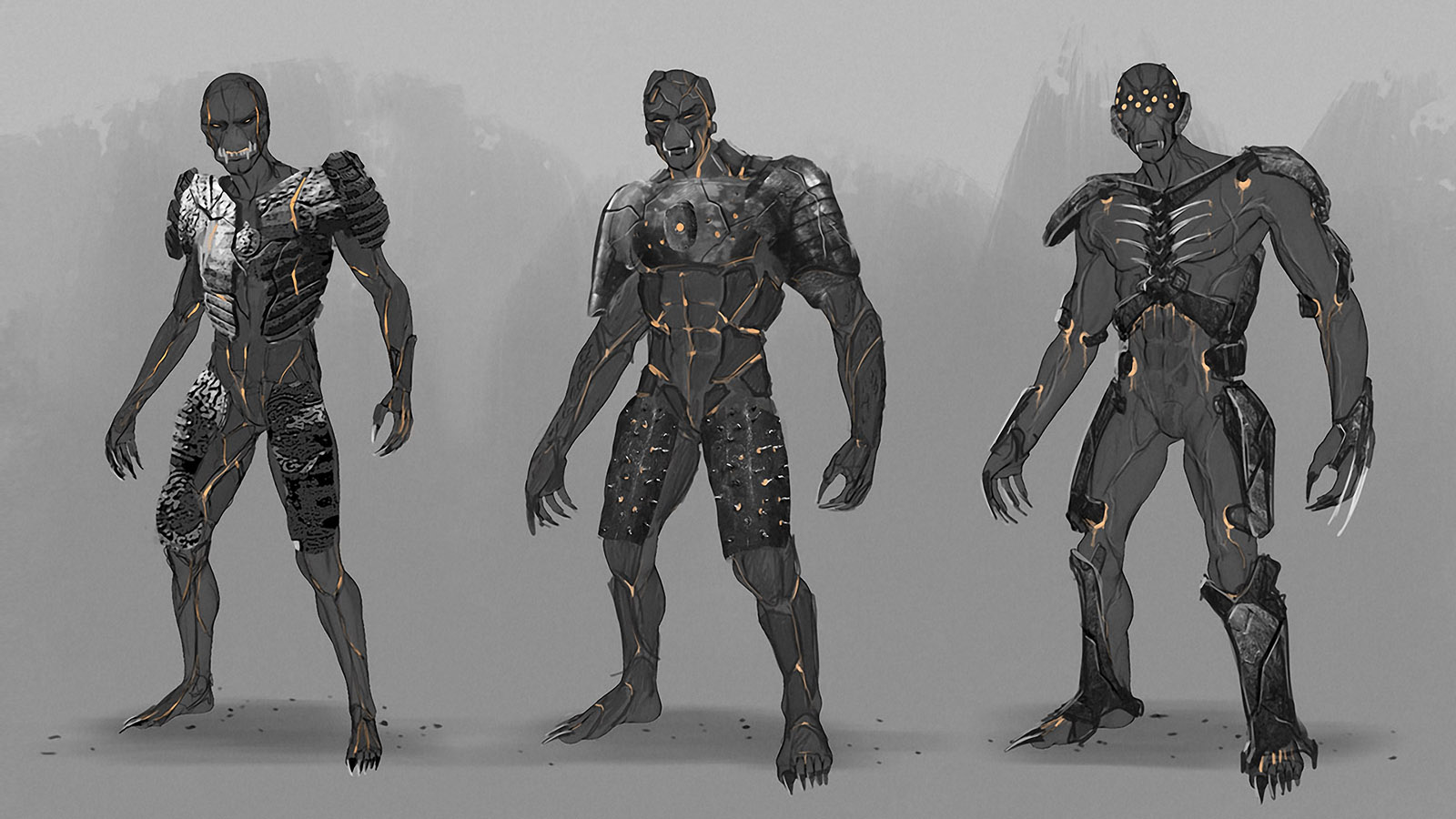
Their blood is yellow, and many of them have more than two eyes (organs that all demonspawn use for more than just vision, by the way, though few DC dwellers know that). Almost all possess wings, which allow them to fly for limited periods of time.
Demonspawn can’t bear children, but live on average 150-170 years.
Common classes: Executor, Herald, Officer // Wild card: Aspect
Strong against: espers, Higher Corrupted // Weak against: espers, Demons
Bonus to stats: STR (high), CON (high)
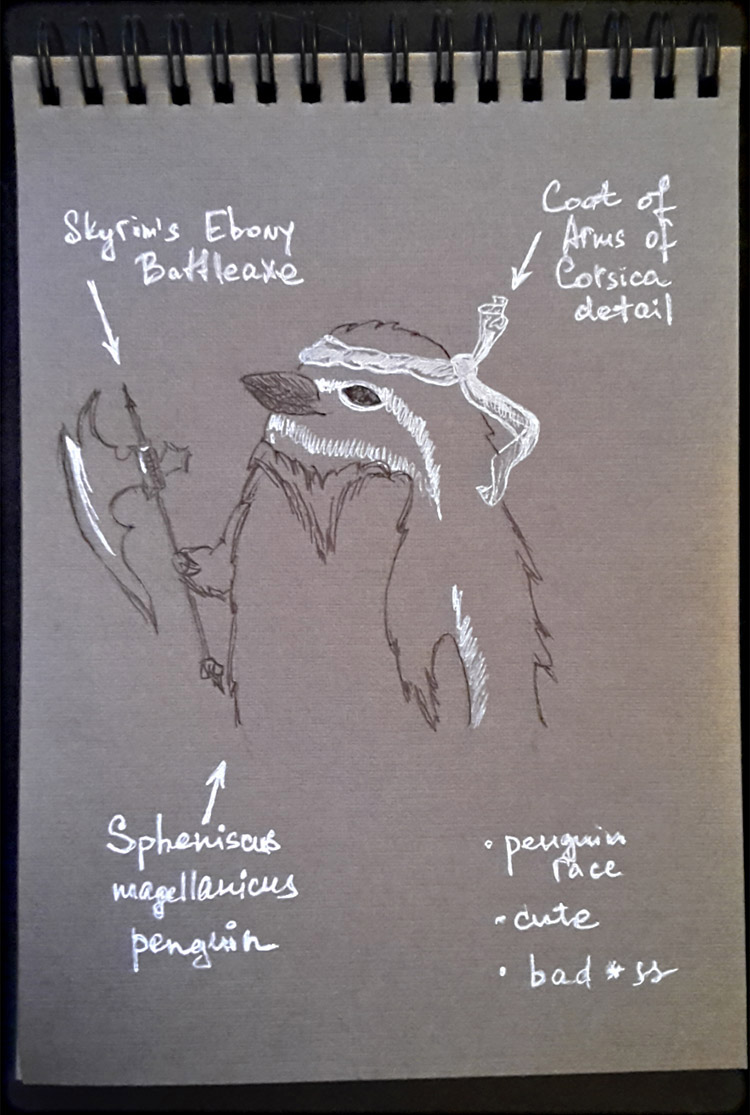
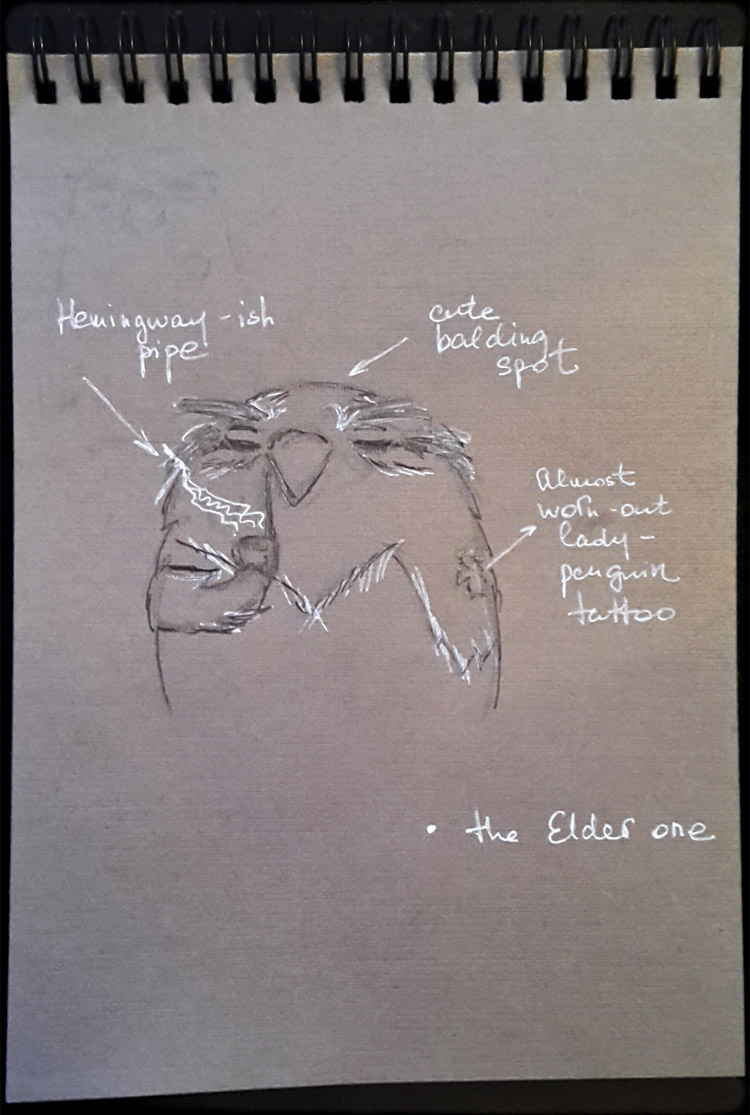
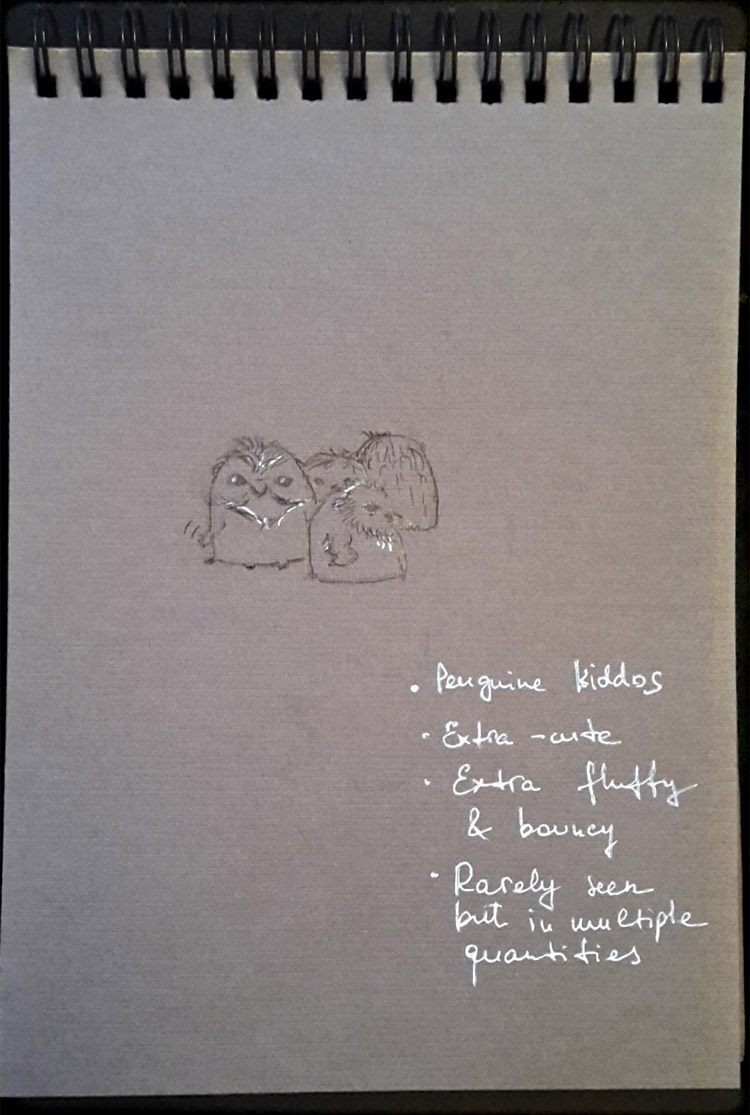
Penguins
Pilgrims from the land of Ilyon.
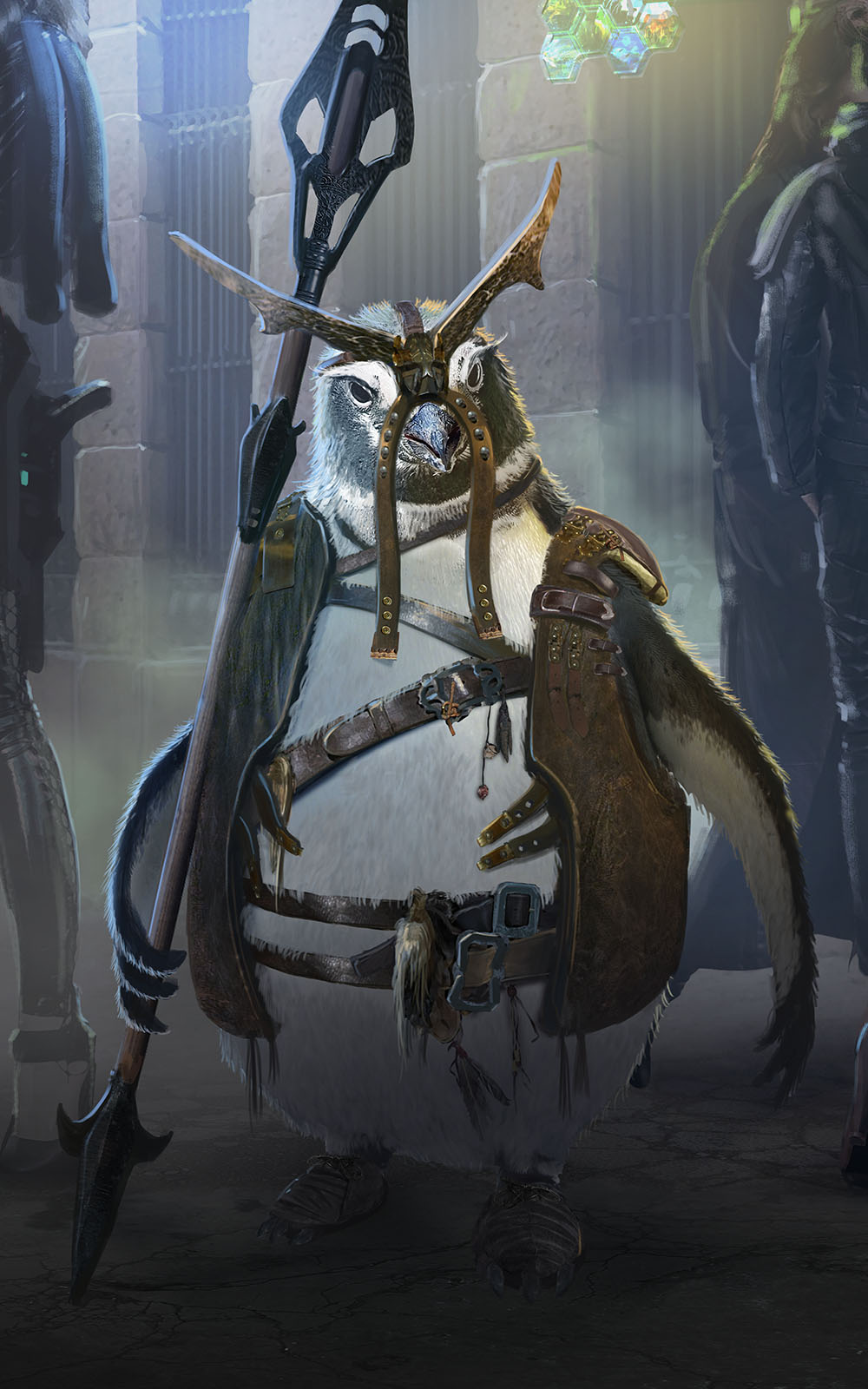
Looking at a penguin is like enjoying gratuitous awesomeness. If only you could have been born as one… — Malé, a penguin explorer and adventurer extraordinaire
The youngest of races known to Kyosians, penguins first came to Mira from post-Calm Ilyon in 416 AW. They were taken for spies and held against their will; however, the air was soon cleared, and pinz, as Kyosians started calling them, became a common sight in domes and settlements.
They are a curious bunch: pinz travel to Kyos for their two-year pilgrimage and bring back knowledge and experience. At home, their community is organized into several tribes, most of which are located in the northern part of the continent. Their society is hierarchical, and one’s status is determined by the length of their napa — an accessory they wear on their beaks.
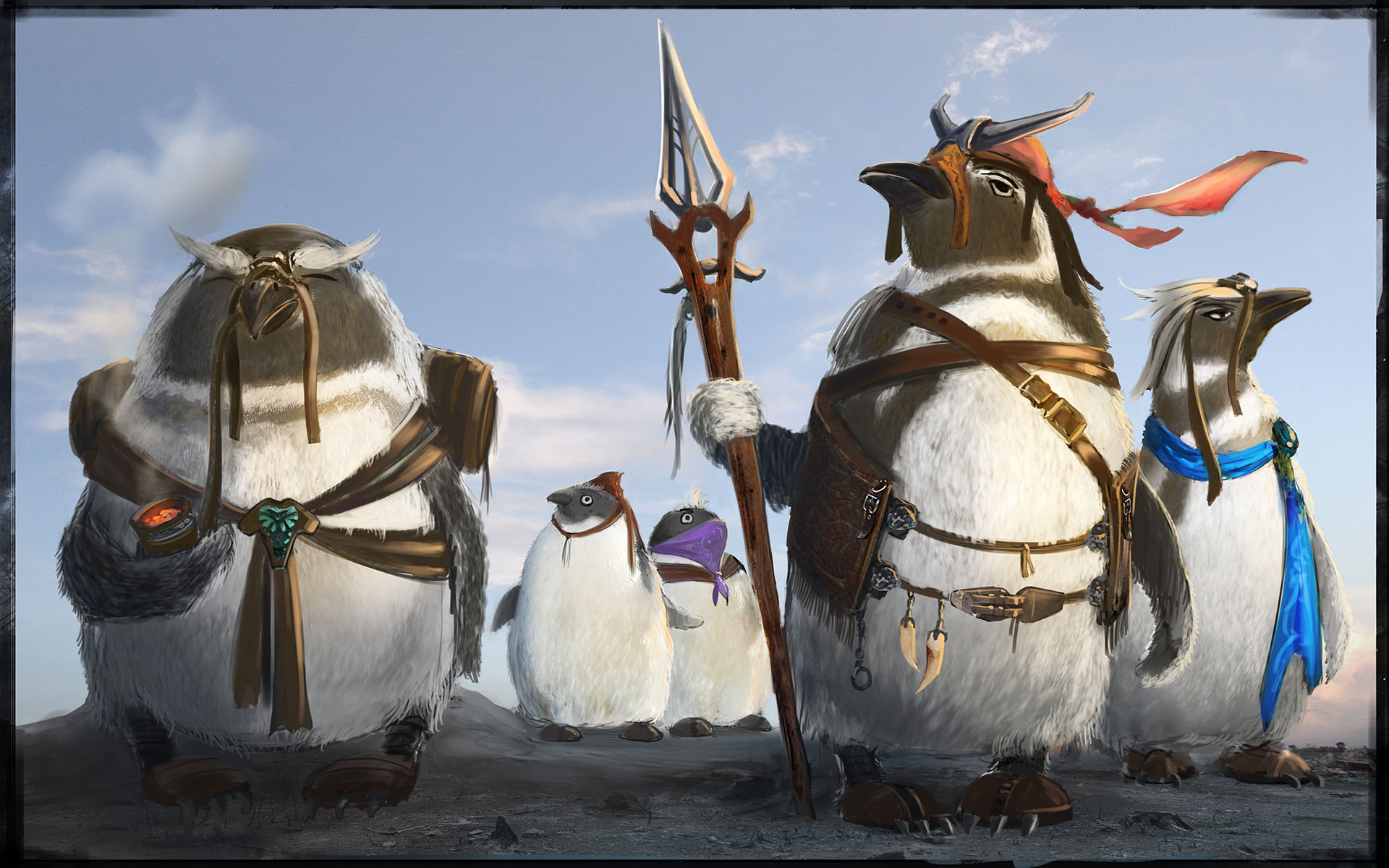
Penguins are smart and adaptable, but have little interest in science and technology. History, in particular, doesn’t concern them in the slightest — many scholars who were hoping to extract information about the Calm and what happened after it were quickly disappointed to find almost none.
Common classes: Herald, Aspect // Wild card: Shade
Strong against: penguins are evenly matched with all other races
Bonus to stats: WIS (high), LCK (high) All stats super-high — Malé