Bygones
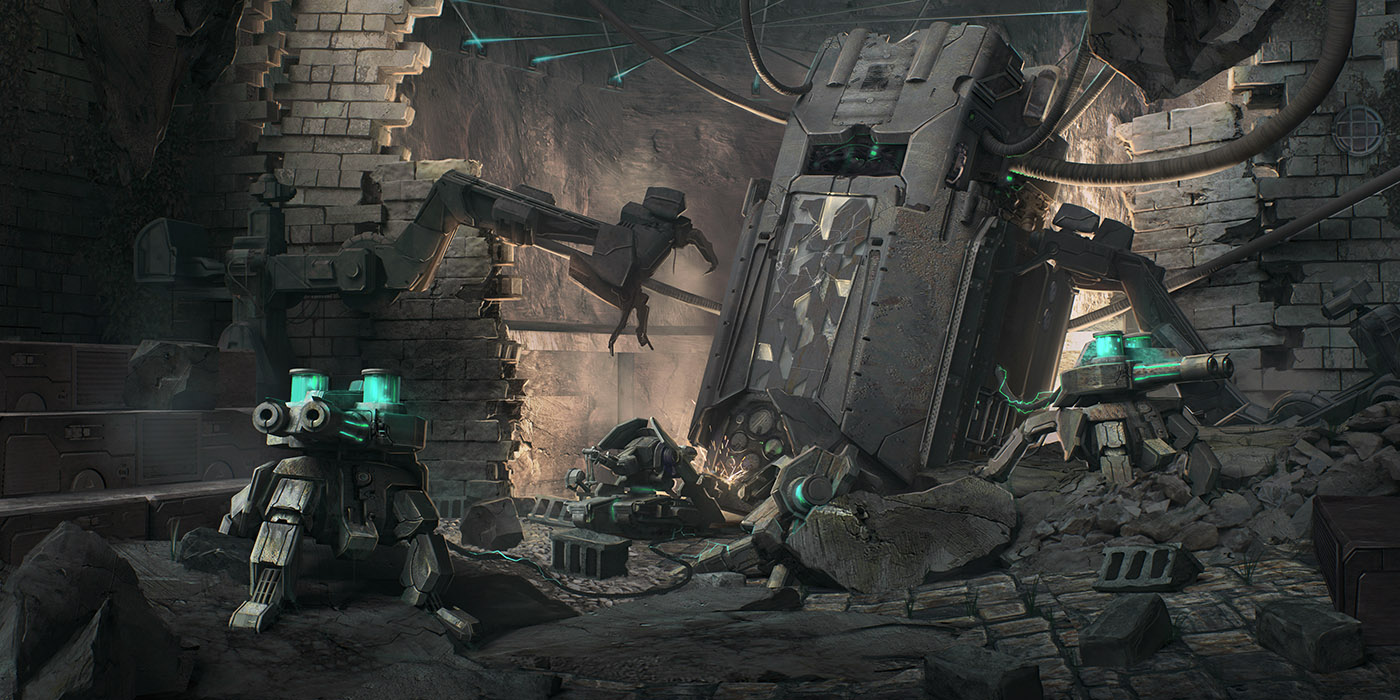
Long-abandoned machines of War.
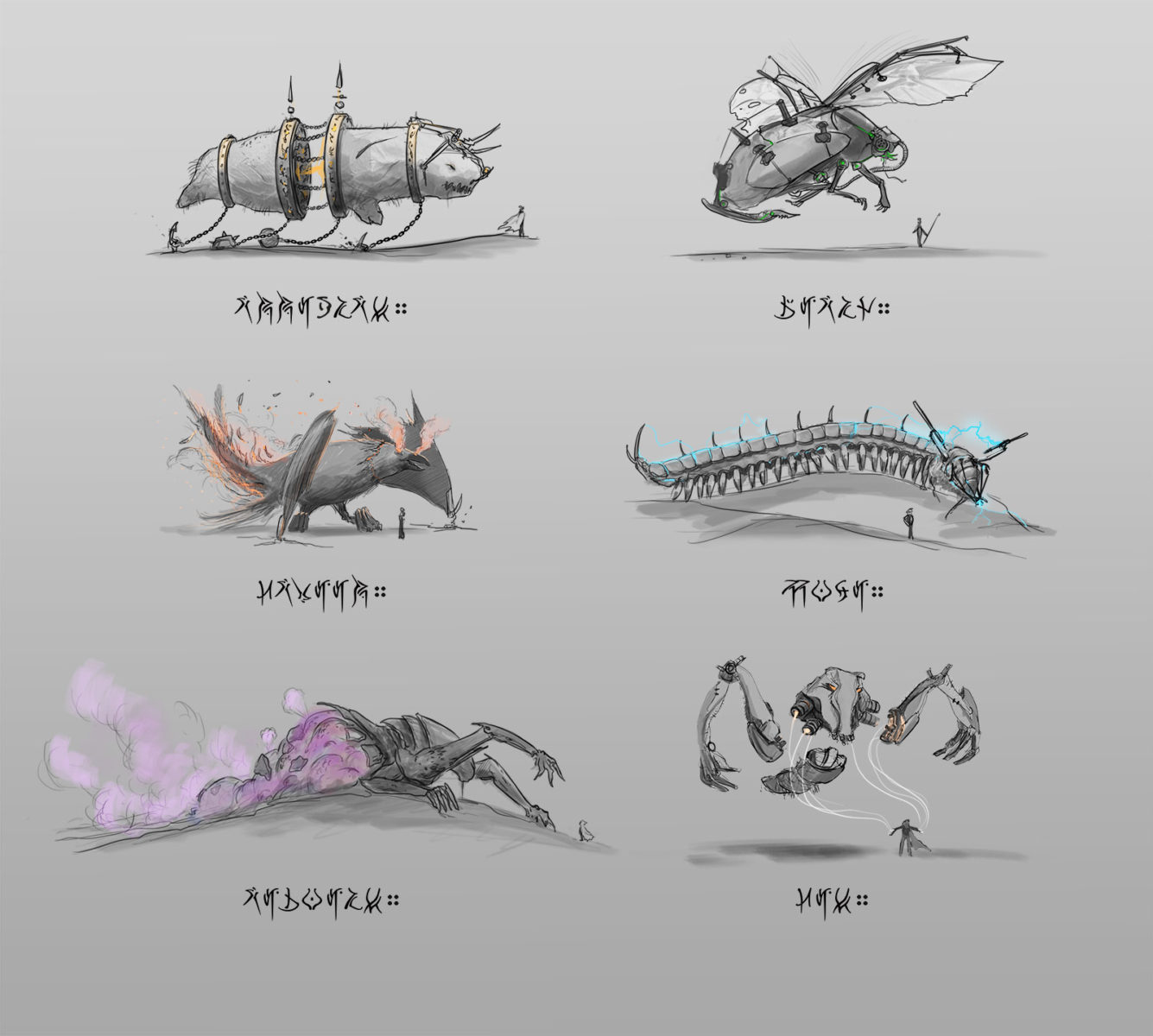
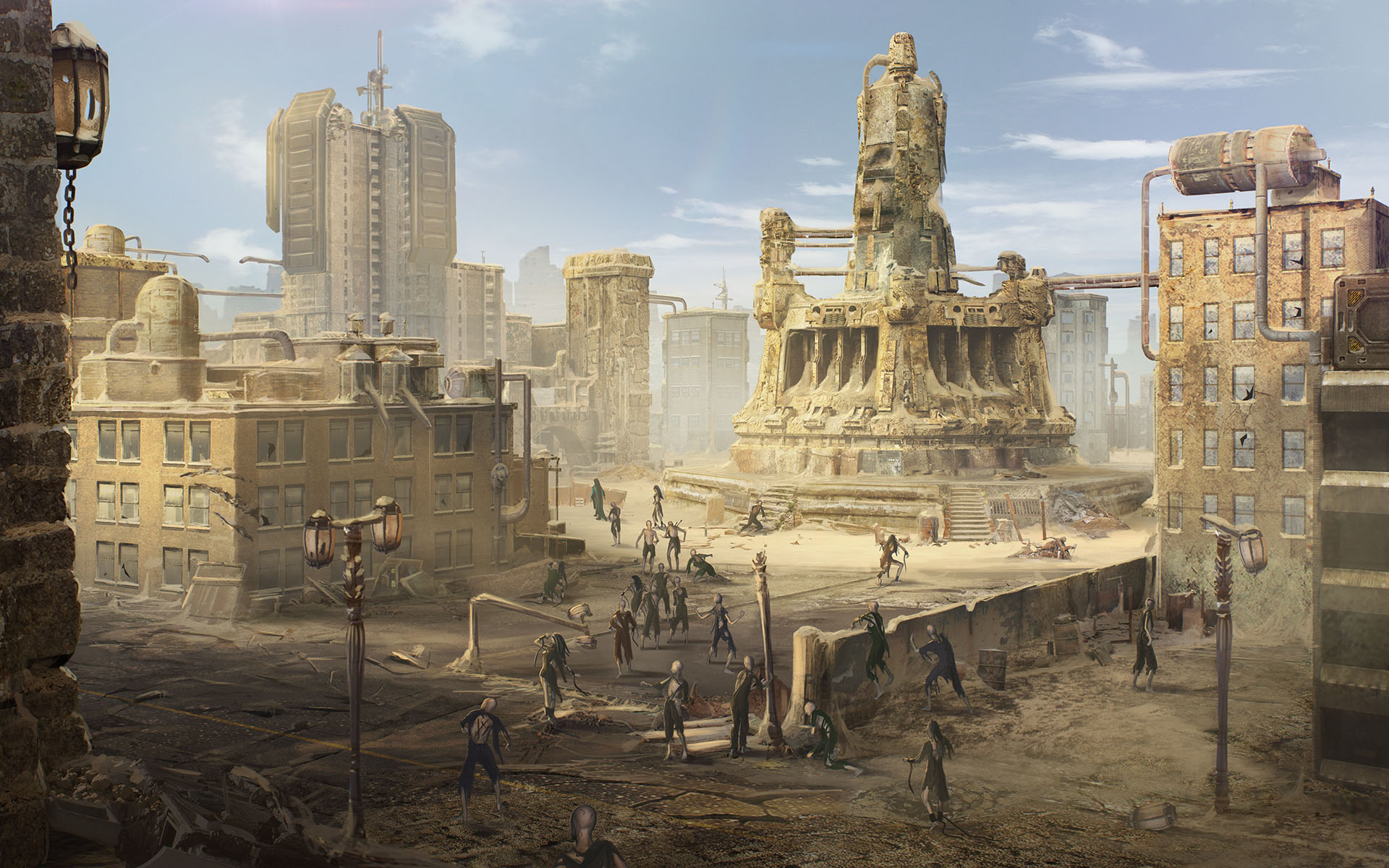
In 52 BW, members of the progressivist wing presented evidence, which many later thought to be fabricated, of increased military threat coming from the southern neighbors (Adrion in particular). This compelled the High Council to agree to several costly projects, one of which was the development of an automated defense system, locally controlled by a programmable AI. Robots carrying out the tasks of the system were called Guardians; they were developed and produced by companies belonging to the Aegis family, and their first lineup was shown to general public in 26 BW.
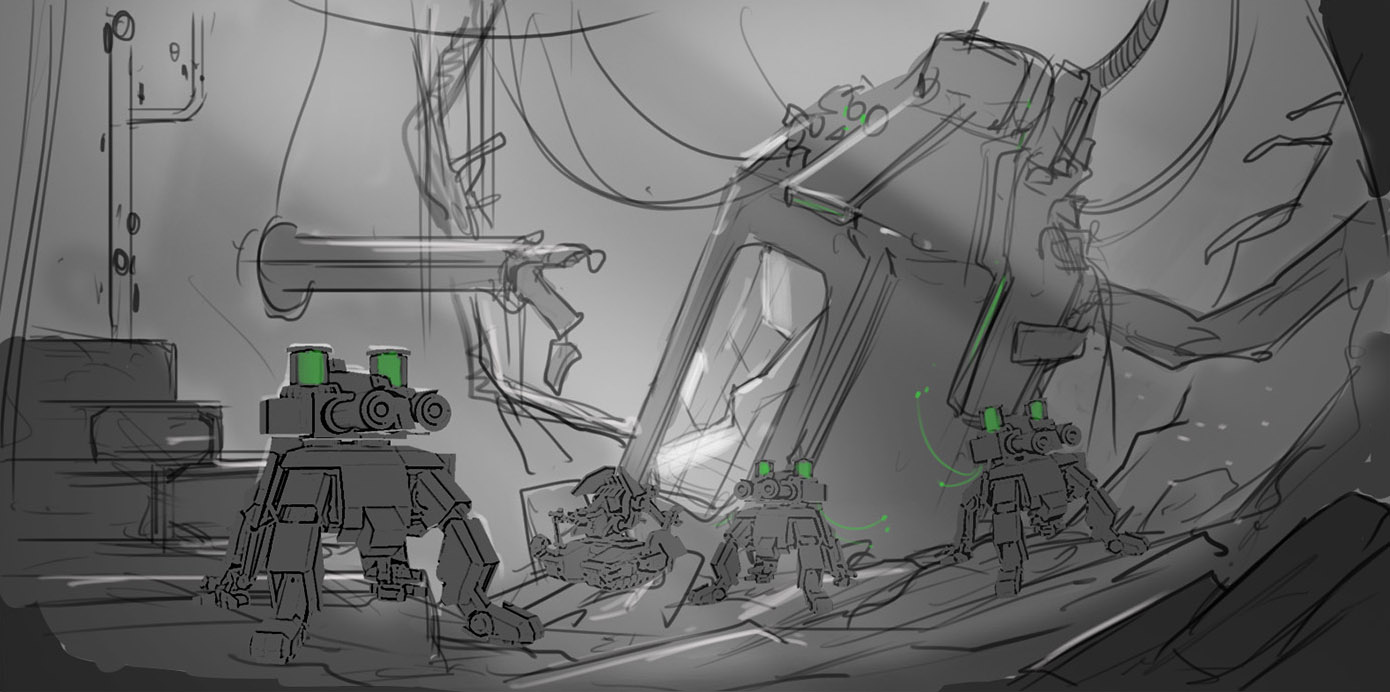
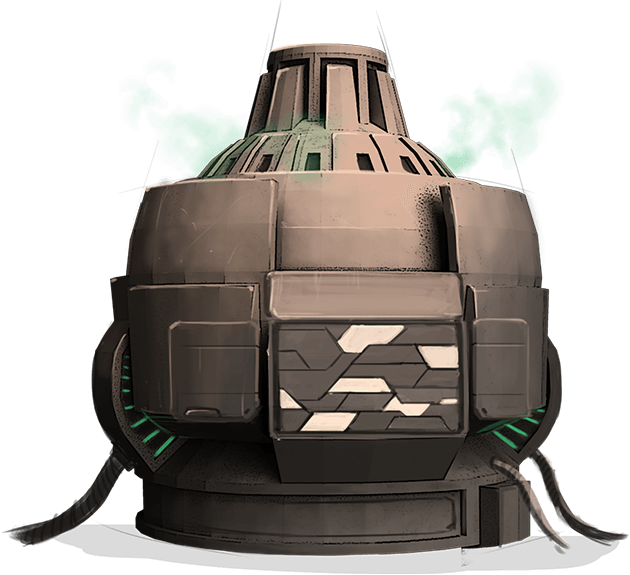
By 5 BW, Guardian cells were set up all over Kyos. A cell usually consisted of around a hundred robots of different classes, a Blue Box (or BB) — a large stationary commanding unit, or “AI house” — and a dedicated group of engineers and technicians. The whole system featured a very roundabout way of inputting commands, which made it deliberately hard to micromanage and difficult to abuse.
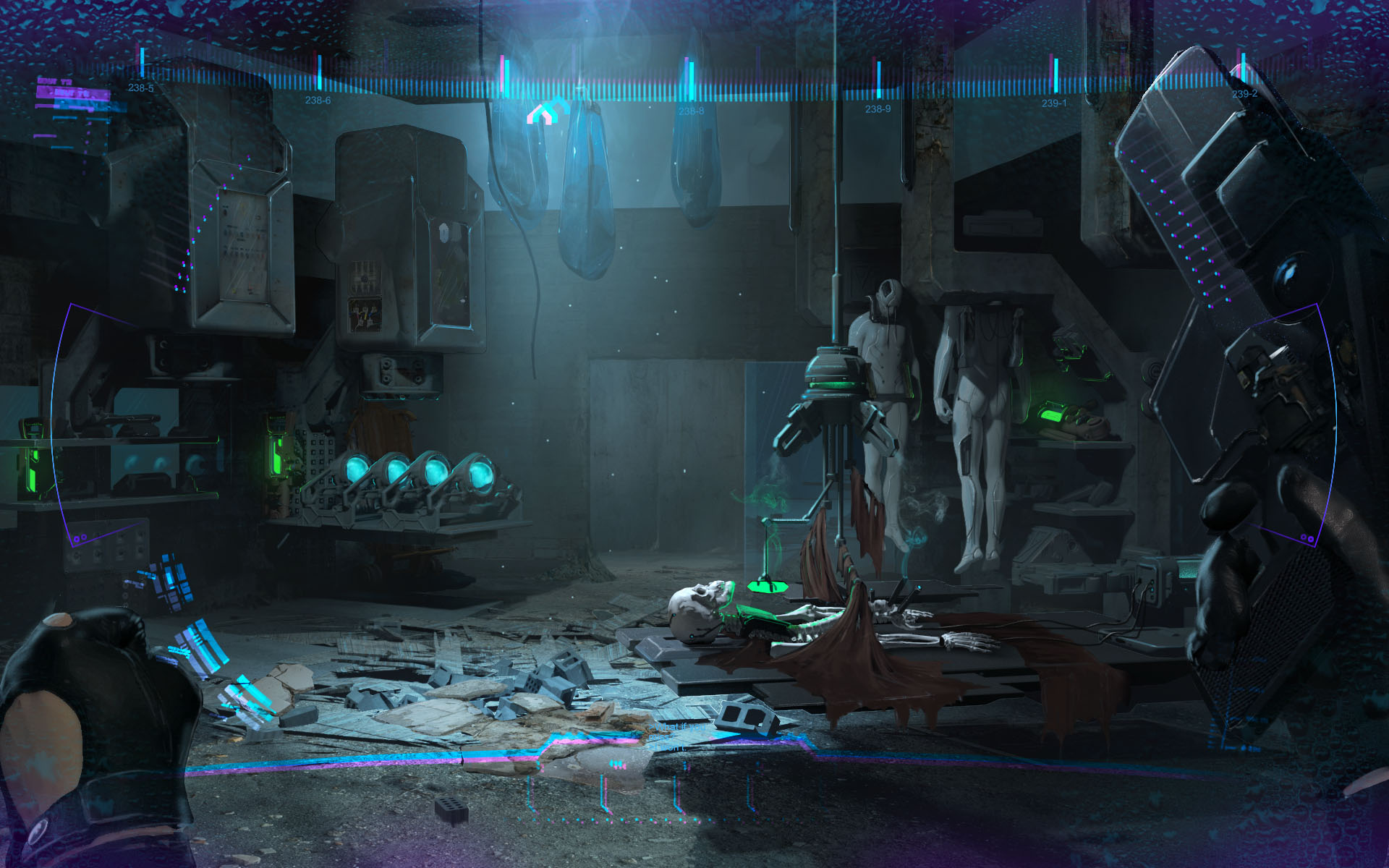
So, how did Guardians become Bygones? In the chaos of War, their deactivation was the last thing Tetrians thought about. If anything, they purposefully left Guardians on while retreating, as the robots proved to be capable opponents for some Demons. But after the dust had settled, Kyosians found out the hard way that without the necessary signatures, they themselves are viable targets. As Hifu Solson, a historian, put it, “Tetrians didn’t have time to turn their Guardians off… And now there are no Tetrians left.” To this day, Bygones continue their mission of fighting enemies of the state. Nothing’s changed, only the list grew longer.
_06
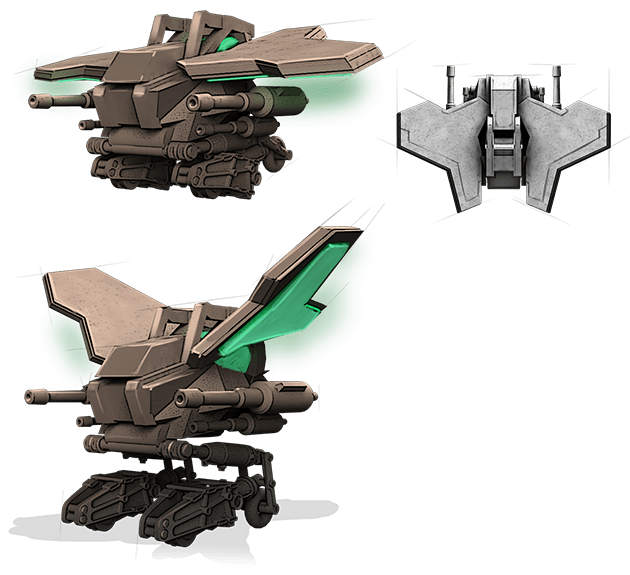
Also known as “drony”, _06 is actually based on a combat drone that was used by the Tetrian military long before the work on Bygones began. Due to its efficiency and robustness, it wasn’t left behind like most other older models – instead, Tetrian engineers decided to upgrade it and integrate it into the new system instead.
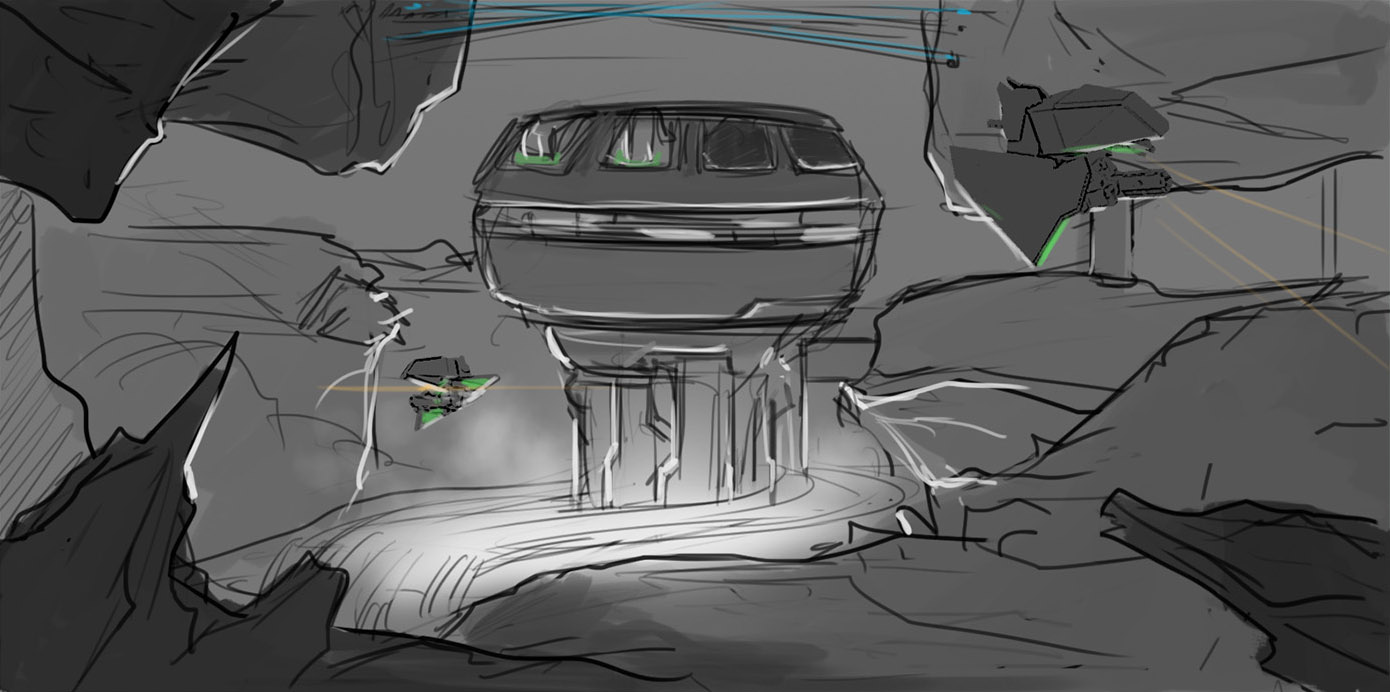
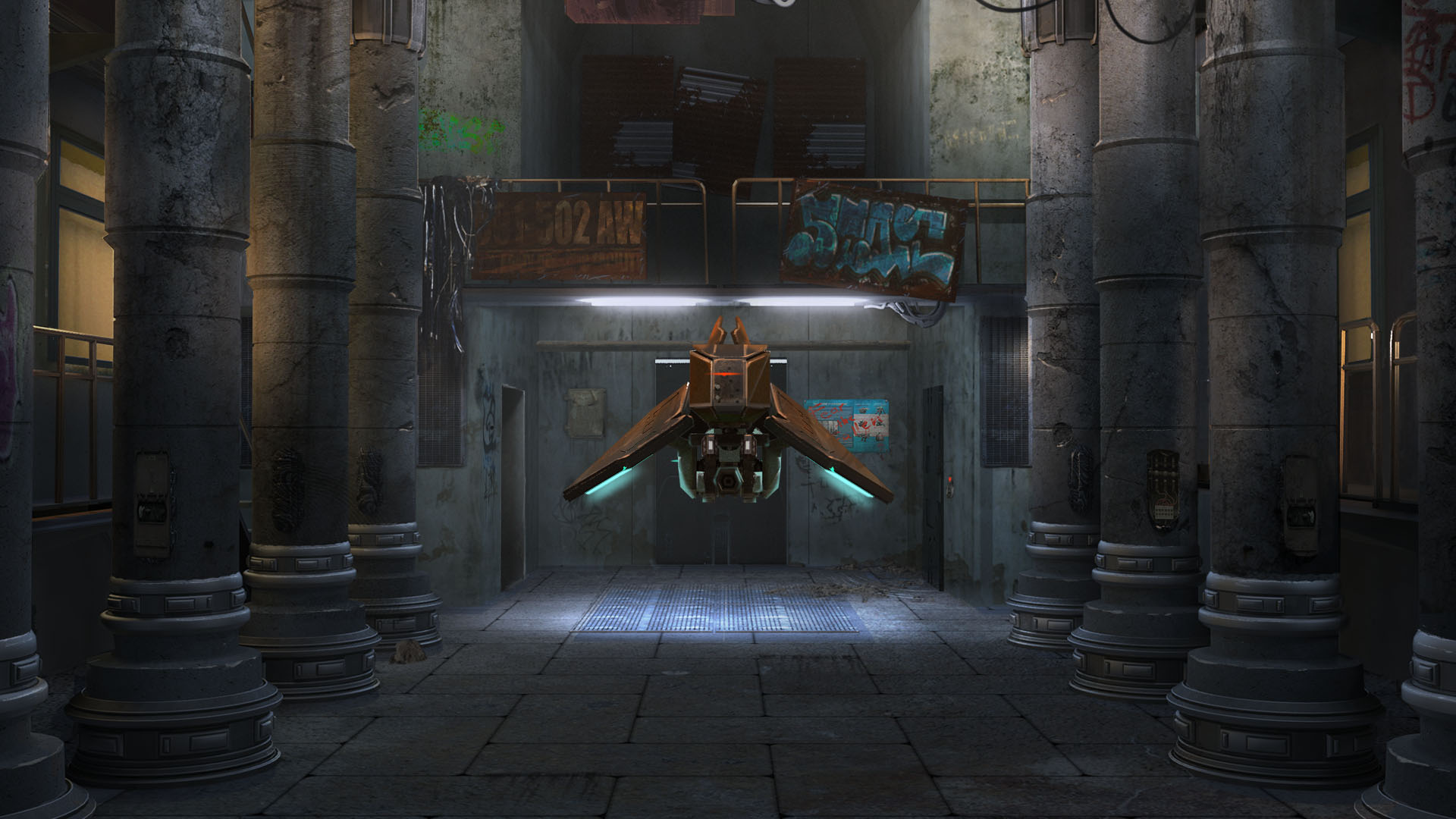
_06s typically attack in groups, which compensates for their modest individual firepower. They are extremely mobile and can become airborne for a limited period of time; a “swarm of Sixes” is a very unpleasant call for any mercenary. BBs often deploy them as support for larger units.
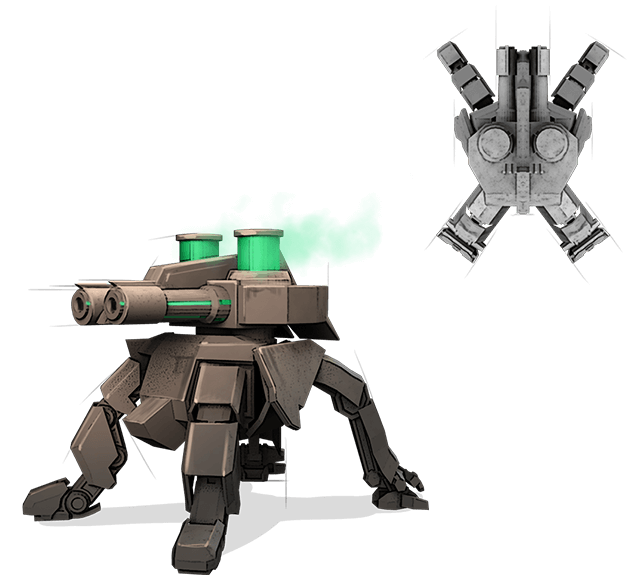
_05
Fives are the backbone of any Bygone cell. They have good mobility and decent firepower, and are reasonably tough. These units were originally intended for stealth missions, but with the project as a whole quickly going over budget, the idea was put on ice, and _05s were repurposed for general combat use. They did retain some of their original design features: these robots can cloak for a limited time, and their 360-degree “Merry-Go-Round” (MGR) two-barrel full-auto rifle can fire silenced shots even in burst mode.
Shades could certainly learn a thing or two from this unit. By the way… androids and Bygones are NOT related in any way. Different standards, you could say. — 1755-10-UA, an unallocate, 523 AW
_04
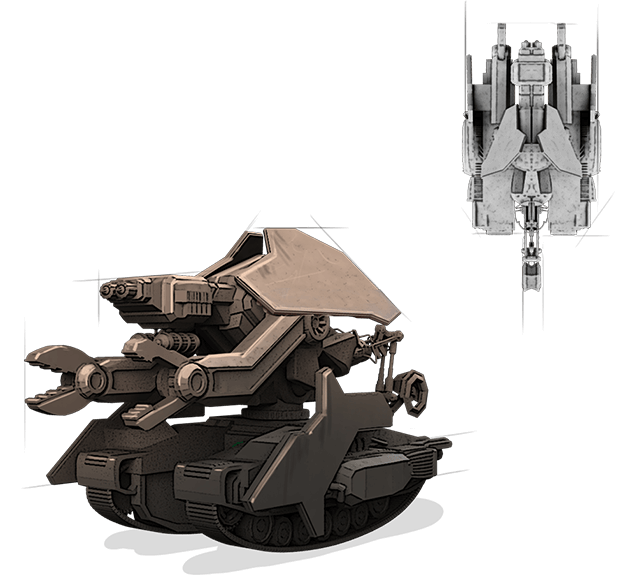
If you think you brought down a Bygone, you have to make sure, twice if the time allows it. Most Bygone models can repair themselves to a degree, but _04s are known to restore back to operation even units reduced to rubble within a minute. During their first attempt at reclaiming Syan Water Station from a Blue Box in 357 AW, Talian Special Forces were surprised to find out that Fours can repair each other as well. Notice how we said “first”.
_04s are not defenseless: a pair of 0.30 machine guns, which can rotate 360 degrees, let them continue their diligent work without being interrupted.
_03
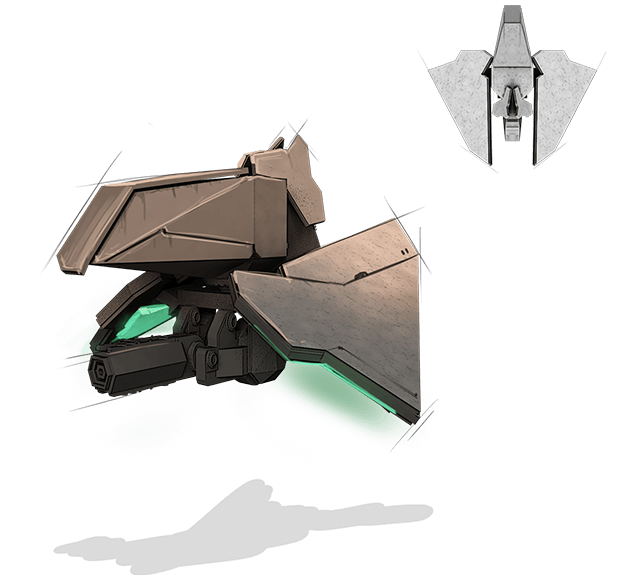
“Everyone’s allergic” — that’s what they say about _03 “bees”. Their firepower is comparable to that of Fives, but these airborne units are much more mobile. The “sting” — a MONGREL 12-barrel machine gun — fires up to four thousand bullets per minute at almost any angle, but what makes this minigun really dangerous is that it can be operated regardless of a unit’s direction of movement. As long as it knows where you are, a Three can get you from almost anywhere.
Unlike their insect counterparts, these bees are also well-defended; however, the drawback for carrying a heavy plating, as well as a large amount of ammunition, is their relatively low speed.
_02
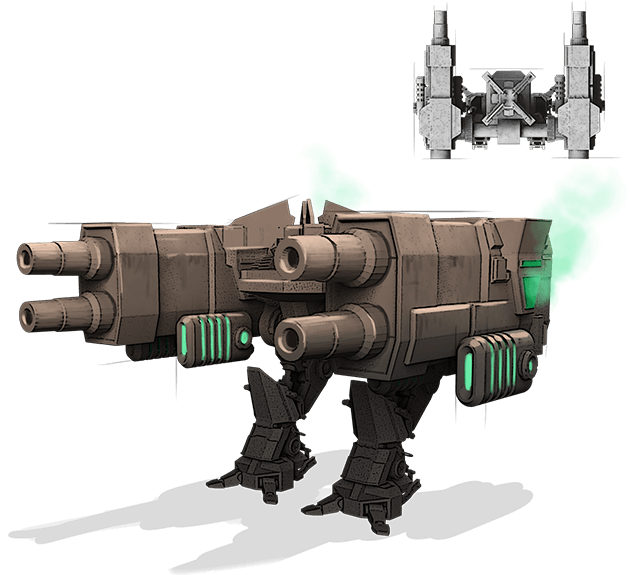
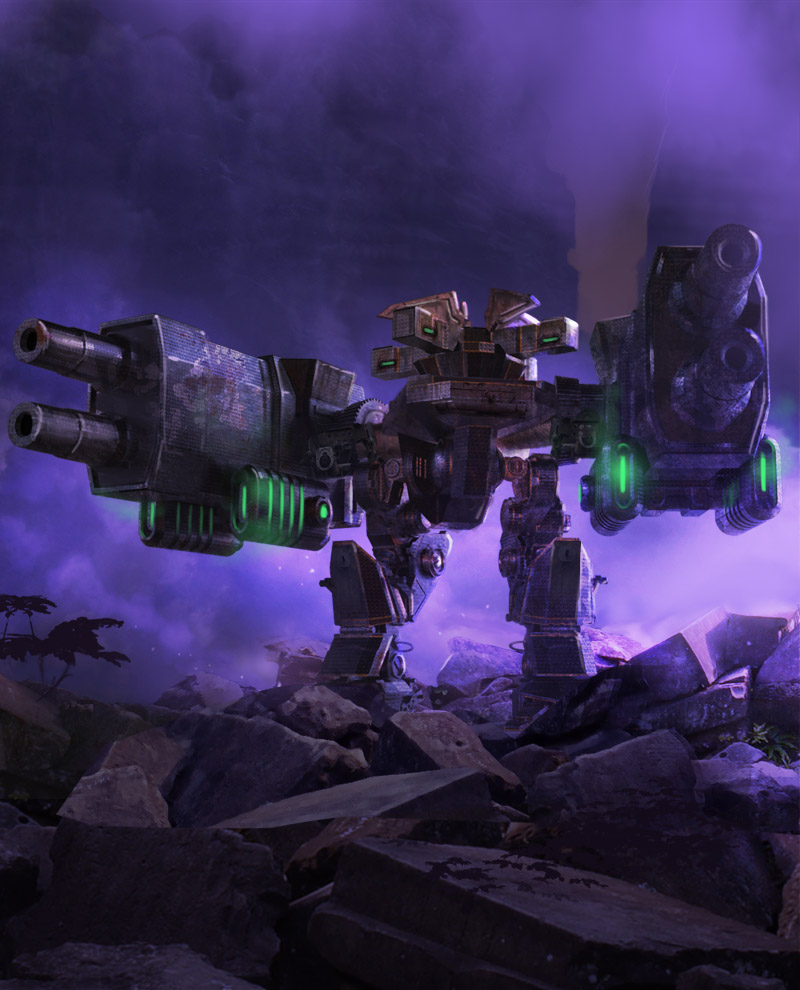
_02 may look somewhat funny, but you won’t be laughing for long. This unit carries an insane amount of explosive firepower: four generously stocked RW “Rex” rocket launchers can deliver a barrage of 110 mm high-explosive warheads to up to a kiloleague away with literally lethal precision. The absence of machine guns makes _02 somewhat vulnerable to attacks from close range, but it’s rarely deployed on its own, so there are other types of units to take care of this. That it overheats quickly is its more exploitable weakness, but lately Bygones have started to adjust their attack patterns so that at least two of these units would be able to fire in turns.
Blue Box
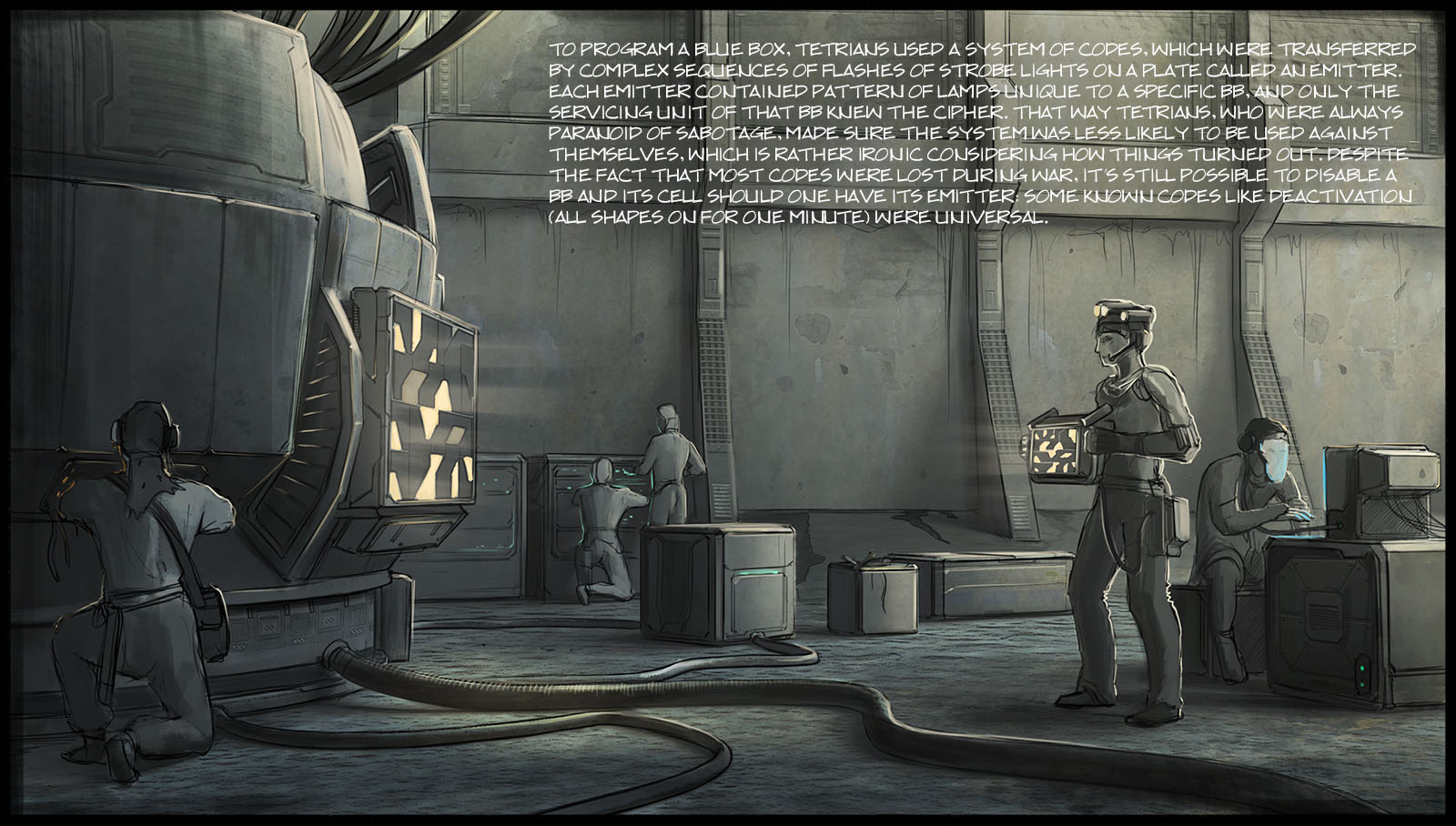
A cell without its BB becomes a pile of junk. The AI manages other units and machinery which is used to provide and distribute necessary resources (cells were designed to be self-sustained); once programmed, a Blue Box stops at nothing to achieve the best possible result within the framework of its goal, which usually comes down to eliminating all forms of organic life except for non-existing Tetrians and some particularly cute animals. The emitters, which are scattered throughout Kyos, can be used to reprogram BBs — theoretically one could force it to target any specific enemy, even hostile jumpers — but since getting to a Blue Box is almost always fiendishly difficult, it rarely happens. Besides, doing so would require the knowledge of a cell’s codes, which are very hard to come by, so in case someone does manage to get to an AI, they usually shut it down or destroy it.
Demons
Manifestations of suffering and fury.
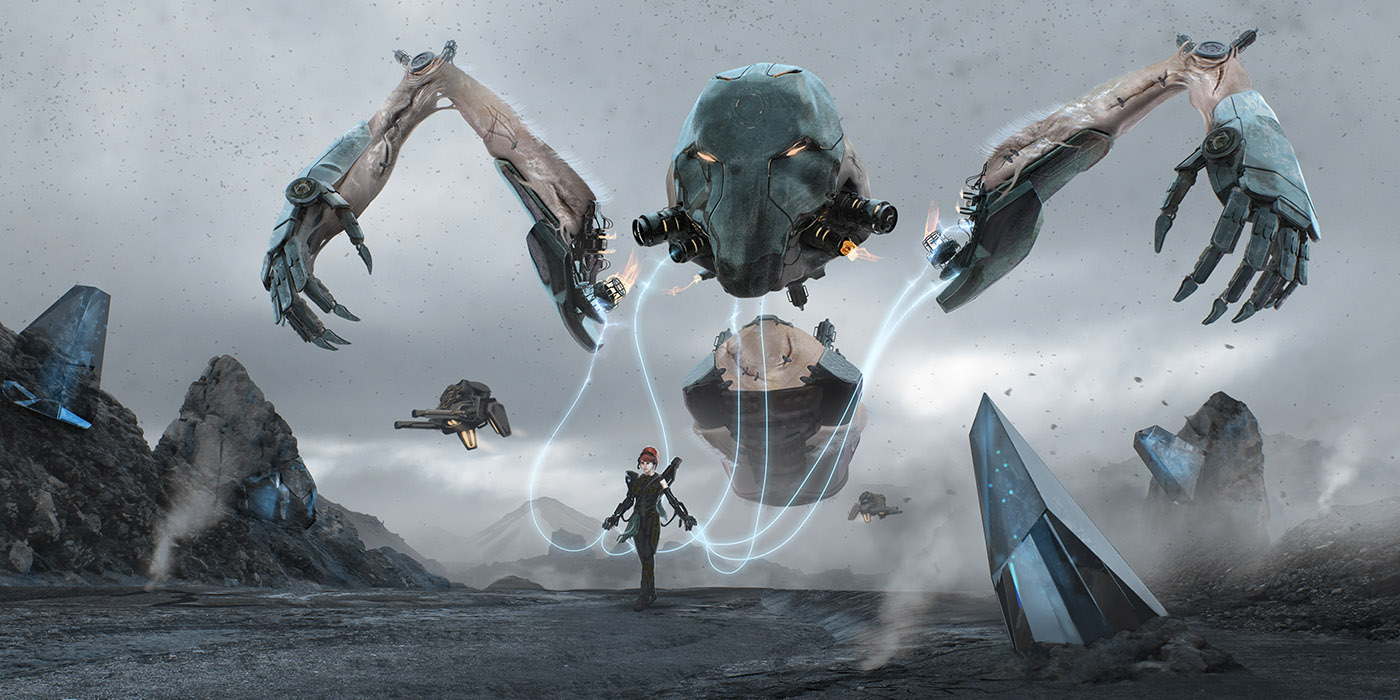
Once an esper awakens, they bring a Demon into this world. It is a monster born of pain and consumed by rage — a Manifest doesn’t come cheaply after all. There’s usually a grotesque connection between the visual appearance of a Demon and a way in which their esper suffered. For example, a number of Demons have their mouths sewn shut, as after the Kindling many soon-to-be espers were gagged out of fear of new incidents. Other cases can be more subtle, and most of them are certainly much more macabre.
Whether Demons have a will of their own or act in accordance with patterns or instinct is unclear; even more puzzling is that they seem to exist in multiple subjective realities simultaneously. It is well known, however, that most espers don’t order their Demons around. Tetra made a mistake of thinking otherwise, and concentrated its initial effort on the extermination of espers, which was one of the reasons it lost.
Every Demon is a dangerous creature, usually large and almost always extraordinarily powerful, with Master Demons towering even higher above the rest in might and ability. Get to know some of them better: once you do, they will seem even more disturbing.
Calderra, Who Is Sliced in Half
Not a single Manifest has been officially recorded since the events in the NRC, but some scholars are convinced that at least a few espers were created in the chaos of the early days of War. Both sides could be responsible for this: Tetrians were understandably paranoid, and it took them some time to realize that espers can be identified by sigils; the High Council, in the meantime, wasn’t in a hurry to publicly admit the reason behind the Conflagration, which would stay the hands of citizens particularly enthusiastic in their witch hunts.
But what about espers, then? Some of them became known for their zeal to avenge Tetra’s genocide; more Demons would certainly help with that, but it is widely believed that an esper can only Manifest once. However, there was no shortage of new helpless victims who had the potential to produce new creatures… and who but espers would know just how to unlock it?
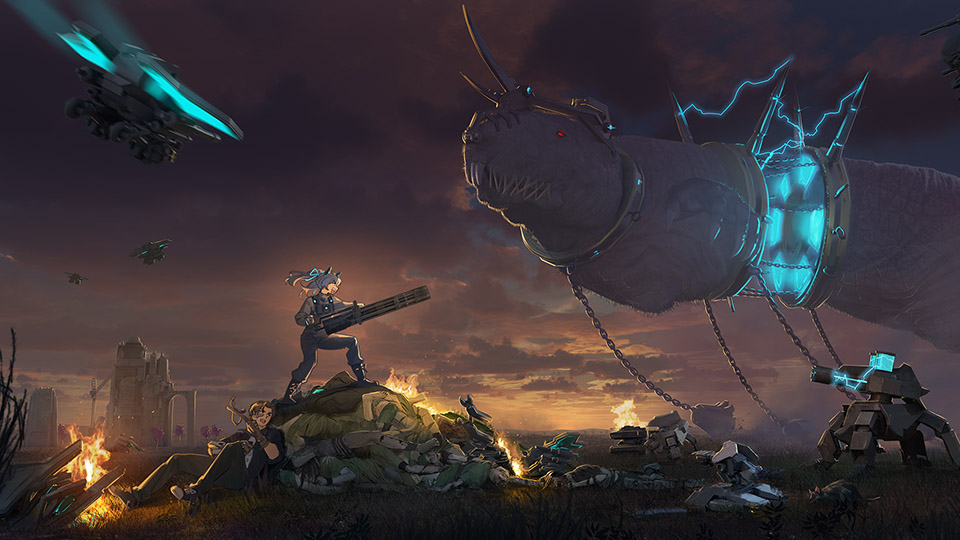
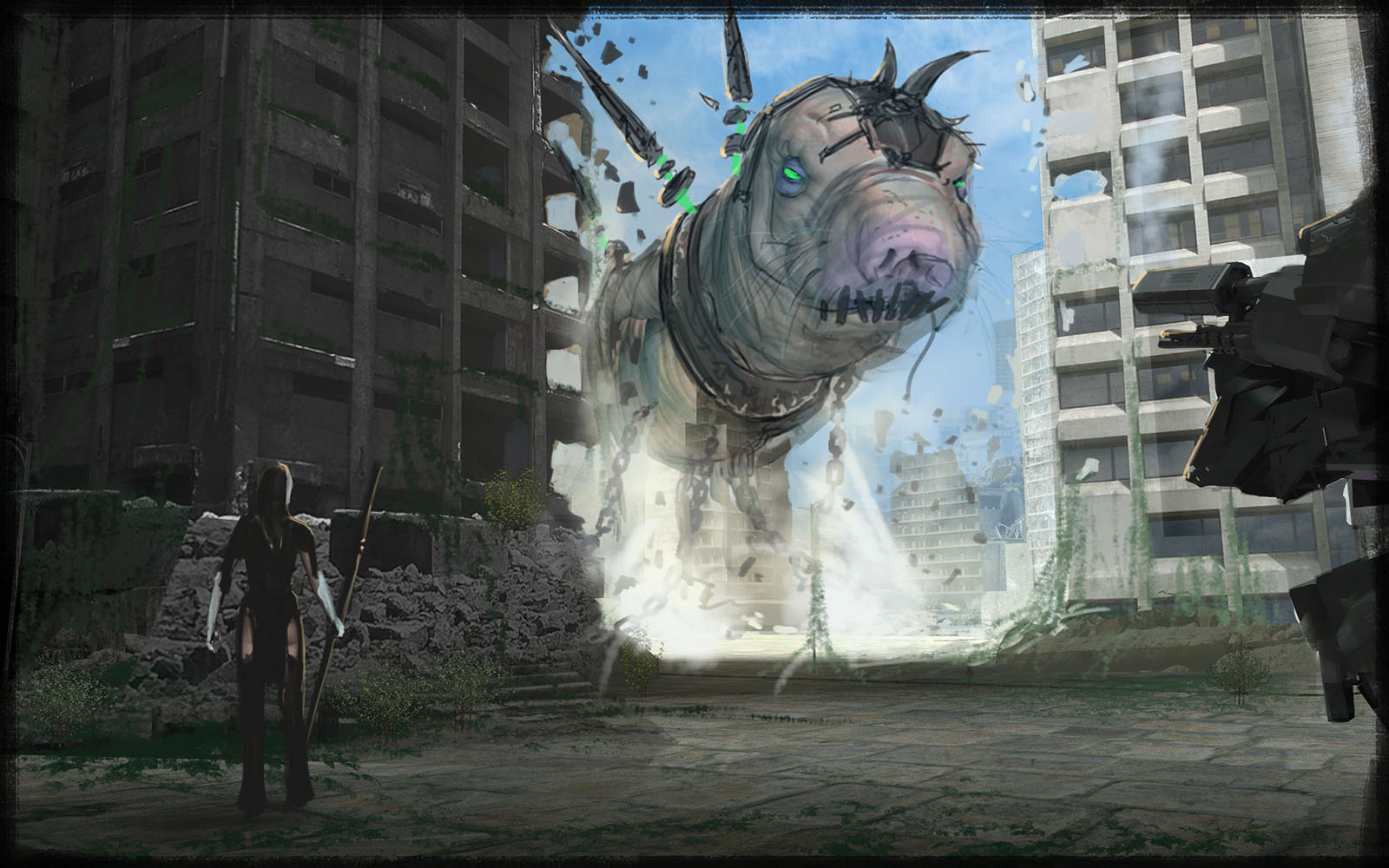
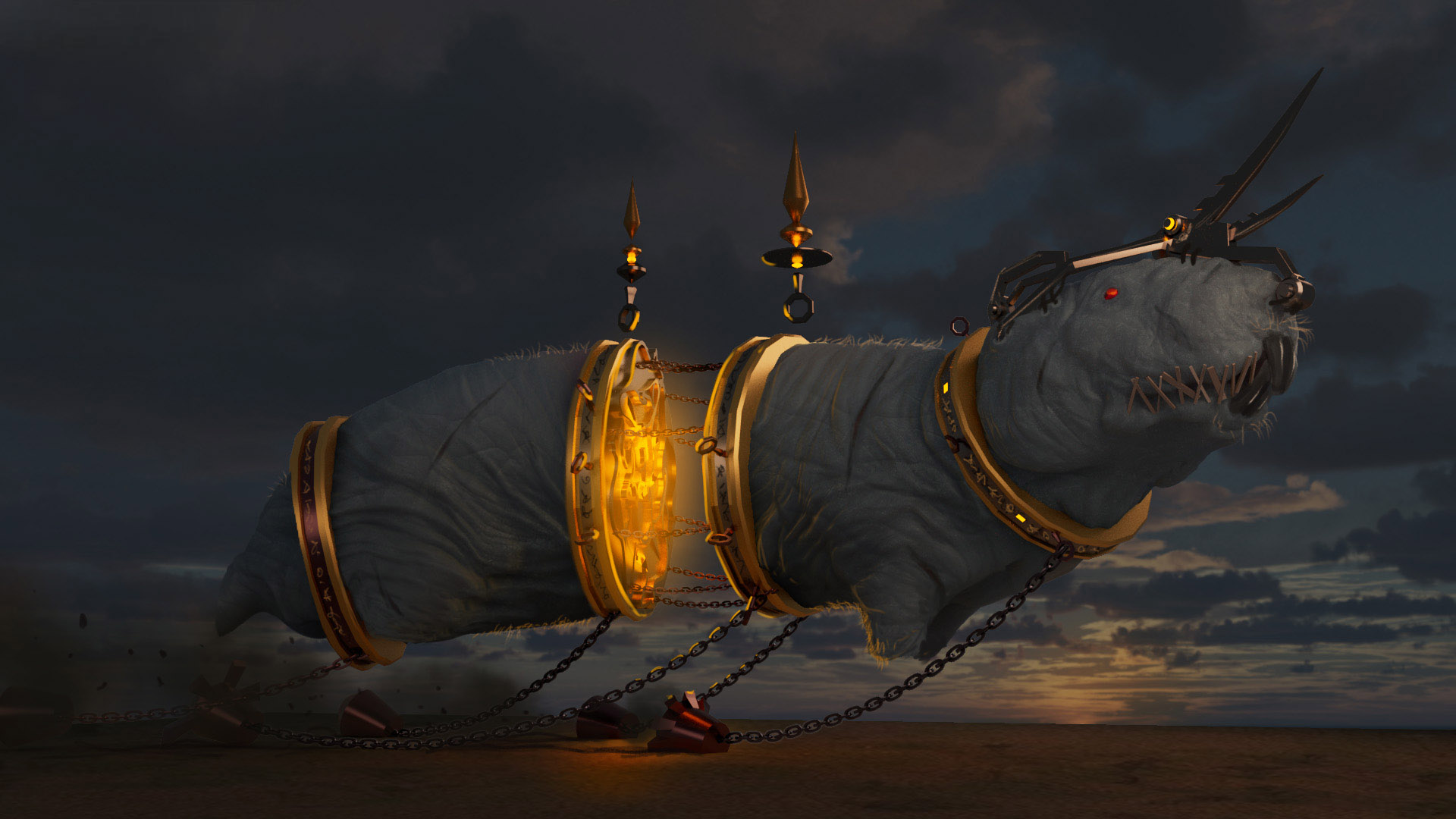
In the end, though, this is just speculation, but those who’re inclined to believe it count Calderra among one of the Demons of this “second wave”. She is an Aspect — Calderra can operate the energies around Her to perform powerful non-physical attacks. Two plates of copper which separate Her body in half act as a gigantic catalyst, increasing Her damage output as well as casting time. Finally, balls (or rather, cones) and chains which keep Calderra grounded also act as potent melee weapons; by swinging them around, the Rat can attack several targets at once.
Above: Calderra in Minotaur
Gram, Who Brings Plague
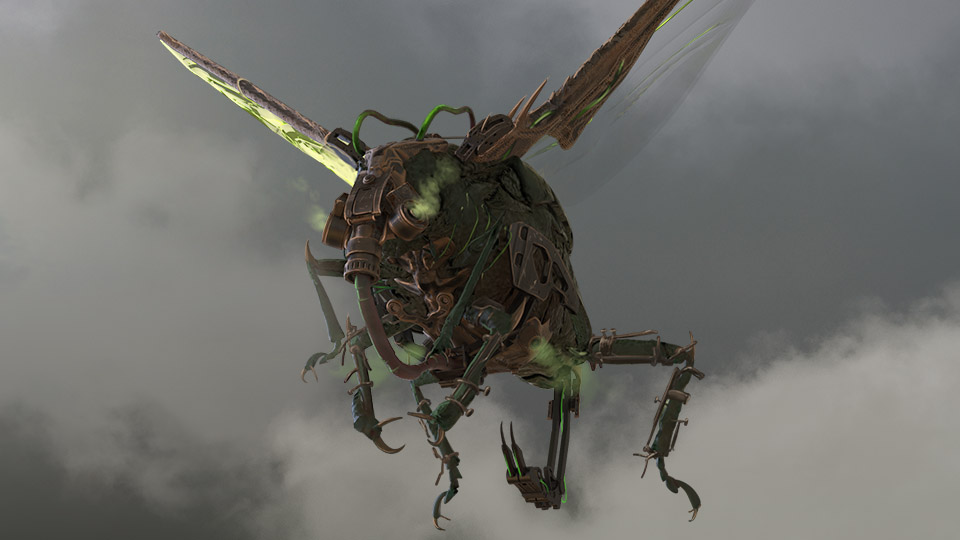
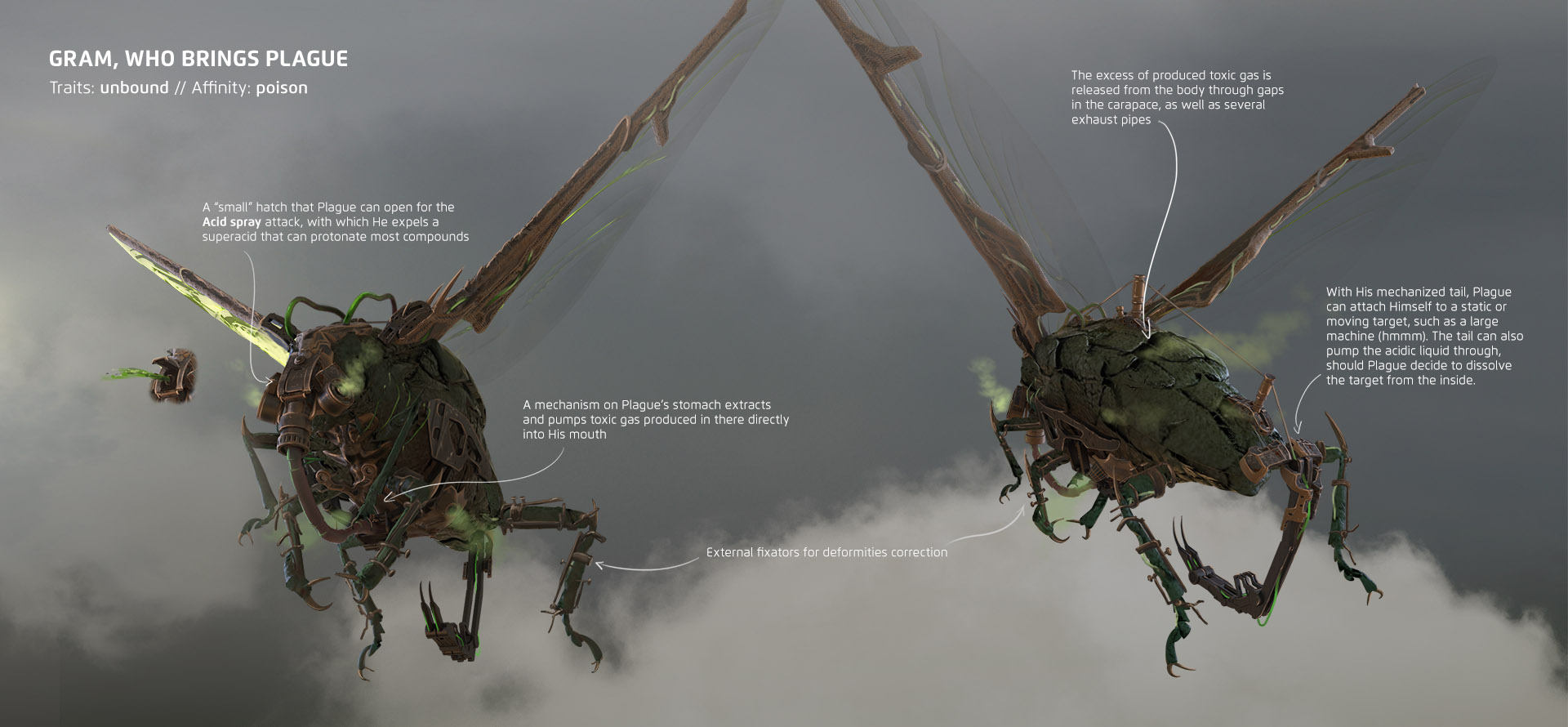
Espers often added older fears to their Demons. Several instruments for deformity correction are embedded in Plague’s body, and it’s likely they came from an unpleasant childhood experience (which is why, perhaps, He’s sometimes observed without them). Entomophobia, on the contrary, is a fear rarely strong enough to become a primary Manifest factor, and so an insectoid Demon is almost certainly a result of a trauma obtained in the Northern Research Center — just like Plague’s gas mask.
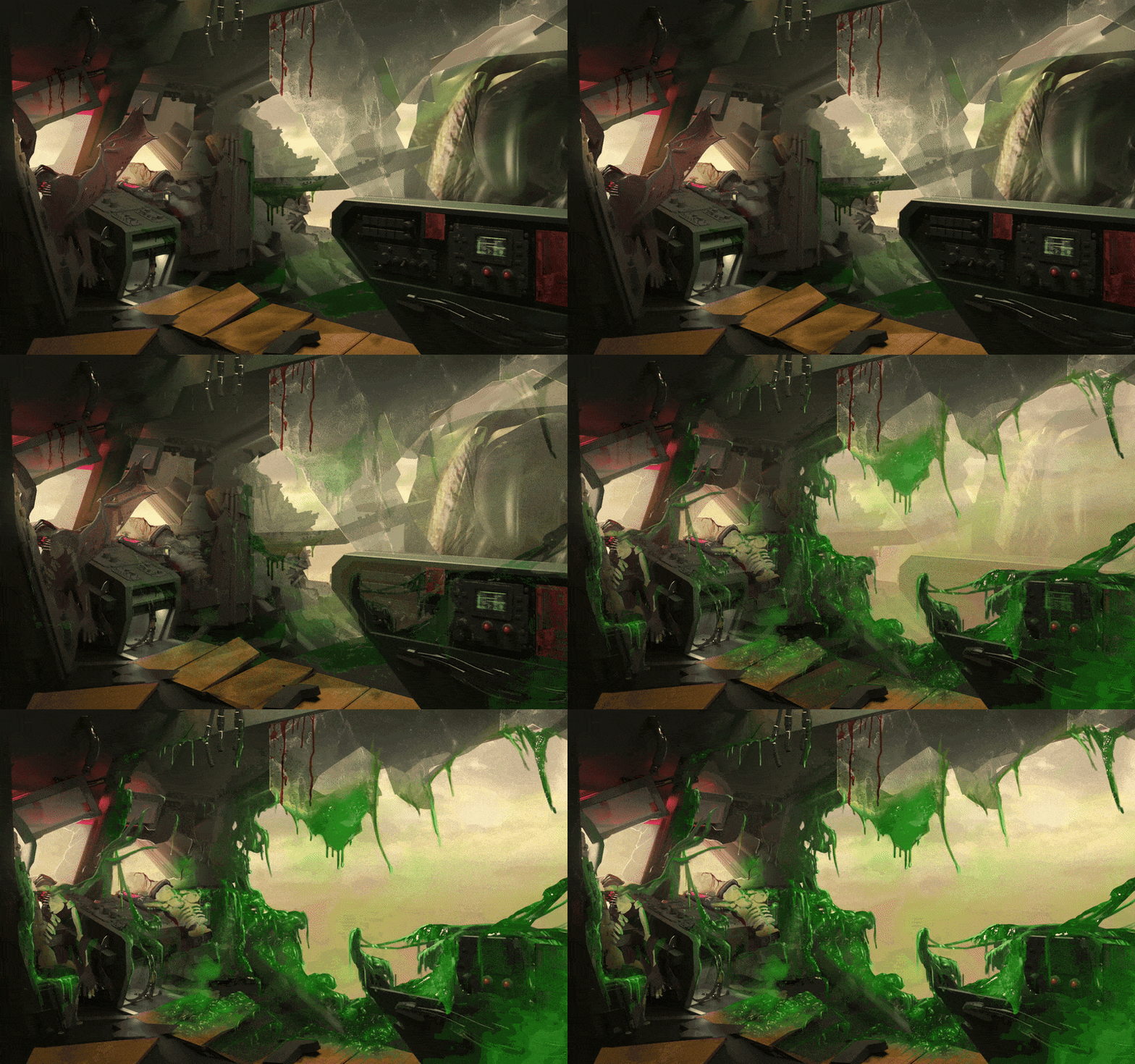
Plague is quite agile for His size; in addition to ranged acidic attacks, He uses His partly mechanical tail and legs ending in sharp claws to mince His targets, paralyzed or otherwise weakened by poison the Demon produces inside His stomach.
What really gets you in the end is the buzzing, though.
Raven
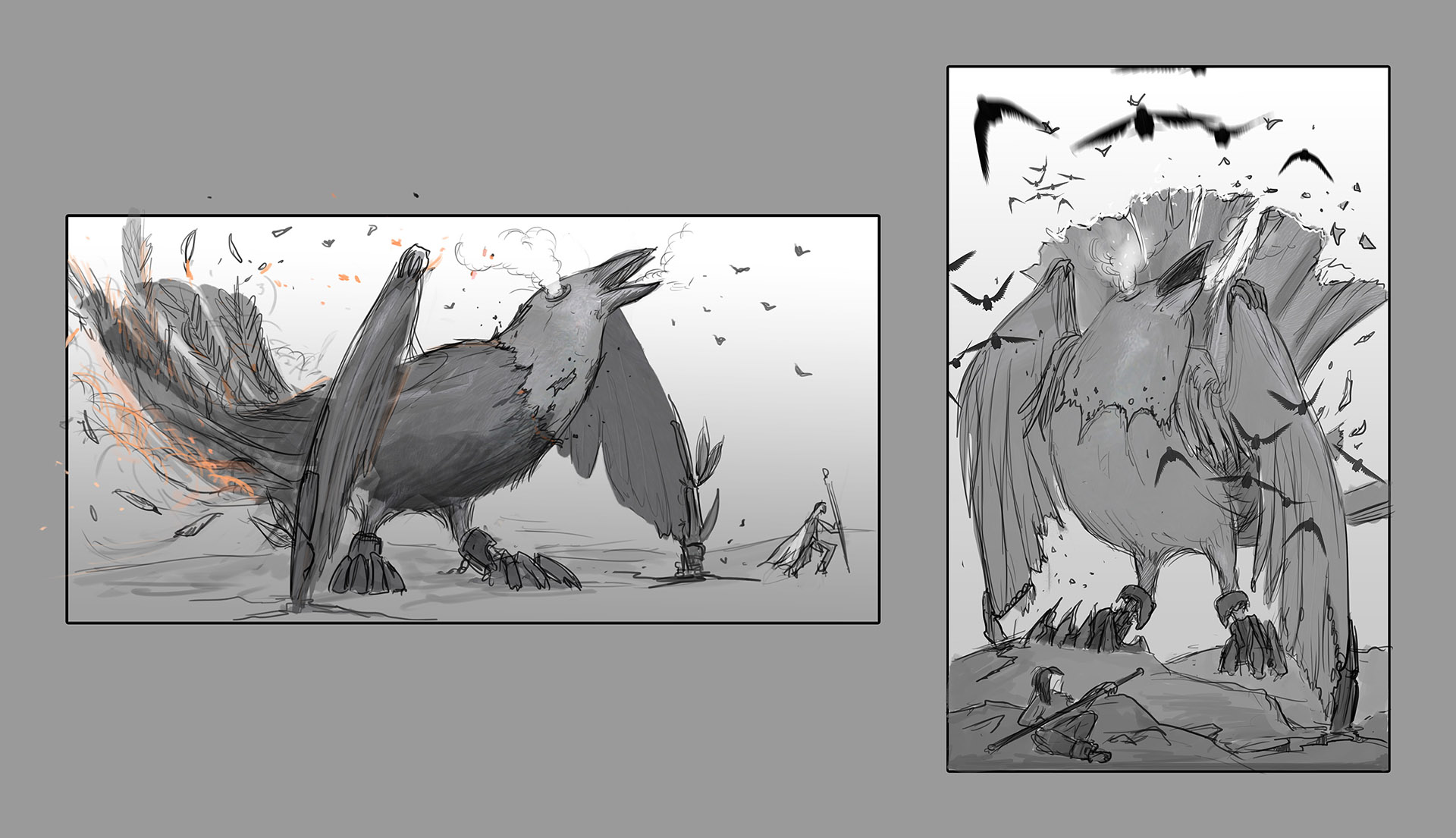
Those “Who” epithets appeared during War; people gave them based on accounts, hearsay and whatnot. It was easy: with most Demons, you couldn’t really go wrong with “He, Who Brings Death” or “She, Who Wreaks Havoc”, although sometimes folks were creative. But Raven was different. His actions were difficult to comprehend, but it looked like they were being carried out with some kind of sensible goal in mind; with Him, it wasn’t just mindless slaughter, which is why there are more witnesses — I mean alive, of course — of Raven than of most other Demons. So He wasn’t given a name, as we figured He probably already had one. — Nod Artas, Memoirs of a War Correspondent, 57 AW
Isott, Who Terrifies
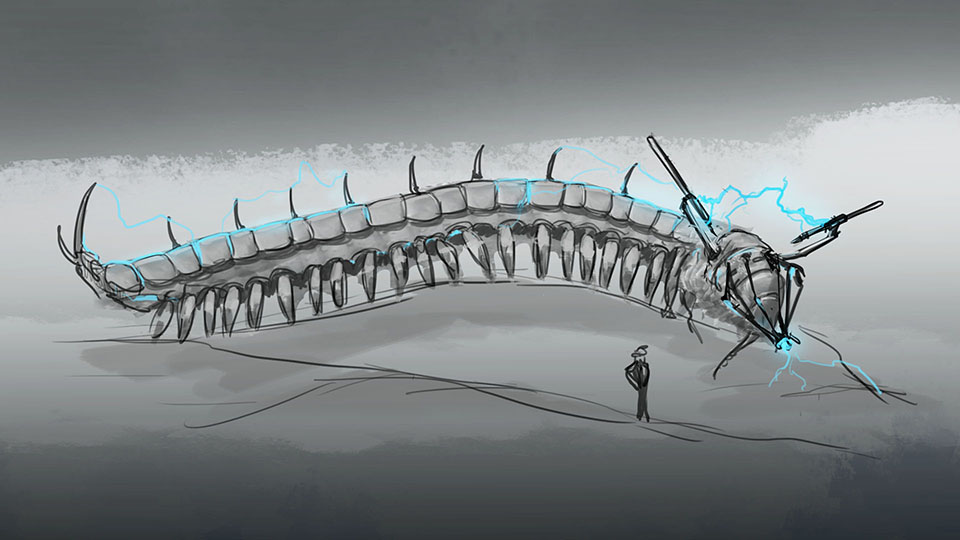
The sight of Isott is unsettling, but even more disturbing are the reasons for such creature to have manifested itself in the first place — NRC grew desperate in the absence of results as time went by and started to resort to extreme stimuli. For a brief time during the beginning of War, Isott was featured on draft posters with a giant boot and a tagline that read “Pest control”. In just a couple of months, it wasn’t funny anymore.
He is surprisingly slow (when you take the number of legs into consideration) and has normal resistance to physical attacks, but scoring a hit with either a melee weapon or a firearm is difficult: Isott specializes in area manipulation and has a number of powerful defensive lightning-based skills. But put that elemental resistance gear away — the arsenal of His attacks is much more diverse, and He’s known to be one of the smarter Demons out there.
You know, maybe the fly wasn’t so bad… — Nora Bloom, a student of the Megaversity of Pion, 523 AW
Klyogeia, Who Rips Apart
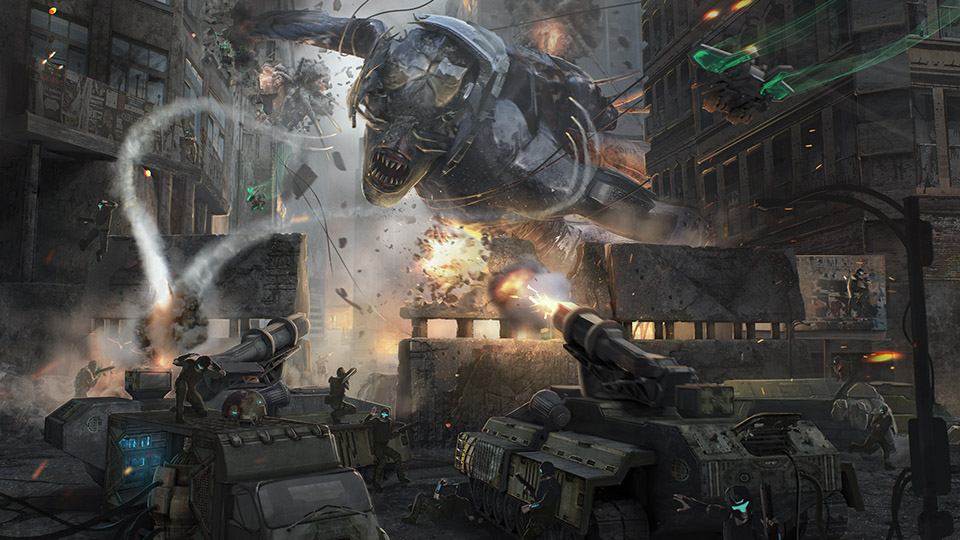
Klyogeia, or Klyo as Tetrians grew to affectionately call Her, laid waste to Metropolis in Year 0; the military lured the Demon into the city in hopes that the creature will be an easy target on the (comparatively) narrow streets, but they assumed wrong. Klyo breezed through the old capital with ease, crushing every fortified barricade on Her way and killing thousands of soldiers and civilians in the process… and then She came back for more.
She is incredibly agile and relies mainly on fast combos of physical attacks, which She compliments with offensive status manipulation. Klyogeia also boasts exceptional armor class rating for most of Her body areas, which is another reason Tetrians had difficulty bringing Her down.
Kin, Who Obeys
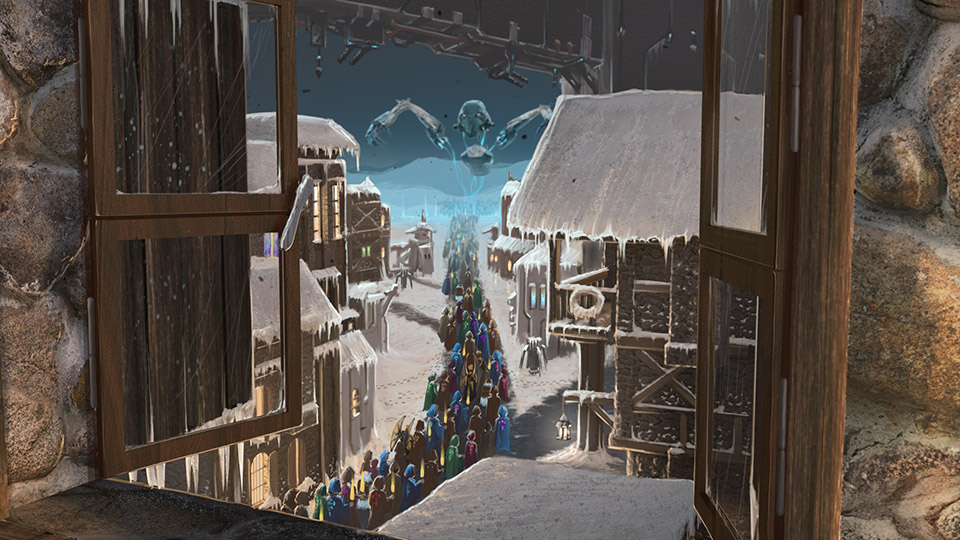
A rare example of a Demon bound to their esper, Kin is also one of the most powerful beings on Kyos. He’s a Master Demon, which are often less intelligent (as far as this word is suitable to describe a creature whose mind is a complete mystery), but always stronger than others of their kind.
There are no War reports about Kin; the first documented encounter happened during the Age of Expansion as Kyosians were attempting to retake Stargazer. It was War in miniature: two Ares PSF companies were wiped out in less than a minute; Novas sent a large contingent of its Corps to search and rescue, which went down even faster. Kin and His master ultimately left Stargazer of their own volition, which is the only reason the outpost was finally established.
Very little is known about how Kin fights; however, battles with bound Demons are very different from confrontations with their free-roaming counterparts. There are two enemies, not one, both capable in their abilities and strong in their stats. Of course, it’s highly likely that an esper’s defenses and health pool are considerably lower, but one would throw their life away assuming this flaw isn’t compensated for by a Demon who one-hits a fully upgraded Raptor.
Above: Kin in Minotaur (1)
Corrupted
Stranded Kyosians forever changed by the Collapse.
They say every slain Corrupted will follow Lucius Soma to Hades, but this is somewhat misleading. While it’s true that Lucius effectively doomed other still travelling groups by ordering to start the Somas’ Axis generator ahead of the coordinated time (see 1-2 AW on the timeline for more), with the activation of multiple domes the Collapse would have happened anyway, and everyone involved was well aware of that. Corrupted are Kyosians who unwillingly paid the price for the domification by having been outside domes or Axis-rich areas when the objective reality failed. The event itself had that effect; one doesn’t turn into a Corrupted by going subjective now.
It’s unknown whether all of the existing types of Corrupted appeared in the Collapse, or if there were any further mutations. Aldi Goffel, a scientist who actively researched Corrupted during his work on the flux, insisted on the former, saying that the resulting variety depended on location and mental and physical properties of the “source material”. His hypothesis is supported by the fact that no new types were registered since The Scourge; there are a total of six, which are divided into Lower and Higher Corrupted based on the extent of their ability to move between subrealities at will and act rationally.
Not all Corrupted behave in a hostile way, but there are no records of successful attempts at establishing contact, so little is known about the inner workings of their “society”, or even if there is any. When observed, their actions often seem bizarre and make little sense, but some go so far as to suggest that in the long run, they pursue their own collective agenda… though that’s an unpopular opinion.
Scavengers and Ghouls
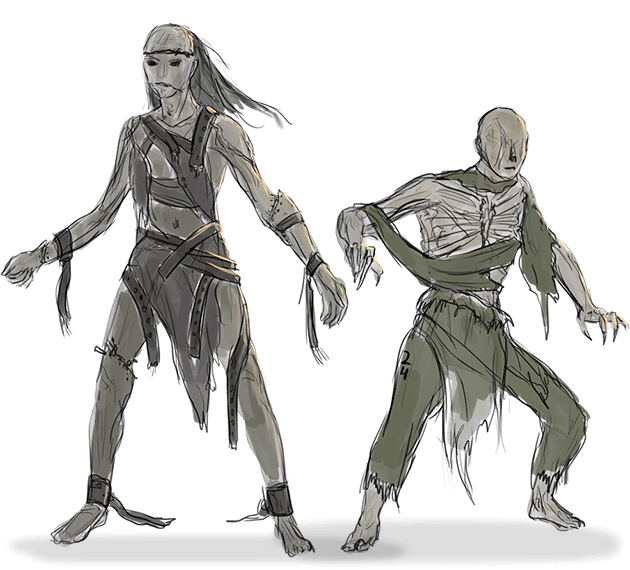
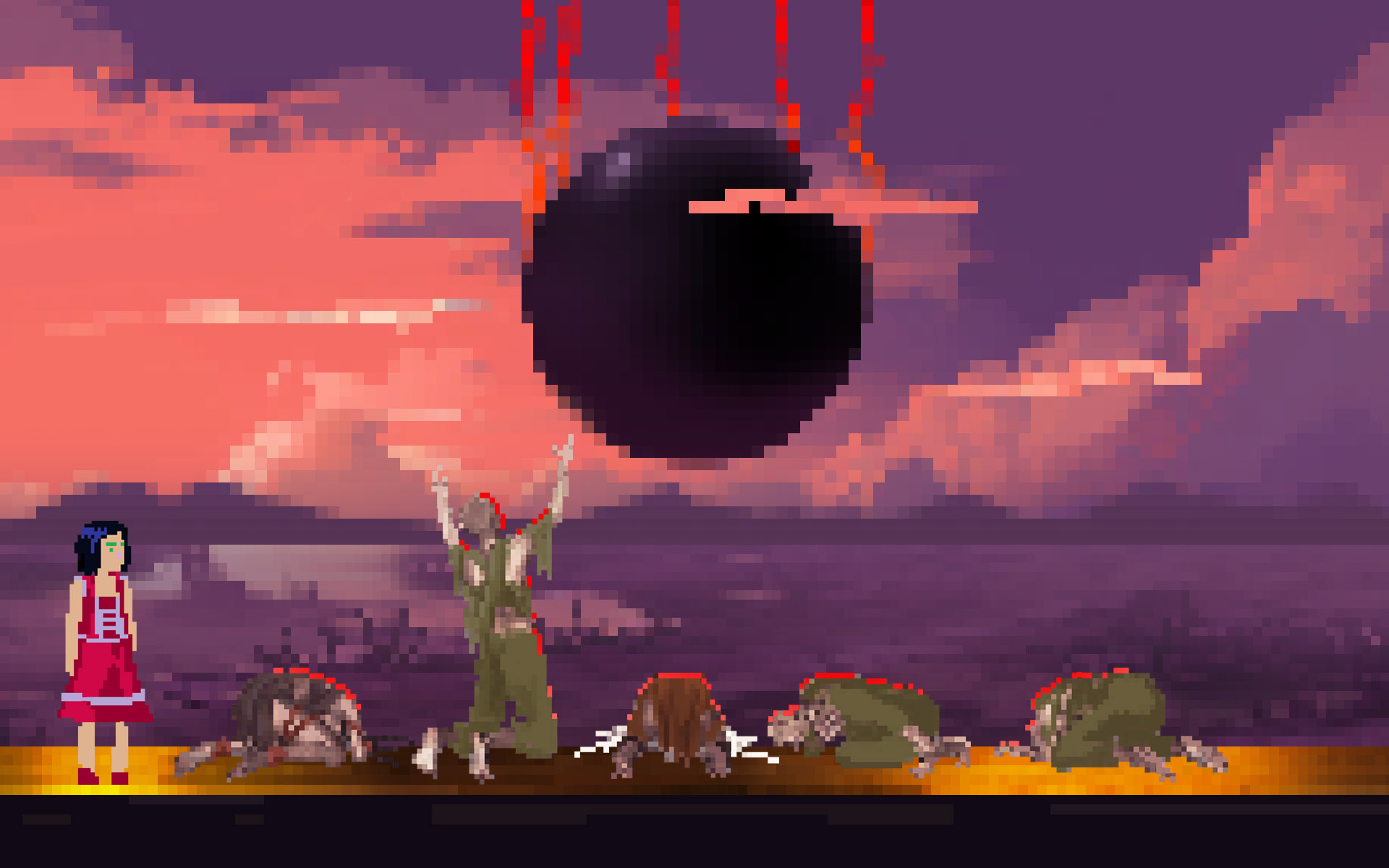
It appears that most Corrupted Kyosians were reduced to seemingly mindless creatures — either Scavengers (females) or Ghouls (males). They are considered to be Lesser Corrupted (or Crawlers), and their danger lies in numbers and exceptional hearing and sense of smell. But even groups of them are manageable unless they’re organized and led by Higher Corrupted: during The Scourge, many settlements paid dearly for disregarding this and employing their usual tactics against the “dumb corpses” until the very end.
Wraith
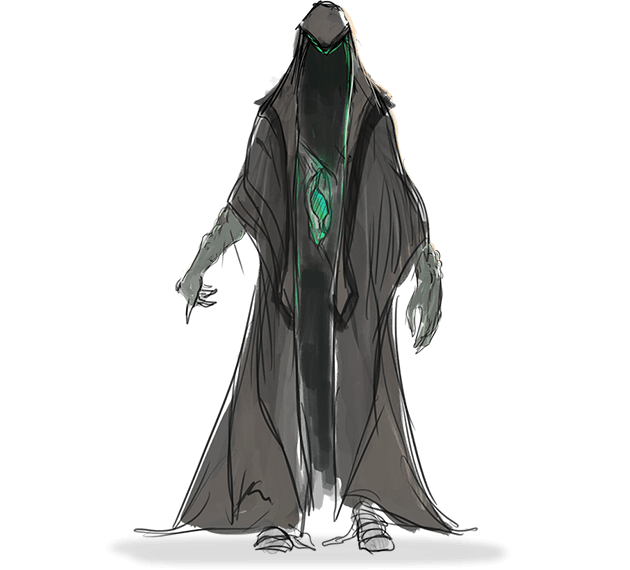
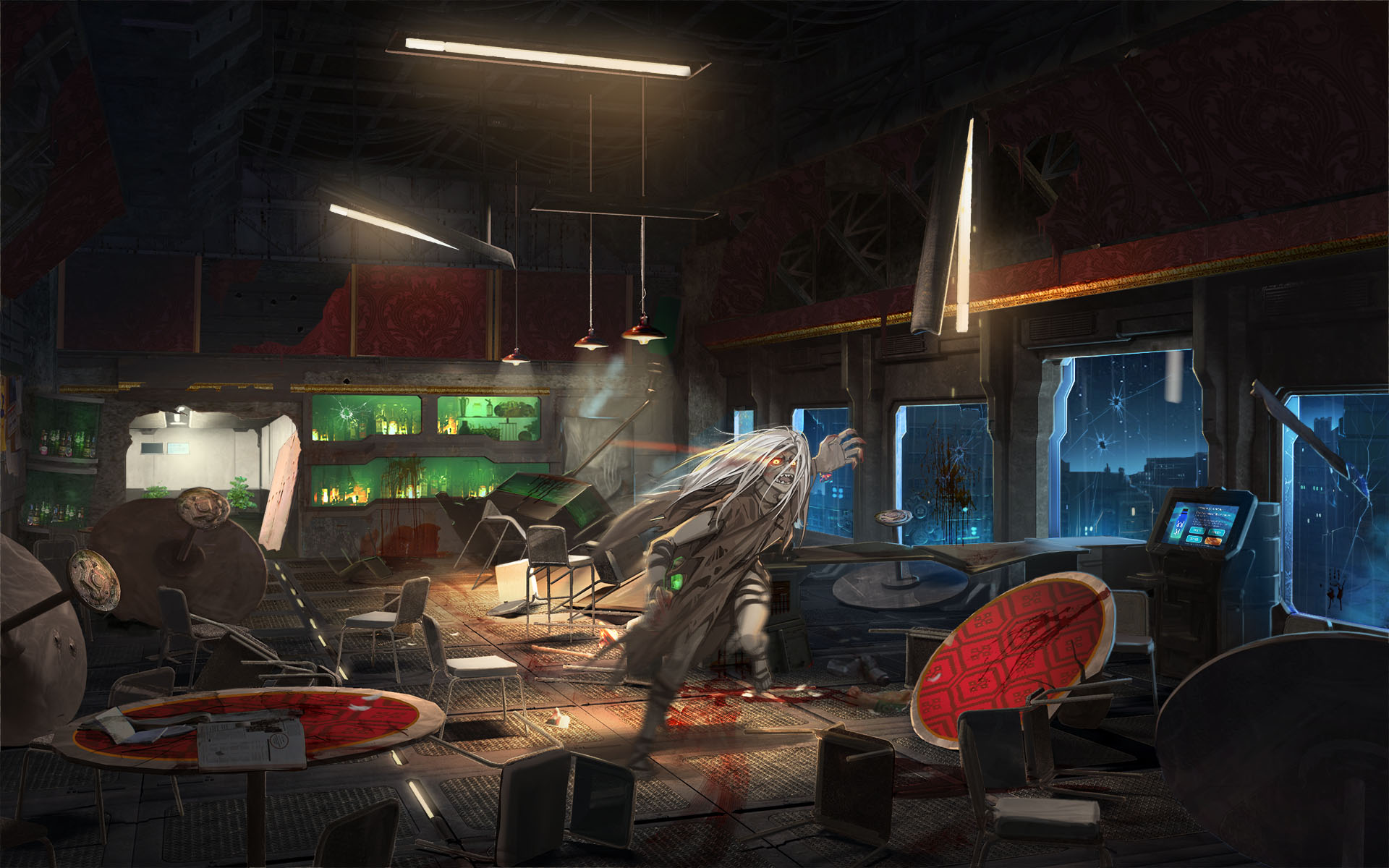
Wraiths come from Corrupted males, but demonstrate entirely different behavior from Ghouls. They communicate (although how, exactly, is still unclear) and are able to command Lesser Corrupted, albeit not in such numbers as Liches. When not busy ordering Crawlers around, they are often seen accompanying Higher Corrupted; but even on his own a Wraith is a menacing opponent. He compensates his weakness to physical damage with extremely high agility and evade rate, and relentlessly attacks his disoriented foes with a barrage of unique null manipulation skills.
Banshee
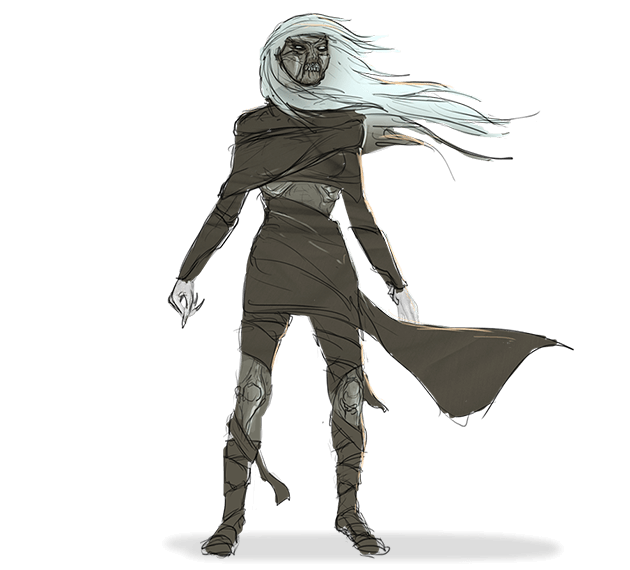
Just like Wraiths are an advanced form of male Corrupted, Banshees are the result of more drastic transformation of females. On their own, they are typically considered to be more dangerous opponents than Wraiths: being highly resistant to physical damage themselves, Banshees rely heavily on physical attacks and often carry melee weapons, which they handle with surprisingly great skill. They are agile and cunning, and despite their habit of getting close and personal they don’t hesitate to use status manipulation.
Curiously, Banshees never attack children, though this isn’t of much help to most Kyosian explorers.
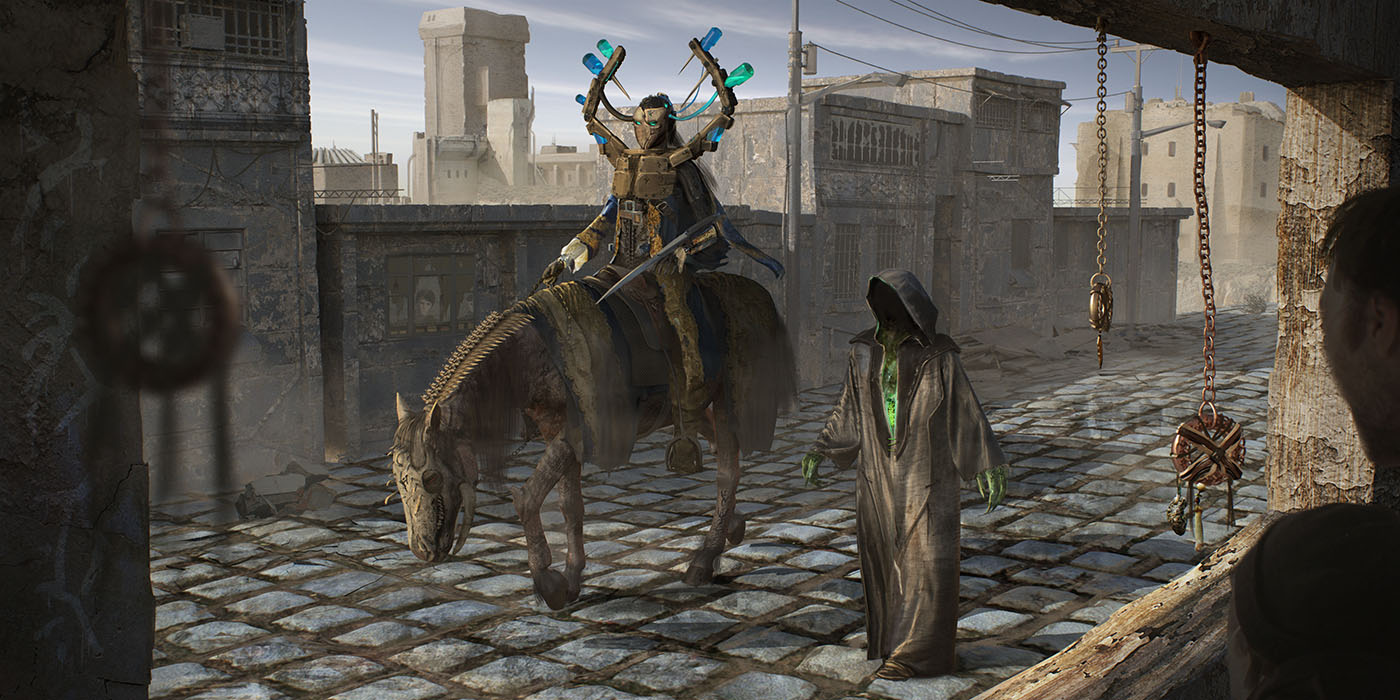
Lich
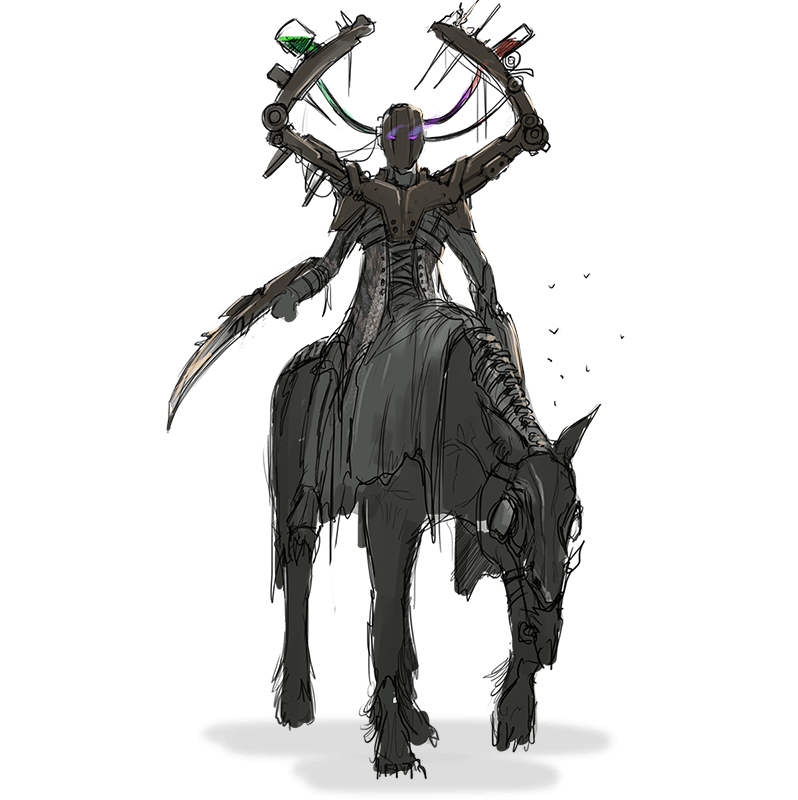
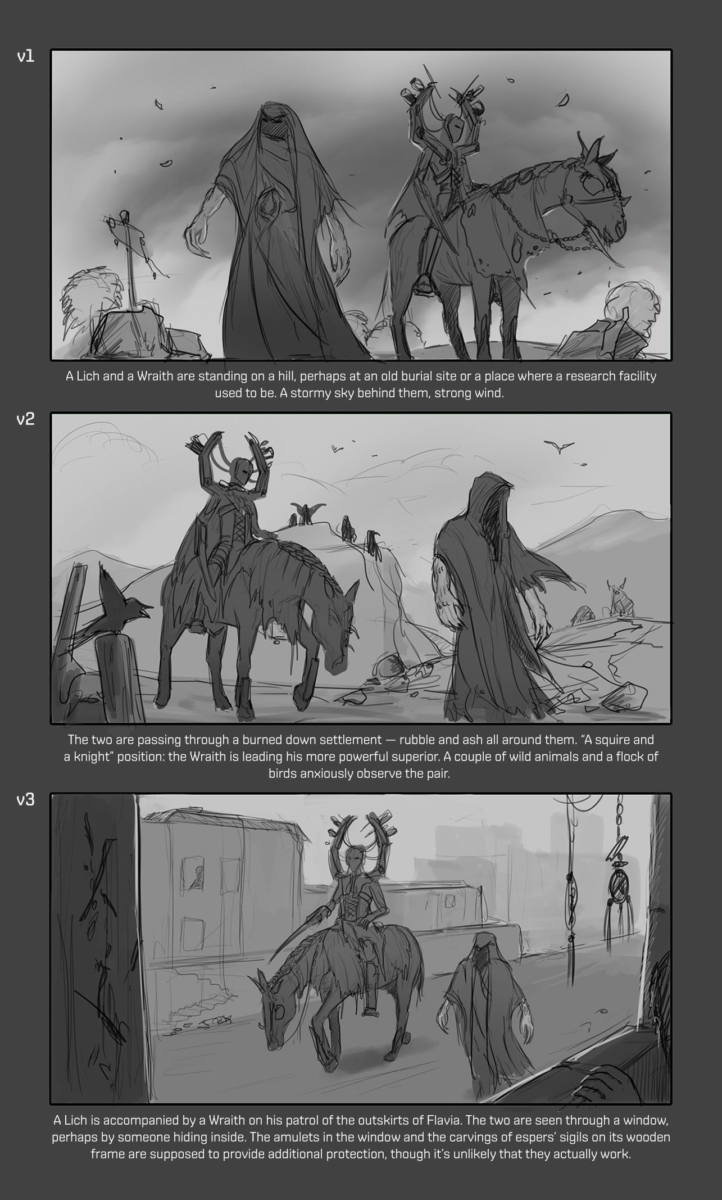
These creatures led hordes of Lesser Corrupted through the plains of Kyos during The Scourge, and continue to steer them hundreds of years later. Goffel once suggested that the more advanced a Corrupted is, the less aggressive they are, but the survival rate of encounters with Liches makes this theory questionable.
Like Wraiths, Liches clearly demonstrate the ability to communicate and manage the lesser of their kind. It was speculated that, while any Corrupted can jump individually, only Liches possess the ability to flux (a borrowed verb in this case) whole groups between subrealities and hold them together for prolonged periods of time.
It is not known what sex they are, or were. What is known is that Liches prefer horses as their mode of transport and corrupt the poor things all the time.
Death
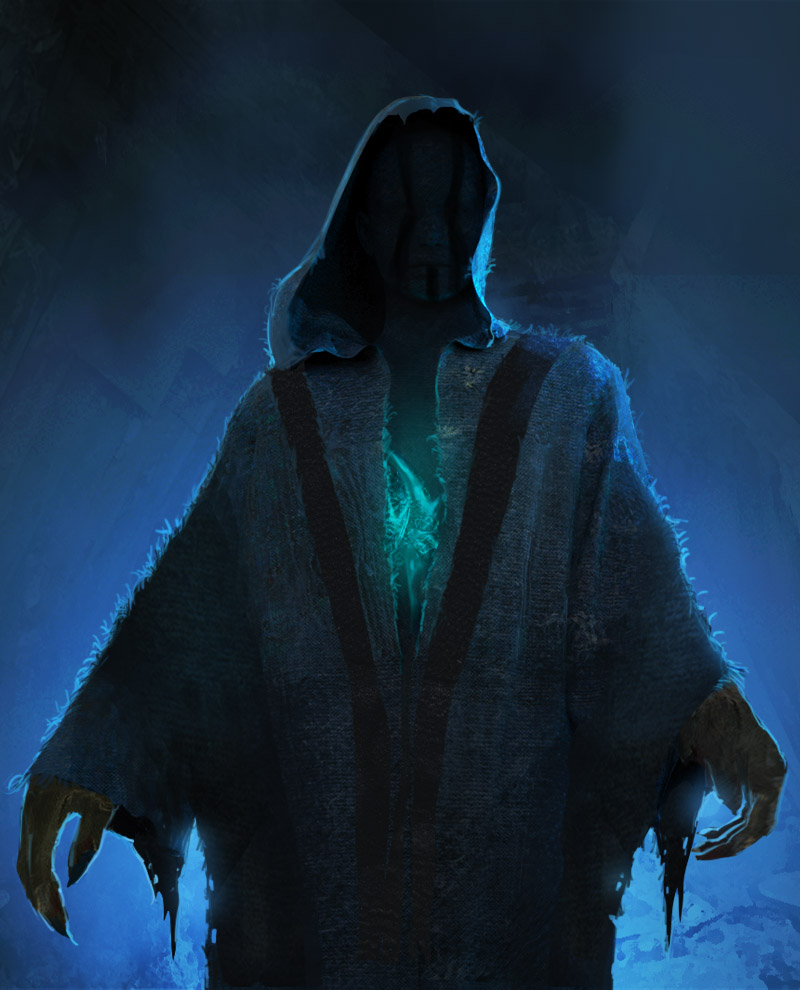
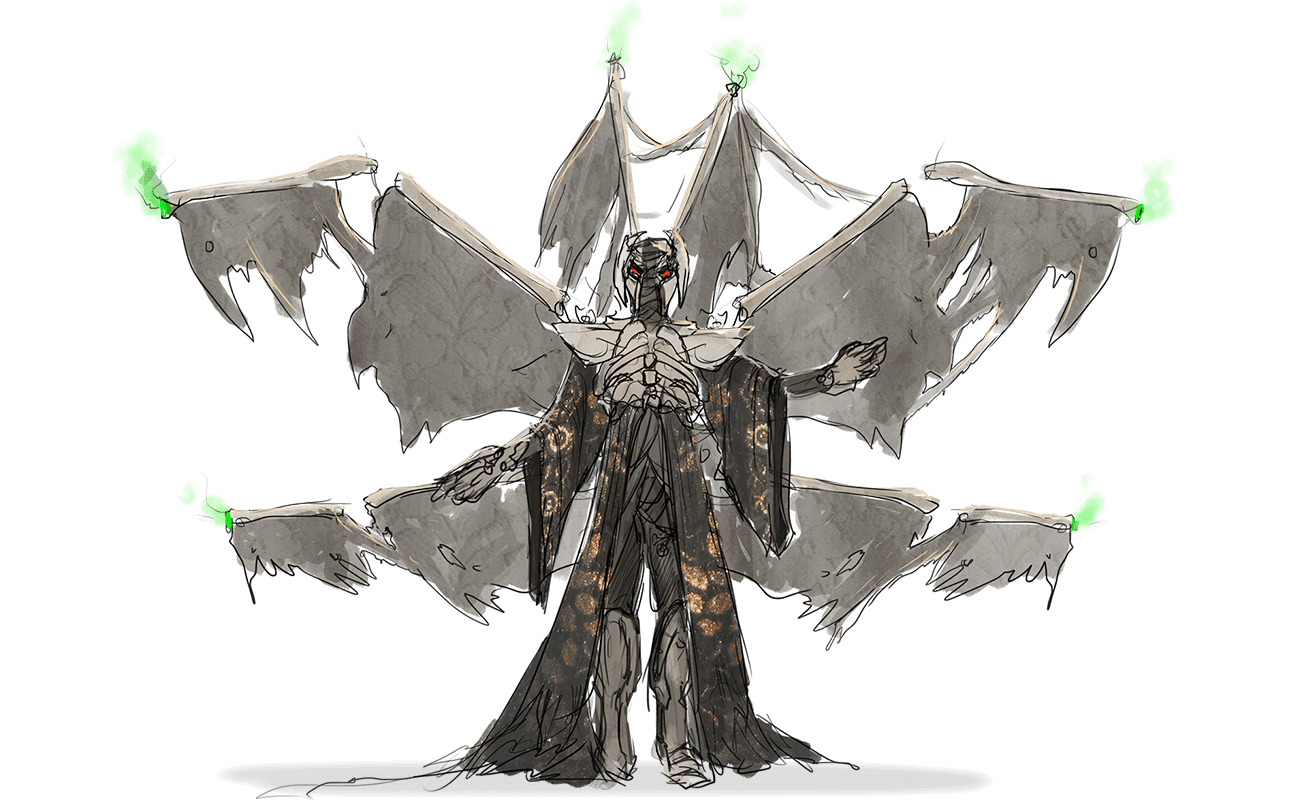
I watched smoke coming up from what was left of our Usurper. Lance just dropped us a couple hundred leagues away from the Inner Labs — right in the middle of Soultap — when a giant invisible hand started crunching the ship like a plastic bottle. One, two, three — every screech was separated by a short pause. Then the crumpled ball of steel fell to the ground. For a few seconds we just stood there, shocked and clueless, until Rob raised his shaking hand and pointed towards the Labs’ gate. We saw six battered flags hanging from crooked poles; they slowly moved towards us, carried by a tall, slim creature on its back. I couldn’t move; I noticed how the snow trail from its heavy mantle grows longer, and I thought: lucky us, we met Death. — Leon Tall, “The Survivor”, 339 AW
Beasts
Fauna and flora (yep) native to Kyos.
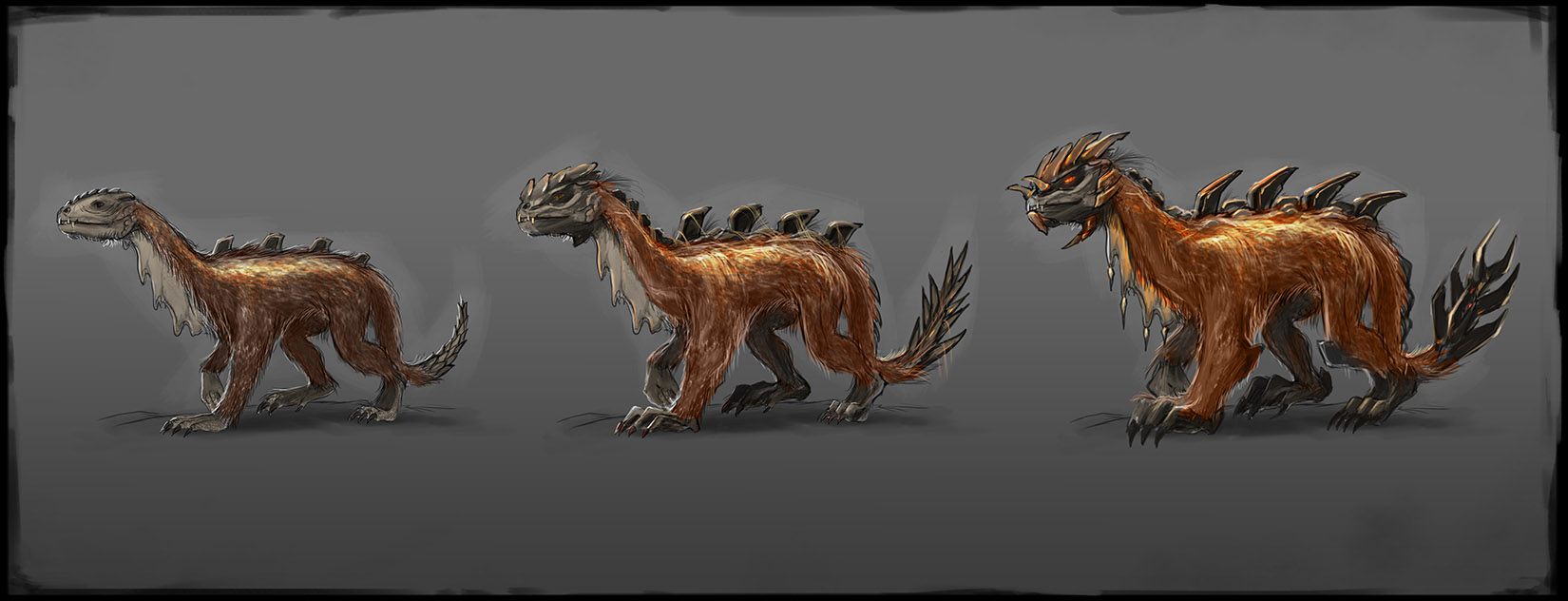
To be fair, there were enough ways for Kyosians to get killed even before Demons and Corrupted appeared, and Bygones started to run wild. They faced dangers from other Kyosians, invaders from the north, and (last but certainly not least) local animal and plant life of all kinds.
Some beasts are less aggressive than others, but the term is usually used even for creatures that pose a threat only when provoked. They come in great variety: Yoon Mai, a famous Somian biologist, was categorizing them until her death during an expedition to Ilyon in 422 AW; several are so large that they can be mistaken for a Demon, although once you’ve seen both (which, to be fair, not many Kyosians have), the difference becomes apparent.
Corruption
Corrupted (or Tainted) beasts become weaker physically, and their lifespan is usually shortened. In exchange, however, their resistance to non-physical attacks increases, and they gain new abilities and patterns of attack. Many Higher Corrupted specifically seek out beasts to taint them; it’s a quick process that is typically complete within a couple of days. However, a beast can become Tainted simply by staying close to Corrupted for prolonged periods of time, in which case the Corruption happens slower. In the end, such animals either travel with their new master, or live out the rest of their days demonstrating asocial behavior.
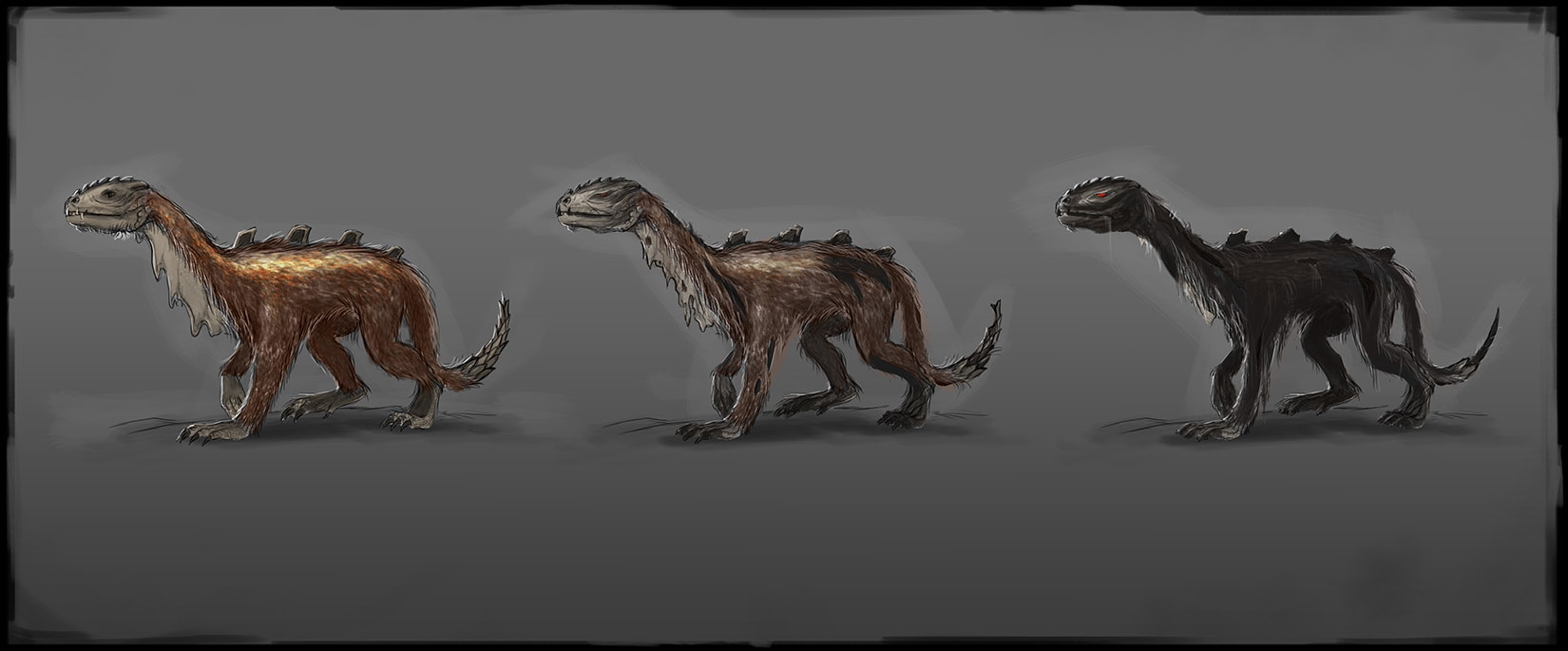
Demonization
It’s not clear where, exactly, Demons get their energies from. Some have forms so bizarre that they couldn’t consume anything even if they wanted to. Many scholars suggest that some kind of exchange might be occurring during Demonization — a process throughout which beasts, whom Demons rarely pay any mind to, flock to the latter for protection, and after a certain period of time start experiencing irreversible changes.
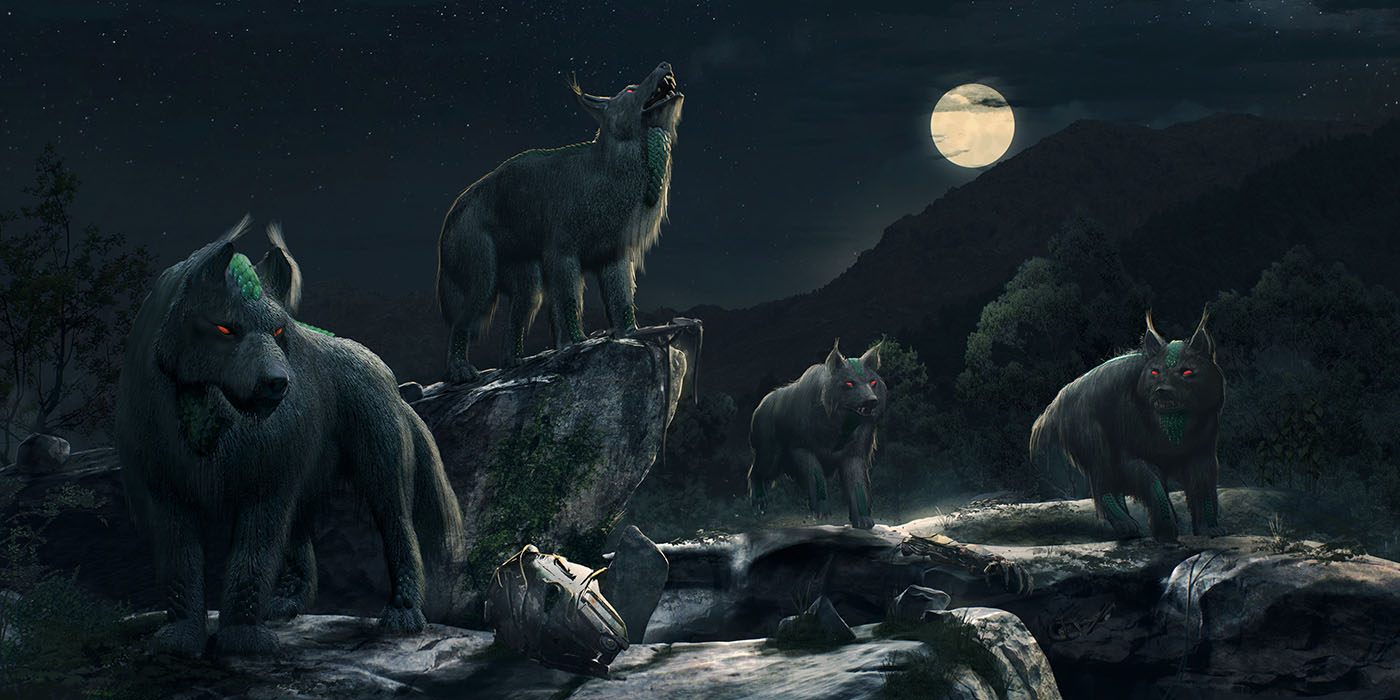
Demonized animals (just like Corruption, Demonization rarely affects plants) show great increase in raw physical power — they are the strongest of beasts. Their agility and health pool are improved as well; feeling this newly acquired potential, predators become much more aggressive. Unlike Corrupted animals, which prefer to isolate themselves, Demonized beasts continue hunting in packs when it was common to their kind, and start banding together when it was not. They also tend to live longer than Tainted creatures, but less than unaffected animals.